



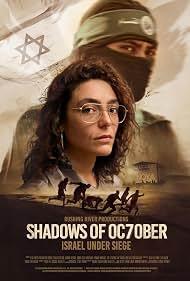
Social media is distorting the reality of the Israel-Palestine conflict, says Rev Dr Ian Paul. He argues that new documentary Shadows of October: Israel Under Siege contains vital but little-known information that most Western audiences have never been told
There is an old saying that, in war, the first casualty is the truth.
Again and again, I find myself in debates with people on social media on the current conflict. I ask them how they know what they claim to know. Have you lived in Israel? Have you visited the sites? Do you understand the different cultures? Do you know the basic facts of what is going on? Have you read analyses of the conflict by experts in urban warfare? Do you know what Hamas’ own analysis says?
Time and again, they don’t. They are not aware that Israel is a multicultural, diverse society, in which all have democratic rights and freedom of movement. They have little idea of the history over the last 70 years. They don’t know of the repeated attacks, through both war and terrorism, on the state of Israel. They don’t know that the largest groups of Jews in the country are Mizrahim, those expelled and ethnically cleansed from the neighbouring Arab countries.
Shadows of October is therefore a timely film that’s very much worth watching for anyone trying to make sense of the global response to the situation in Israel-Palestine on the third anniversary of the atrocities of October 7th.
First hand accounts
The documentary starts by highlighting the paradox of Western support for ‘Free Palestine’ movements in the wake of October 7th, given that this was the worst mass murder of Jews since the Holocaust. What the film did not go into was details of orchestrated social media campaigns, largely funded by Qatar, which distort the truth.
The film mixes reportage and information about the situation in the region with personal testimony, from the Israeli side, of the impact of October 7th. This is framed, briefly at the beginning, and at more length at the end (in an interview with a Christian Arab Israeli) through a form of Christian Zionism which sees the promises to Abraham in Genesis 12 as of enduring application. But you don’t have to buy into that viewpoint (and I don’t) to see the value of the film.
The first two interviews are with survivors of the October 7th Nova festival massacre. A woman talks about hiding in a rubbish skip with 15 other people, only to find that 12 of them, including her boyfriend, were killed when Hamas fighters shot into the skip. The second is testimony from a man who hid with five others under a house—and an Arab man protected them from being found by terrorists.
The next interview is with a soldier who served with the IDF, and he counters the claims that there is genocide or systematic targeting of civilians by IDF forces. Supported by video evidence, he shows how Hamas places weapons and command posts, and launches rockets from schools and hospitals, and how they have used civilians as human shields.
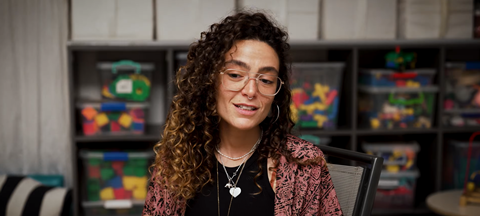
There is then a fascinating discussion with a woman who was a member of Students for Justice in Palestine (SJP), one of the US campus movements, who realised how many false claims she had believed when she visited Israel and talked to Israeli Jews and Arabs. As part of the conversation she notes that “Israelis are their own best critics” and that, in a liberal democracy, there is plenty of criticism in Israel of the Netanyahu government and its policies.
The interview with the director of Palestine Media Watch is deeply revealing. Although we tend to think that Hamas are the extremists and the Palestinian Authority is a moderate force, this is not the case. The PA supports education which teaches young children that Jews are evil and Israel is Satan, and funds the notorious ‘Pay to Slay’ scheme, in which those convicted of terrorist murders are paid a salary for each person they have killed. Much of the funding for this has come from Western government aid programmes, including from the UK. This section also highlights how the opinions that Israel has no right to exist and that Hamas did the right thing on October 7th, have become widespread in the West Bank.
The film closes with an Israeli mother whose husband was killed while serving in the army, and an Arab Israeli Christian who argues that the biblical promise of blessing for Abraham and his descendants still applies.
Social media has become awash with false claims and outright lies
Finding the truth
I am not sure this is the best resource on the conflict that I have encountered, but it does a good job of bringing together moving personal testimony with key facts of which most people in the West are simply not aware. There is little engagement with the question of the suffering of Gazans and the devastation of the territory—but it would be hard for any film to do justice to the complexities of the conflict from every angle. Besides, our social media is awash with this perspective, and what it lacks is reliable information about the reality of the situation, and an alternative that is supplied here.
Jesus told us that the truth would set us free. In the three years since October 7th, social media has become awash with false claims and outright lies—and sadly many Christians, moved by an uncritical emotional impulse, have been among those who have swallowed them whole. Please watch this film and begin to engage with some of the harsh realities of this tragic and intractable situation.
Shadows of October: Israel under Siege is available to stream now




















No comments yet