
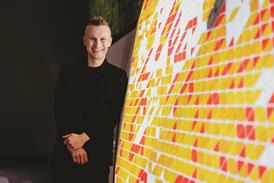



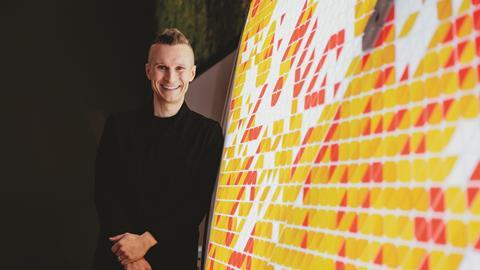

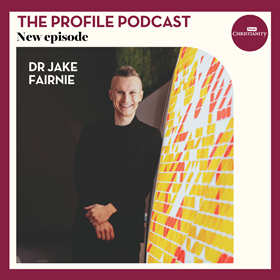
In a world of constant distraction, could the ancient practices of prayer and stillness hold the key to a healthier, happier brain? Christian neuroscientist Dr Jake Fairnie explains what science is discovering about the power of switching off, why he believes the human brain points to a creator and why God is a bit like a moonwalking gorilla
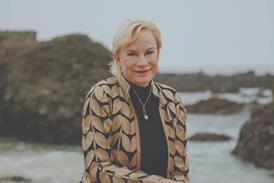
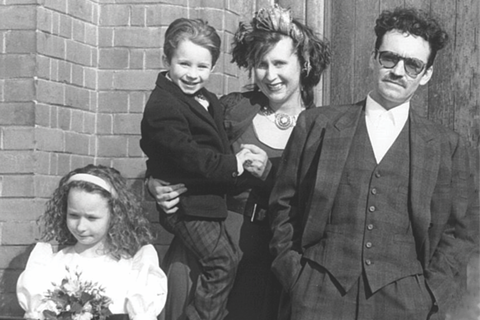
Sculptor, Charlie Chaplin impersonator, musician and chicken hypnotist. Dr Jake Fairnie’s father Steve had quite the CV. So does his mother, a multi-hyphenate artist who has appeared on Top of the Pops and had her work displayed at the Royal Academy. Together, they formed 1980s’ electronic pop duo the Techno Twins, until Steve tragically died from an asthma attack in 1993. Young Jake was just six years old at the time.
In such moments of inexplicable suffering, some might be tempted to question the existence of God. Yet Fairnie says his early experience of the “fragile, vulnerable moments of life and death” cemented his beliefs. The support of a loving church community was vital. So too was witnessing how his mother’s Christian faith sustained her through grief.
Fairnie’s career in science was “completely bonkers” to his artistic-minded family. Yet the playfulness and curiosity that come from his upbringing has clearly influenced his professional work as a research scientist and communicator. He’s made chocolate models of his two hemispheres for tech bros to snack on while talking about the impact of cocoa on focus and mood, and seen an MRI scan of his brain used as the video backdrop to a U2 stadium tour. For Fairnie, there is no hard divide between art and science; it takes creativity, imagination, determination and discipline to imagine anything new – whether that’s a play, a painting or a cure for cancer.
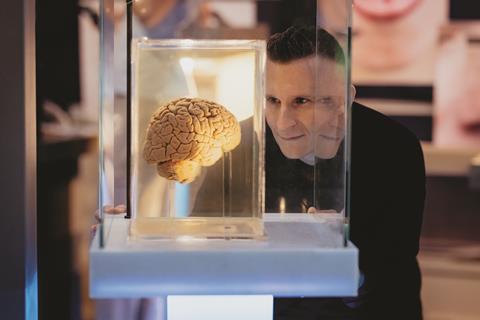
Having spent much of his life studying the human brain (primarily researching attention, awareness and distraction), Fairnie is increasingly convinced that its complexity and power, uniqueness and fragility can only point to a creator God. In the end, he says, it all comes back to the same thing: being awake to the awe and wonder that permeates the whole of human experience, whether in moments of deep tragedy or transcendent joy.
We should be mindful of what we’re allocating our precious cognitive resources on
All this work necessitates “a holy pause” from time to time, something that is increasingly difficult in our always-on world, full to the brim with content and distraction. He’s discovered that traditional Christian practices, such as prayer, meditation and stillness allow specific regions of the brain to come alive, sparking new connections, inspiring creativity and increasing happiness. His research just might be the hope that the world needs right now.
You were raised in a very creative environment. Where did your love of science come from?
Like my faith, my interest [in science] came from personal experience. We had some quite serious mental health conditions in my family – schizophrenia, bipolar disorder, addiction – and I was fascinated by how the brain can be simultaneously beautiful and powerful but also fragile and mysterious.
I did a psychology degree at University College London and then a PhD. On the day that I handed in my thesis, I posted about it on social media. I got a message from someone who said that, years earlier, they’d helped my dad write a PhD proposal to study creativity and the brain. [He did not complete it, and] I knew nothing about it. It still gives me goosebumps when I think about that. I guess it felt like a bit of a wink from above.
My research looked at why your brain is able to focus on one area intensely, at the expense of the other. We looked at ADHD and autism and what the age of distraction is doing. In one study, we found that the more distracted you are, the less happy you feel.
Some people assume that humans are either ‘arty’ or ‘academic’. Do you believe that?
Society often pitches creativity and science against each other. But I see them as completely complementary. Scientists have to imagine hypotheses, design experiments and make unexpected connections between ideas. Creativity needs to be deeply disciplined. Ideas need structure; you need to test them, refine them, edit them. There is a huge crossover.
You’ve talked about an idea called “the holy neuroscience of pause”. Would you explain what that means?
In this age of distraction, when we’re scrolling, striving, consuming, the brain doesn’t switch off. But there is a network of regions in the brain, called the default mode network (DMN), that becomes active when we pause. Basically, when we stop ‘doing’, it doesn’t mean that the brain stops. When we’re looking through a brain scanner, we can see an increase in activity in those regions when we’re remembering past activities or daydreaming. Periods of lower stimulation create space for the mind to wander and for ideas to connect. You also see an increase when we’re prayerful, when we are meditating.
This really maps on to this world we’ve engineered, where we’re trying to fill every gap with screens, AI slop, notifications, entertainment, 24-hour news. We almost never allow ourselves to become bored and switch off. There was even the recent raw-dogging trend on social media, where you go on a long-haul flight and watch a map for eight hours; it’s now seen as an extreme activity just to create a space where you’re calm and at peace, removing the noise and the chaos and the constant bombardment that we’re faced with on a daily basis.
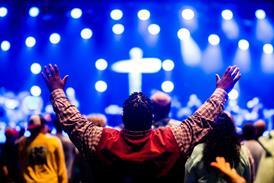
Scripture says that on the seventh day, we are supposed to rest. Luke 5:16 says: “Jesus often withdrew to lonely places and prayed.” He does these extraordinary things – healing people, teaching, drawing huge crowds, feeding the 5,000 – and yet we witness Him stepping away. Even before His public ministry, He spends 40 days in the wilderness. We’ve got the scripture dating back thousands of years, and now science is starting to catch up.
It’s interesting that young people are being drawn towards more orthodox and Catholic expressions of faith. It’s almost as if there’s a hunger for stillness and quiet, which is the exact opposite of the environment we live in.
Yeah, it’s like a faith version of raw dogging! I think there’s a big movement towards seeking discomfort; young people are looking for areas where they’re not in their comfort zone, they’re pushing the boundaries of what’s possible.
When you’re cognisant of the fact that your attention is being manipulated, you want to lean into this search for something deeper – of self-improvement – and you don’t want productivity hacks. That’s quite a big thing with young people. Prayer, meditation, focusing inwards, going to church and sitting there, worshipping, allowing the word to wash over you – basically raw-dogging through church – you can’t get that from anything else. You can’t get it from your smartphone. You can’t get it from AI. It’s something different, and people are hungry for it.
Ultimately, that’s why we’re seeing this revival of young people in church. It’s a beautiful thing to witness. People are looking for answers, and I think the place you get that is faith.
Why is it good for us to make space for the DMN to be stimulated?
When we recruit the DMN, it taps into new systems, making new connections. We’re using our memories, allowing the mind to wander into new territory and cross boundaries that it hasn’t crossed before. Exploring new things gives birth to new concepts.
When we go into our inner world, we pray, we meditate – it’s having that flow and balance between the two different states.
How does this research map on to faith?
A video came out of Harvard University in the 90s that asked people to count the number of passes made by a team of basketball players. And what a lot of people don’t notice [when watching the film] is that there’s a moonwalking gorilla in the background. In some ways, it’s a bit like God is the moonwalking gorilla. A lot of people go through life just paying attention to the ball, but when you notice the moonwalking gorilla – when you pay attention to God’s miracles, the wonders He’s placed there – are we willing just to scroll AI slop all day, or do we want to carve out a space in our distracted world to allow our creativity to run wild, to sit prayerfully in the scriptures? We should be mindful of what we’re allocating our precious cognitive resources on.
Is that getting harder in today’s ever-increasingly connected world?
Yeah, we’re living in an engineered world that consumes every spare second of our attention, and the emergence of AI is only going to accelerate this: more content, more noise, more slop – more reason to get away and pause!
We’re at a dangerous crossroads. In some ways, we’re at the precipice of another Garden of Eden moment. We’ve got this incredibly powerful thing in front of us, and the question is: What are we going to do with it? Do we bite the apple just because we can, or can we use this moment to rediscover quite how extraordinary the potential of the human brain can be?
The thinking and the pausing, the imagining and the creating are what makes us human. If we can use AI wisely, purposefully and sparingly, we’ll be in a great space.
Some scientists are warning that AI may pose an ‘existential threat’ to humankind. Is that scaremongering in your opinion? How do Christians respond to that?
AI has the potential to do the most incredible things. The capacity for AI to do drug discovery that can take ten years in 30 seconds is scarily brilliant – but scary. Things are moving at a much faster pace than we’re used to. But I bet on the human brain, once we put guardrails in place – and I do think we need that. If we can use it in a way to harness and support our brains, but not replace them, it can be a positive thing.
There are also many ethical questions – from the impact on the environment to supporting a technology that could be used for enormous harm. How do we wrestle with those questions as Christians?
It’s difficult. I’m still wrestling with it myself.
There’s a global element where politicians and leaders need to step up and have those conversations. But on a personal level, the choice is: do you allow AI to replace your thinking, become passive, distracted, intellectually lazy, or do you use it purposefully, sparingly and thoughtfully, to enhance the things your brain is already generating?
How can Christians better deal with the fast-paced world that we live in?
I’d probably boil this down to three things. The first is to pause. We’re not talking about laziness but allowing your mind to be still and have a break from the stimulation. The second thing is focus. Be a mindful gatekeeper. Try to move away from multitasking and focus on one thing, whether that’s family, community, prayer, gardening, cooking, whatever. Go all in on that, and you’ll be amazed what you can do. The third thing is rhythm between the pause and the focus. Rest and work. Reflect and take action. When you look at the pattern of Jesus’ life, He does exactly this.
Being still doesn’t have to be separate from the work that you’re doing. It can be very much part of the preparation, as you see in Jesus’ life. My encouragement is to give your brain the opportunity to breathe. It’s capable of miraculous things.
To hear the full interview listen to Premier Christian Radio at 8pm on Saturday 28 November or download The Profile podcast

















No comments yet