







For years, six-time grammy winner PJ Morton was made to feel like Christian musicians had to choose between gospel and secular music. As he brings both worlds together on his new album, Saturday Night, Sunday Morning, he tells Premier Gospel’s Belinda Brooks why he has spent his career refusing to choose
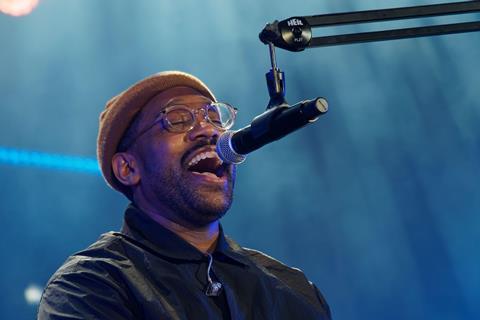
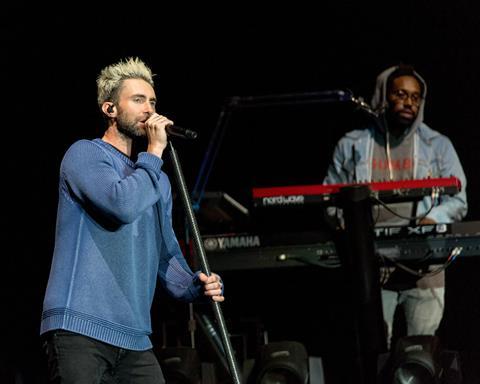
“Gospel or secular?” is a dilemma many a musically gifted Christian has encountered as they sought to build a career in music. While many do pick a side and stick to it, PJ Morton has resolutely refused to do that. The 45-year-old has been hugely successful in both camps, known as much for writing Gospel hits such as ‘Let Go, Let God’ as for writing and producing songs for the likes of India Arie and LL Cool J, or for being the keyboardist in the band Maroon 5.
The son of a pastor, Paul Sylvester “PJ” Morton Jr was born in New Orleans in 1981 and grew up in church, surrounded by seasoned musicians who inspired and mentored him. He studied Marketing at Morehouse College in Atlanta, one of the USA’s historically Black colleges and universities (HBCUs), whose other famous alumni include Martin Luther King, Samuel L Jackson and Spike Lee.
Morton’s determination to make both Christian and secular music was the theme of his 2011 book Why Can’t I Sing About Love?, his memoir Saturday Night, Sunday Morning: Staying True to Myself from the Pews to the Stage (Worthy Books), and his latest album, also titled Saturday Night, Sunday Morning.
In this interview, Premier Gospel presenter Belinda Brooks sits down with him to discuss his journey trying to navigate the sacred-secular divide.
You grew up in New Orleans, in a home that was full of faith, but it was more than just music and church. When you look back, what was one of your favourite moments from childhood?
One of my favourite times that I always go back to is Christmas time at home every year. Our family lived in Canada, Atlanta and Detroit, and they would all come to New Orleans for Christmas, so I got to see my cousins and everybody. Since I was a kid, probably two years old, my dad would videotape us waking up early in the morning, and we were allowed to open one gift before we went to church. We’d go to church and then come back, and my dad always put on a talent show. You had to show whatever your talent was that year, so you can see these videos of me growing up, starting on drums, and then going to guitar, and then finally settling on keyboards and us all singing together. That was a special part of my childhood.
You’re a PK (pastor’s kid), and your father, Bishop Paul Morton, is well known for his own music. As a PK myself, it can be a life of privilege, but sometimes it can come with a burden as well. What was the biggest lesson that you learnt as a PK?
I always heard that the PKs were the bad kids! I never heard of any privileges of being one, but there must have been some. It just depends, I guess, on who your parents are.
I’d say my biggest lesson was realising that the congregation was our community, and they were holding us up. My father was always very clear on that.
I have seen PKs treat people as less than or act like they’re on some type of pedestal, and my father was very clear on the fact that I was born into this; that I didn’t have anything to do with our status, and that these people being our community were the reason why we were here. That gave me an appreciation for people; knowing that they don’t have to support you, they don’t have to be there, but they’ve chosen to be there, and to hold them in the highest regard. And I think that actually prepared me for everything I had to do in my life, because it’s the same thing with being an artist. People don’t have to support me or to listen to my music, so when they do, they deserve my fullest gratitude. And I’ve taken that with me.
With regards to your own faith, do you remember the moment when it was no longer about what your dad or your family were doing, but developing that journey with Christ for yourself?
There was that, but I was also the kid who liked going to church. Not a church boy necessarily, but my friends were there and the music was there. My dad had a very musical church and the musicians there were my mentors, so I was always ready to go so I could watch them.
Church was where my friends were – more so than school. It was kind of my comfort zone, being in New Orleans, being at my home church. I was almost in a bubble, and never had been challenged.
But then I went to college, and that was the first time my faith was questioned. “Why do you believe what you believe?” I’d never been asked that before.
It reminds me of algorithms today, where you’re not challenged because everything you’re being fed is stuff that you want to see. That was when I had to develop my own relationship and to develop my own ‘whys’. College was where I said, “Okay, this is just not my dad’s God; my faith is not built on my parents. Let me find my own way.”
Was there a time growing up where you felt like you had to hide a part of yourself?
There was. Initially it was more on the songwriting side. I was writing R&B songs ‘on the low’ [clandestinely]. In public I was writing gospel songs because that was approved of and I didn’t want to disappoint anybody. But at the same time, I’d hear Stevie Wonder and think, “Man, I want to write songs like that!”
My musical heroes could talk about God whenever they wanted along with other things, but in gospel music you can only talk about God. I had an issue with that.
I wanted to write love songs, and I didn’t get why I wasn’t allowed to. Love is great! My parents have been married all these years and they look happy; where are the songs for them? And so initially I just wrote them for myself and would listen to them for my own enjoyment.
Eventually, I went to my father one day and said, “Dad, I’m writing about more than just Jesus. I’m writing about more than just God. When I listen to Stevie Wonder, I don’t feel convicted or that my faith is being challenged.”
For me as a songwriter, it was being somebody who could write ‘Let go, let God’, or write ‘Over and over’ for Trin-I-Tee 5:7, but then start to find success in R&B music. My first placement in mainstream music was on an India Arie album. When I met her, she was singing songs that weren’t necessarily mainstream R&B. She came with something different; she was talking about life and love in a different way, and it kind of opened my brain. I realised that I could be different; that I could be something else.
From a professional standpoint, I saw many of my friends who started in gospel music get boxed into that. Meanwhile, I looked at my other musical heroes, Stevie Wonder, Marvin Gaye and Donny Hathaway. Stevie has ‘Jesus children of America’, Marvin has ‘Mercy, mercy me’, and Donny has ‘Lord, help me’. They could talk about God whenever they wanted, along with other things, but in gospel music you can only talk about God. I had an issue with that. I want to talk about more. I do think that is a calling for some people, no different to being a minister or a preacher or a pastor.
Kirk Franklin famously told me, “If Jesus can be in the room and you’re still comfortable, then you’re all right.” Jesus would be in the room even when I was writing my love songs. And so I just started to try to find a balance.
I wrote this book years and years ago called Why Can’t I Sing About Love?. A lot of it was just me being honest and asking questions. My dad wrote the foreword for the book, and in it he said, “I wasn’t listening to ‘Amazing grace’ when I was courting your mother!”
Which leads us nicely to Saturday Night, Sunday Morning – both the album and the book. Talk us through the inspiration behind them.
Saturday Night, Sunday Morning was my memoir’s title to begin with; I had no plans on doing an album. But then I started to get excited, and a challenge began to develop.
I initially thought of the title because we’d be playing the clubs on Saturday night, vibing out on Saturday, but it didn’t matter what you’d been doing or how late you were out, you had to get up and play for church on Sunday morning. So how do I do this? Just artistically, how do I do it? The ideas started to roll from there.
I want the listeners to see that they can be balanced people. This art is just reflecting life. I think that as Christians, people sometimes focus on the art a bit too much, and also that people have different levels of conviction, which is why we’re always having this debate of gospel versus secular music.
If you do feel convicted when you listen to songs that are not about Jesus, then don’t. But I’m just trying to show that there can be a balance; that there’s a possibility and there’s a life where we can be balanced and we can celebrate love, we can celebrate life, and we can celebrate God without it having to be one or the other.
I couldn’t be happier with the end result. It is truly a representation of me, and I think a representation of many of our experiences in general.
What do you want people to remember about PJ Morton?
That I didn’t just take the first stop. I’ve always questioned things and tried to be as authentic as I could. I believe that’s the job of an artist. I think sometimes we try to do God’s job and say, “I know you made me like this, but let me just edit things over here so I can fit this space.” Meanwhile, God’s saying, “No, I made you a thumb on purpose. Why are you trying to be like a pinky?”
I try to listen to that small voice as much as I can and to stay connected, so I can be exactly who I’m meant to be, not what I’ve seen before, or a copy of my heroes. I’m like, “Who am I, and how can I bring something new to the conversation?” That’s why even with the Saturday Night, Sunday Morning album, I wasn’t going to make music if I didn’t feel that I could be inspired by something new, or that we were pushing forward and growing and having a new conversation.















No comments yet