
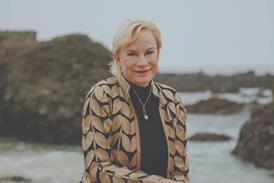


Her vast, kaleidoscopic artworks have transformed public spaces around the globe. Yet behind the colour is a softly spoken artist whose work is shaped by displacement, the longing to belong and the Christian faith that grounds her
If Lakwena Maciver’s art were a person, they would be the most vibrant and vivacious in any room they walked into. So, perhaps unfairly, I assumed that those traits would be reflected in the artist herself; that the work, in some way, would be an extension of her personality.
I was wrong.
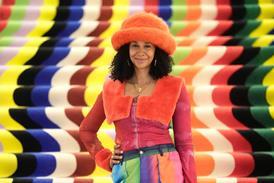
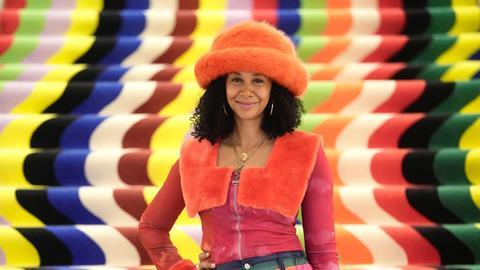
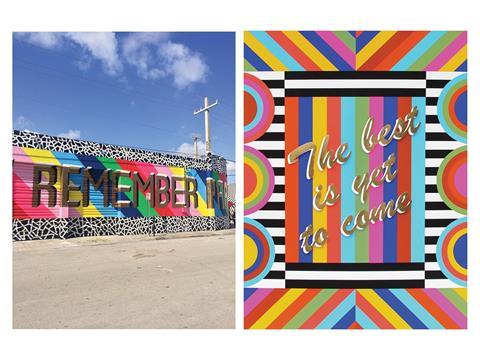
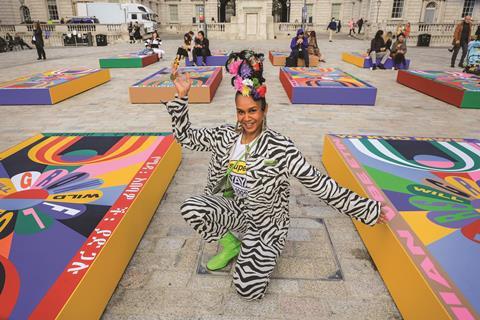
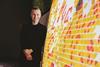
“I have been, at times, quite introverted,” she admits, somewhat to my surprise. Maciver is softly spoken and reserved in a way that almost feels at odds with the bold expressions of her creativity that have transformed public spaces around the world. See, for instance, Miami, where her 40m-long public mural, I Remember Paradise first pushed her into the public consciousness in 2013. Or the vast 1400m² rooftop installation Back in the Air: A meditation on higher ground, created above Temple Underground Station in London at the end of the pandemic.
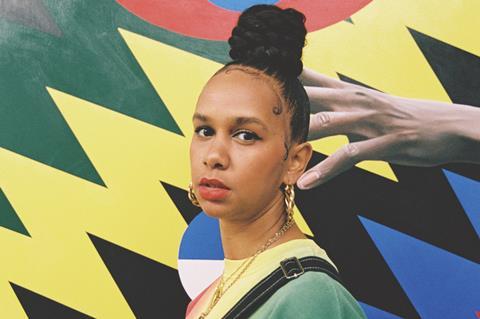
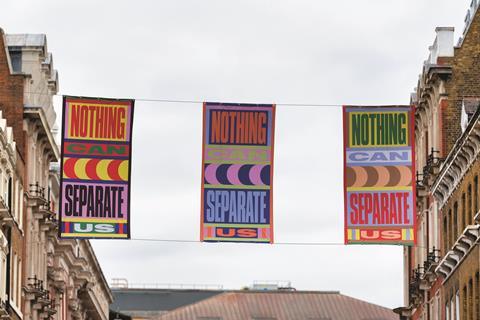
Certain trademarks recur. The works are often overwhelmingly large in scale, beautifully cacophonous in colour and adorned with short declarations that subtly point towards the Christian faith that underpins far more than just her art.
“I wanted Him to be at the centre of everything that I did, all the decisions that I made and my whole life,” she says, reflecting on the period in her adolescence when she found God.
I’m trying to be rooted in Christ and not defined by what impressive or unimpressive situation I’m in
To understand why ideas of belonging, home and something beyond the present world appear so frequently in Maciver’s work, we need to go back to the beginning.
Born in north London, she spent much of her childhood moving between Ethiopia and Uganda. Her father’s work required the family to travel. The family left Uganda for Ethiopia after her father was shot, for reasons that remain unknown to her. He survived, but the family eventually returned to London when Maciver was eight.
The upheaval, coupled with the racism and ostracisation that she encountered, left Maciver struggling with a sense of belonging. It was amid that instability that her faith became a refuge.
“My faith was massive, just in realising I was loved and accepted by Him. I could draw from that well, even if there were other wells that were empty.”
It is difficult not to notice the echoes of those early experiences in the language that would later come to characterise her art.
From as early as 2013, Maciver was decorating public spaces with phrases such as “Just Passing Through” and “The Best Is Yet to Come”. Elsewhere, her work has invited viewers to “Imagine Eternity”. More recently, her debut solo exhibition at the Mariane Ibrahim Gallery in Paris, I’m in Your Hands, carried the same familiar combination of brazen colour and implicit spiritual longing.
“We have a memory of how things were supposed to be in our subconscious,” she tells me, explaining the thinking behind I Remember Paradise. “All my work since then has been about that longing for paradise, for freedom, connection, belonging, home.”
Her art, then, is much more than just an extension of her personality. It is her bridge between a present reality that occasionally falls short and a paradise she remembers and believes she is destined to return to.
You spent parts of your childhood in East Africa. What do you remember about returning to London?
I think a lot of people experience this – that memory of coming off the plane and the grey, the white clouds and it being very cold. That is a good metaphor for how I felt in many ways.
There was quite a big cultural shock, because in Ethiopia I looked like everybody. The climate was very warm. We’d also led quite a privileged lifestyle because of my dad’s job. Then we came back here. He lost his job. We thought we were going to go back to Ethiopia, so there was a sense of loss because that had been my home and now I wasn’t going back. I felt a bit displaced.
How did that impact the way you saw your place in the world?
I think I saw myself very much as African. I used to draw a lot of pictures of aeroplanes and homes. I think I was trying to process that journey.
As I got older, I started to feel quite marginalised. I was one of the only non-white kids in my class and, going into secondary school, it was the same thing. I was obviously different from everyone and I felt very isolated.
At times, there was racism on the way to school and back, people shouting noises at me. That whole part of my life was about trying to figure out who I was, feeling unaccepted and rejected.
As a teenager I started to be quite hateful towards the people who were abusive towards me, and towards this country. I felt really angry. I started to withdraw into myself, rather than lashing out. There was just a lot of pain.
Ultimately, I realised it wasn’t doing me any good. Those feelings were tearing me apart. I was bitter. My faith was massive, in realising that I was loved by God, and so that even if I wasn’t loved by others, His love could overcome that. I was loved and accepted by Him, and so I could draw from that well, even if there were other wells that were empty.
I slowly began to come out of the shell that I had built to protect myself, and I started making a lot of work. Drawing was a way of processing some of what I was going through, and I started to dig really deep into scripture, into the Psalms particularly. I found a lot of encouragement there.
When did faith come into the picture for you?
I’m told I was four when I decided to follow Jesus. But that was a very black-and-white understanding of: What does God want you to do?
Interestingly, my kids now ask questions about death, and I think I was asking those same questions. My parents explained what the Bible teaches about death and wanting to be with Jesus when you die, so that was what I believed. But as I got older, the relationship became deeper.
When I was about 13 or 14 – around the time that things were starting to get really difficult with my sense of identity and feeling very rejected – I went to a new church where they were much more open to the idea of the Holy Spirit being active and speaking to us even now.
I think I had my first tangible encounter with God, where it felt like it went deeper than just rules, and it started to be more about a relationship. From there onwards, I wanted Him to be at the centre of my whole life.
It sounds like, alongside your faith, art was also a means of processing what you were going through. When did you discover your love of art?
I’d always drawn. I often drew my name because I’ve always liked words. It wasn’t something conscious that I was doing, but I’ve always been good at drawing.
Because I’m a bit more introverted than the rest of my family, it was a natural, instinctive way for me to think about things and then draw them.
Does being a Christian impact how you see creativity?
Massively. God is the creator. I want to make great work, so I often ask Him to show me how, because I feel like I’ve got so much to learn.
He made the sunsets, He made us; the intricacy of a cell and a seed, and the way that grows. It’s just incredible.
I’ve just started growing plants, and I recently planted some squash seeds, and then I saw the shoots come up. But to see that all that information is stored in the seed is insane to me. That’s God’s creation.
I’ve always seen sunsets and thought they were beautiful, but this seed thing is crazy to me. That’s God’s artistry. What we’re trying to do as artists is like a teeny tiny reflection of that mastery.
So, I’m [asking Him]: please show me how to be an artist.
When people think about your work, they think colour. What does colour mean to you?
That season of my life where we’d come from Ethiopia and arrived in England was quite formative. There was that contrast between the colour and warmth, and then arriving in this very grey climate, and what I felt was quite a cold emotional situation for me.
As a child, I remember consciously thinking about trying to recreate that tropical, warm environment, at least in my room. I think there’s probably an element of that in what I do.
What do you hope somebody encountering your art draws from it?
I don’t think that much about what people are going to get. It’s almost like I’m speaking to myself when I make the work. I’m trying to encourage and lift myself with the words that I put out there. But because the human condition is universal, the things that I feel, you probably feel or have felt. In the same way that I’m trying to lift myself, I end up hopefully lifting other people as well.
What we’re trying to do as artists is like a teeny tiny reflection of God’s mastery
It was very healing for me to realise that the struggles I’d had, or the things that I’d suffered, almost everybody has suffered in different ways.
You credit I Remember Paradise as one of the works that pushed you into the public consciousness. What is the practical process behind creating a piece on that scale?
That was the first big wall that I painted, and I was so scared. I’d never had a panic attack in my life. I was on a group holiday in the Dominican Republic with my husband and some friends, and randomly, on one of those nights, I think [I had] a panic attack.
I went with a friend and we started painting it. In the end, a couple of local painters helped us, and we managed to do it. It took about three weeks. Often, the way that large pieces are done is that there’s a group of people painting them.
It said: “I Remember Paradise” and, at the time, that was really significant because I’d been reading a book called Echoes of Eden (Crossway), which [said] these longings we have are because we have a memory of how things were supposed to be in our subconscious.
In a way, all my work since then has been about that. I speak a lot about this longing for paradise, for freedom, connection, belonging, home. That was a starting point, and a lot of the work since then has continued in that vein.
When you complete something like that, what emotions does that evoke in you?
To be honest, I am the type of person who’s always thinking about the next thing, which is a bit of a problem.
I think there’s also a performative aspect because people are always asking you: “Oh, what’s next?” Which is like: “I just did this, incredible thing, and you’re asking me: ‘What’s next?’”
All my work has been about that longing for paradise, for freedom, connection, belonging, home
People feed that, which I’m getting a bit tired of. This year, I want to dwell a bit on the last ten, 15 years and write about it, get people to write about it and just look back, because I feel like I’m transitioning to a new season, partly because of my kids.
I’m just trying not to rush on to the next thing and get off that running track.
Does your faith help you resist being defined by what you produce?
That’s the hope, isn’t it? Knowing that we don’t have to perform to be accepted and loved.
It’s something that I have to meditate on, especially in a situation where I have a big job dangling in front of me, and then it disappears because some decision was made.
If you’re not careful, you can feel like: I’m king of the world, and then: Oh no, I’m nobody, if you’re too defined by that stuff. So, I’m trying to be rooted in Christ, and rooted in relationship with Him, and not defined by what impressive or unimpressive situation I’m in.
Do you feel like your artwork forms a part of your Christian witness?
I try to just think of it as my job. I’m aware of the power of images and that we’re in a very image-saturated culture. I think having kids has made me think more about culture and what stories we tell each other. But then also; as a society, what are we telling the next generation?
So, I think I’m really aware of that – the power of images, the images that we make, the stories that we tell and how that impacts people.
As a Christian working in the mainstream art world, how supported have you felt by the Church?
I don’t feel like I’ve had a lot of support in particular. I think it’s a lot easier for Christian artists nowadays than it was maybe 40 years ago.
It’s weird, because when you look at the history of art, at one point the Church was a major patron for the arts. But there was a point quite recently where the Church was suspicious of art and creativity, which is a real shame, when you think that God made art. God made creativity.
A lot of Christians will talk about Bezalel and Oholiab, who were the people God’s Spirit came on to make the tabernacle. They had a really important role. God cares about beauty and making things beautiful.
I benefit from people who have gone before me and who’ve paved a way. So, I think now there’s quite a lot of openness in the Church to art and creativity.
A lot of your work is intentional about speaking life. How much do you feel that is God speaking through you?
I don’t know. We never know, really, do we? I pray. I’m prayerful about the work.
There have been things that have happened where I believe God has ordered and aligned things in a particular way, and so I do think that He’s in my work, but I don’t want to make claims about what I don’t really know. It’s quite mysterious, isn’t it?
In reflection, what do you feel God has done through your entire story?
He’s done a lot of things. With art, He’s given me a place in the world. I feel very blessed because there are a lot of brilliant artists out there who haven’t necessarily had this level of success. He’s given me something to do, and I’m very grateful for that
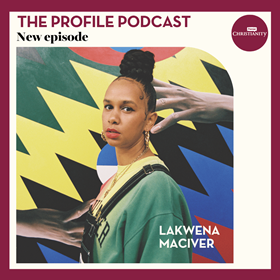
To hear the full interview listen to Premier Christian Radio at 8pm on Saturday 17 November or download The Profile podcast. It will also be available to watch on Premier’s YouTube channel.



















No comments yet