


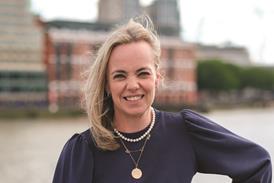



Anna Faro was unprepared for the effect that perimenopause would have on her mind, body – and spiritual life. Understanding this important life stage isn’t just a women’s issue, she says, it’s one we all need to take seriously
In the last few years, the menopause has become (if you’ll pardon the pun) a hot topic of national conversation.
In 2021, Davina McCall’s Sex, Myths and the Menopause documentary hit our TV screens. As well as urging women to be more open about their menopause experiences, the show addressed the scaremongering that had long been present around the risks of synthetic Hormone Replacement Therapy (HRT). ‘The Davina effect’, as it has become known, has heralded a new frankness about a subject which was previously barely discussed – and certainly never mentioned in church.
Since then, a flurry of podcasts, articles and social media reels have highlighted the impact of this life stage on women’s physical and mental health. But what about its impact on their spiritual health?
It had never crossed my mind that the age-related drop in oestrogen, testosterone and progesterone in a woman’s body known as perimenopause could affect her faith.
A crisis of faith
Around a year ago, my joints started becoming so stiff that, on occasion, I hobbled across the room like a 90-year-old. I’m still in my 40s, but that wasn’t the only perimenopausal symptom I’d been struggling with: uncharacteristic low mood, brain fog and anxiety were turning me into a tearful mess.
HRT helped with some physical and mental symptoms, but at the same time as my emotions and body began to confuse the heck out of me, I hit a rocky patch in my walk with God that I couldn‘t explain. Nothing dramatic had happened to make me question the existence of the Lord I had loved all my life. Yet I found myself in a big – and scary – faith crisis. It was hugely unsettling, because I didn’t feel I could talk about it, even with some of those closest to me.
I don’t believe it’s God’s best that we get to perimenopause and then fall off a cliff
Gradually, my apparent loss of faith seemed more real to me than the strength of it. Comments which previously bounced off my armour now got through. I wondered: What if it’s all made up? What if the Bible is too good to be true? When I eventually divulged these fears to an incredible woman who has known me and prayed with me for years, she said that she had seen similar unprovoked doubts in those battling depression. She did not suggest I was depressed, but she made the link I had failed to see – that low mood and low hormone levels affect everything. Every strong tower can seem shaky when the chemical messages that keep your body and mind functioning stop getting through.
What is the menopause?
Perimenopause is the term that describes the drop in hormone levels in a woman’s body and the beginning of menopausal symptoms.
Officially, menopause does not start until a woman’s periods have stopped for twelve months.
According to the NHS, symptoms can include:
Changes to the frequency, length and flow of your periods
- Hot flushes and night sweats
- Difficulty sleeping or disturbed sleep
- Mood changes, poor memory or brain fog
- Weight gain, particularly around the stomach and upper body
- Vaginal dryness, irritation or itching that can make sex feel painful
- Urinary tract infections (UTI), feeling pain when you pee, needing to pee more often
- Heart palpitations
- Loss of bone density
- Headaches and migraines
- Muscle aches and joint pain
- Hair thinning or loss
- Skin changes, including dry and itchy skin
- Reduced sex drive / loss of libido
- Sensitive teeth, painful gums or other mouth problems
- Anxiety, panic attacks, feeling depressed or irritability
- Tinnitus
Misdiagnosed
For Lisa Olsworth-Peter, head of partnerships and engagement for Spring Harvest, this shake up of everything she held dear happened aged just 41. Lisa was driving her car when she suffered a hemiplegic migraine, a rare event which can present like a stroke. The mother-of-three became dizzy and remembers that the car felt like it was turning over. She lost strength in her left arm, left leg and couldn’t communicate. “I could hear everything, but I couldn’t speak. And when I was able to, it was very slurred,” she says.
After this frightening episode, Lisa’s condition was not only misdiagnosed but sadly dismissed. “Initially the ambulance crew thought I was having a stroke, and then very quickly put it down to mental health. I was in pain with the migraine and I couldn’t respond to what the paramedic was saying, but I was infuriated. He was basically saying: ‘Yeah, this is depression, there’s nothing wrong with her.’ And I was thinking: I don’t know what you’re talking about. I’m totally fine. Why would you think that?” Once a stroke was ruled out, Lisa was prescribed antidepressants. “They just thought: Woman with three kids, got twins at home, etc. Must be that,” she adds.
The antidepressants did little to help, and Covid restrictions meant that Lisa struggled to access further medical help. “I got so low that I was praying for a heart attack,” she continues. “And that’s not me being dramatic. I didn’t want to die; I just wanted to stop. My husband said: ‘OK, that’s enough, we’re going private.’”
When Lisa sought advice from a specialist clinic, she received a totally different response. “The woman said: ‘This is perimenopause. We’re going to give you HRT and you’re going to be fine,’” Lisa recalls. “I just burst into tears, because an answer had been found. It had taken ten months to get a proper diagnosis.” Lisa says she still feels “real sadness” that there are others in her situation. “No one would listen and no one would believe me.”
I found myself in a big, scary, faith crisis, and I didn’t feel I could talk about it
Thankfully, following HRT, Lisa was able to return to work. But life has changed dramatically. Prior to perimenopause, Lisa says she was the “life and soul of the party”. A performer in the West End for many years, she also entertained at home every week and had been a worship pastor at her church – one of the many roles which she needed to give up during that time.
“I lost my identity,” she says. “And I still don’t really recognise myself in terms of my character and my personality. I know what it is, so I can attribute it to something, but back then it was a grief; I was grieving the person I was. Now I’m very anxious and find it difficult to go out.”
Lisa says she felt very angry about what she had been through and struggled with whether she was representing God in the best light. She felt guilty about the impact on her family, her marriage and her friendships. “That’s been the hardest thing, that I haven’t been able to be the person I’ve wanted to be for those people,” she adds.
Ed’s story
It took me a while to work out that my wife’s sudden mood swings were not her being unreasonable, rude or difficult, but part of her menopause symptoms. It can be hard when you don’t know what’s going on, but when you realise what’s causing the changes in behaviour, you can respond differently and be more supportive. As I’ve learned more, I’ve been surprised at how many physical symptoms can be associated with menopause, too.
It took ten months for my wife to get a diagnosis. Not knowing what’s going on can be hard. Finding the right treatment was harder. Some GPs are helpful, others not so much. And even when you find someone who understands, finding the best type of treatment – whether HRT or herbal remedies – can be trial and error. The uncertainty of not knowing what might help your partner, and seeing them struggle in this, can make you feel very powerless.
Every woman goes through menopause, and lots of marriages are impacted. But men don’t talk about menopause very much. It’s not a subject that comes up in conversation. There is growing support for women in menopause, and rightly so, but I think more support for men would raise awareness and resource them to support their partners better during this time.
My wife and I found it helpful to talk to other couples who were going through the same thing. I have had some good conversations with other husbands; it helps to know that there are others out there who understand.
I’ve learned that menopause is a marathon not a sprint. It can take many years for some women, so it is lived with rather than cured. It isn’t something that can be fixed with a quick trip to the doctors. Physical symptoms and emotions can change day to day and can be different over time too, so expect the unexpected. The more informed you are, the more you can accept and understand what is happening.
As with many areas of marriage, communication is key. The more you can talk openly about what is happening in menopause, and how you are both feeling about this, the easier it is. It might be as simple as giving your wife permission to say: “Just to let you know, I’m having a menopause day today.” You can then take extra care to respond with kindness rather than defensiveness!
Listening well, reassuring your wife that they are loved and that the marriage is OK can make a big difference. And having a strong Christian faith can help you both through this challenging time.
What’s wrong with my wife?
Jo Ibbott, author and menopause coach, supports women like Lisa to understand their menopause experience. She is currently writing a series of biblical reflections to help women explore their faith through this life stage. “It’s been really interesting,” Jo says, “thinking about women feeling invisible, women feeling that loss of identity, and asking what the Bible contains that reassures us and speaks into this, because I don’t believe it’s God’s best that we get to perimenopause and then fall off a cliff.”
Both Jo and Lisa have encountered people who desperately needed reassurance that they would survive the menopause. Together, they hosted a panel discussion at Spring Harvest. At the end of the session, a couple approached them. The husband said: “You have probably just saved my marriage. I’ve learned more about what the woman I love is experiencing just now than I have in the many hours I’ve spent on Google in the early hours of the morning.”
Lisa adds: “He’d been thinking that his wife was disappearing in front of his eyes, that there was a problem in their marriage, that he was losing her.” But hearing the experiences of other people reassured him that they could get through it.
The husband said: “You have probably just saved my marriage”
Jo also runs retreat days for women. So many people and organisations – especially the Church – depend on midlife women to keep going and keep giving out, says Jo. “This is something churches need to be aware of, from a pastoral point of view,” she says. “It’s mainly women who are volunteering within the Church, and it’s mainly women in midlife or a little bit older. If they’re struggling with mental health, confidence or feeling invisible, all those sorts of horrible, insidious feelings start to creep in, and the Church could be losing valuable people.” Some churches and denominations are starting to tackle this, she says, but on the whole, it does not yet recognise women who are struggling with the menopause, and support and value them sufficiently.
A couple of years ago, while speaking on the fruit of the Spirit at church, Jo took the opportunity to explore the impact of hormones on this important area of spiritual development. “Hormones are so powerful,” says Jo. “We can feel guilty that we’ve just let rip at our child or experienced road rage, but we can also feel like we’ve got no control over it. It’s never talked about. So, let’s be honest that yes, of course, the fruit of the Spirit is what we’re aiming at, but we do have this extra layer of challenge.”
The spiritual fog
Rev Karen Markiewicz looked at the spiritual impact of menopause on women’s faith journeys as part of her master’s degree. Now, she’s writing a book that shares twelve women’s stories. Like Lisa, Karen also had to seek perimenopausal treatment during the pandemic.
“I remember hot flushes, anxiety, not wanting to leave the house, a lack of confidence in everything I was doing in my job,” she says. She was also incorrectly offered antidepressants. “I was like: No, sorry, I had postnatal depression 25 years ago. I know what it feels like and this is not that.” After refusing medication, the symptoms became “very debilitating”, including severe anxiety and “horrendous” insomnia.
Throughout this season, Karen remembers repeatedly asking God: “Where are you?” It felt, she says: “like a spiritual fog”.
“It was as though my prayer life, the way that I engaged my faith, just wasn’t resonating anymore,” she says. The Church, she says, doesn’t really talk about this aspect of midlife for women. “But I think we should. If there are women that want that space, it should be provided.”
In her own spiritual journey through the menopause, Karen found it helpful to research how different Christian traditions approach prayer. She took frequent long walks and prioritised times of silence. “God knows in those moments what my spirit is feeling,” she says, “and that’s still prayer.”
An issue for us all
All three women agree that more awareness is needed about something which is likely to impact 51% of the population. Mental health has been brilliantly championed in the secular sphere by public figures such as Prince William and Prince Harry and, as a result, it is now far more widely understood and supported. Now, high-profile women are beginning to do the same for the menopause.
But this isn’t just a ‘women’s issue’. If you work with a woman, are married to one, have a female friend or relative, or pastor a church that has women in it, you are going to be affected by these issues. As 1 Corinthians 12:14,26 remind us: “the body is made up of many parts. When one part suffers, every part suffers with it”. So, let’s make sure our understanding isn’t held back by British reserve or disbelief that it has anything to do with our spiritual lives.
Wondering if you are in perimenopause?
- Check the symptom tracker at The Menopause Charity: themenopausecharity.org
- For self-help guides and more resources: rockmy.com/menopause
- The Power of Hormones (Hodder & Stoughton) by Dr Louise Newson is an informative read: drlouisenewson.co.uk
- Jo Ibbott is a Christian and a specialist menopause coach: courage-coaching.co.uk


















No comments yet