



The government says new legislation will protect LGBT people from abuse, but the Evangelical Alliance’s UK director warns that the current wording could undermine parental rights and put Christian prayer and pastoral care at risk
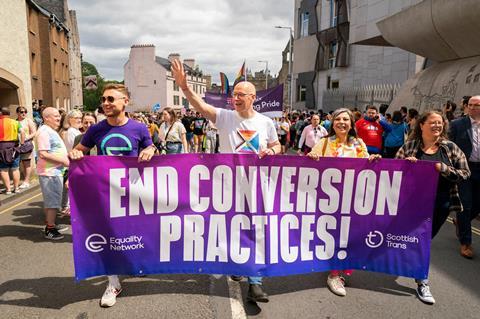
The government published its Draft Conversion Practices Bill for England and Wales on 25 June 2026. Today, a joint committee of six cross-party MPs and six peers began taking evidence from external witnesses and report back to the government in the new year.
The Evangelical Alliance is opposed to the bill. This is not yet the moment to say everything we will want to say. We want to see who the committee invites to give evidence and what questions it asks. We intend to engage carefully, constructively and at the right time. But that does not mean we are silent – there are already good reasons for concern.
We want to start where the government says it starts: abuse is wrong. When the bill was introduced into parliament the then minister for equalities spoke often how “abuse is unacceptable, no matter to whom it is done or where we find it.” And we would agree. Coercion, violence and abuse have no place in any setting, and least of all in the church. Some people have been deeply hurt by practices carried out in the name of faith. We grieve that, and we will not defend it.
Our opposition to this bill is not opposition to protecting people. It is a question of whether this bill is the right way to do it.
Why this law is so hard to write
Since 2018, successive Conservative and Labour Governments have promised to introduce a bill to ban conversion practices…five prime ministers later, we have another draft. This delay is not simply a lack of political will, it reflects a real problem at the heart of the proposal; much of what campaigners rightly want to stop is already illegal: assault, threats, false imprisonment, corrective rape, coercive and controlling behaviour, and the abuse of children are all crimes today, whatever motive lies behind them.
What is not already illegal are, for the most part, things that should not be: parents guiding their children, adults choosing the support they want, churches teaching, praying and offering pastoral care. Trying to draw a criminal line around that territory is where previous attempts have faltered.
The current draft defines a conversion practice as any conduct intended to cause someone to have, or not to have, a particular sexual orientation or transgender identity. That is very broad.
We have repeatedly raised with government ministers and officials the need for clarity about what the proposed new law is addressing and what it is not. The work of narrowing it down to genuine abuse fails on other parts of the bill, and ultimately on the judgement of police, prosecutors and courts. That is exactly where the detail needs examining.
Parents, children and lawyers
Parents have a responsibility to love, guide and protect their children. Sometimes that means affirming them, sometimes listening, and sometimes challenging them or saying no. Those conversations are especially hard when a child is wrestling with questions about sexuality or gender. Ministers have said that parenting will not be criminalised. But when the most serious offence in the draft carries up to five years in prison, reassurance is not enough. The safeguards must be clear on the face of the bill.
Our opposition to this bill is not opposition to protecting people. It is a question of whether this bill is the right way to do it.
The draft also creates conversion practices protection orders. These are civil orders, made by the courts, which can be sought before any offence has been committed. Parents could face court proceedings over how they handle these questions at home, without anyone being charged with a crime.
Parents should not need a lawyer in the room before they can talk to their own children.
Free to seek support
Christian faith is not a set of private opinions. Christians pray, teach, counsel and support one another. People come to church precisely because they want to think through life’s hardest questions in the light of their faith. That includes people who experience same-sex attraction or who are questioning their sexuality or gender.
Some will want a church to affirm their particular conclusions; others will want to explore questions in light of Christian teaching. Some will be deeply conflicted, and some will simply want someone to listen and pray with them. They should all be free to seek that support.
A law meant to protect people should not make it harder for them to find the pastoral and spiritual help they themselves choose. Bridget Philippson, the minister for women and equalities, wrote in The Independent, “I know how important it is to protect people’s right to freedom of expression, religious practice and decisions on how to parent. This draft Bill will not impinge on those rights [our emphasis].” But as it currently stands, there is no wording in the bill that guarantees those protections.
This committee, and in time the rest of parliament, must make sure the bill actually delivers what ministers say it will, because at the moment it does not.
More than just a Christian issue
It is tempting to see this debate as a dispute between LGBT campaigners and conservative Christians, but that would be a mistake. Concerns about the bill come from many directions, including LGBT groups and women’s rights campaigners who are concerned about children who are questioning their gender being steered towards one answer rather than given space to explore. Others are troubled about parental responsibility, free speech and the proper limits of the criminal law.
So our concern is not about protecting religious privilege. It surrounds a basic question for a free society: how far should the state decide which conversations people may have about sex, sexuality and gender?
A free society can say an unequivocal no to abuse while still allowing families to pass on their convictions, adults to seek the support they choose, and churches to teach what they believe.
Pre-legislative scrutiny is the best opportunity to test the government’s proposals against evidence and experience. We have engaged with MPs and advisers and will continue to monitor who gives evidence, what evidence is presented, and how the committee responds. We are hopeful that we will also be called to give evidence on behalf of our members.
It is tempting to see this debate as a dispute between LGBT campaigners and conservative Christians, but that would be a mistake.
In Northern Ireland, a separate bill brought by Eóin Tennyson MLA is already being scrutinised by the Assembly’s Communities Committee. The team in Northern Ireland has already engaged and will give evidence to the Committee in late November.
For now, we are listening, gathering evidence and working with others who share our concerns. Please pray for the members of the committee and for wisdom for all involved. We will have more to say when the time is right.
But our position is clear. We oppose the current Draft Conversion Practices Bill because it takes a broad and sweeping approach which risks penalising legitimate parenting, prayer, pastoral support and ordinary conversations. The burden is on those proposing any new criminal law to demonstrate precisely where the gap is – and, only then, to legislate narrowly to fill it.