






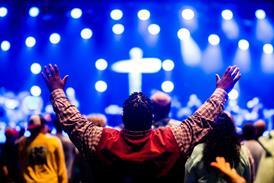





The list of people willing to help with refreshments, children’s work or leading worship is a beautiful image of the body of Christ, says Chine McDonald
Recently, I dropped the ball yet again on the church rota. The feeling might be familiar to many readers of this magazine: between juggling responsibilities at work, home and church, I belatedly realised that I could not, in fact, lead the service that coming Sunday because I was due to be elsewhere. My church family were gracious as ever, and we shuffled the dates to cover for my diary error.
But it got me thinking. Churches simply cannot function without rotas. That applies to both the practicalities of creating the rota – often done by those with the gift of administration – but also the essence of what rotas are. A rota is more than a spreadsheet that simply tells us who is doing what, when and where. The beauty is found in its why.
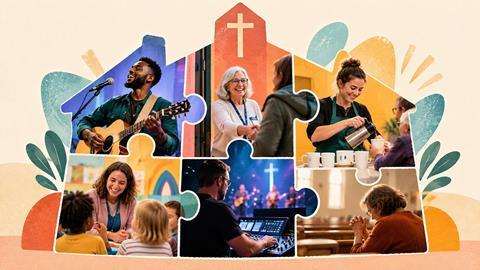
For me, the rota is a symbol of the beauty of the body of Christ. It represents a body that is interdependent – each member playing its part, bringing their gifts, skills, talents and offerings. For some, this is serving tea and coffee; some are gifted with the welcoming smile that greets churchgoers at the door. For others, it’s the technical wizardry of the sound desk, or the patience of saints, found only in children’s workers. Some are up front and others are praying at the back. This is how we are supposed to be. Church should be a place where no gift is too small and no act of service goes unnoticed. 1 Corinthians 12 goes further: in the kingdom of God, it is the parts of the body considered ‘less’ that receive special recognition.
Church should be a place where no gift is too small and no act of service goes unnoticed
In a world of increasing individualism, this is both a gift that the Church can offer the world, and an example of what it is to be human. We need each other when life is going well, but perhaps even more so when it is not: when we are experiencing relationship breakdown, financial woes or physical illnesses. In the churches I’ve been part of, people selflessly show up to fulfil their responsibilities, even in the midst of the tumult of life.
It’s worth noting that, at times, this sense of duty can put undue pressure on people, and some churches ask too much of the few. The rota must not be a tool of exploitation but a place where people open-handedly offer what they can, with a sense of responsibility rather than burden.
In our consumerist culture, a community of mutuality and interdependence is countercultural. Rather than conforming to the pattern of the world (which pushes us towards the myth of self-sufficiency), the Church models that to be human is to both need others and be needed by them. The rota is a small and radical embodiment of this reality: as a community of churchgoers, we are not simply consumers coming to receive a religious experience but participants in the body of Christ. Church doesn’t just meet our needs but is also a place where we can offer to meet others’.
Everyone has a part to play in the family of God. And when one of us drops the ball (as I did recently), the beauty lies in others being ready to pick it up.

























No comments yet