
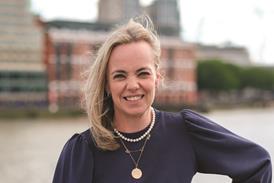




Dealing with racism isn’t a secular concern, says Chine McDonald. This Black History Month, she’s praying that Jesus-followers remember we’re all made in God’s image
It was 2010, and I was among 2,000 others gathered at Friends House in London to hear Rev Al Sharpton speak. The civil rights campaigner, social justice activist and Baptist minister, who spent much of his career working alongside Rev Jesse Jackson, was in the UK for an Operation Black Vote event, to mobilise the UK’s Black Christian community to participate in the upcoming general election.
It was a formative experience for me. So often, we’re told that religion and politics shouldn’t mix but, at that event, I was reminded that they do – and must. Much of my career has been defined by a desire to see the vision of human flourishing found in scripture made manifest in our politics and common life. But that rally made visible the reality that, for many Black people, our daily lives, politics and histories are intertwined with what Christianity says about who we are and how we should live together.
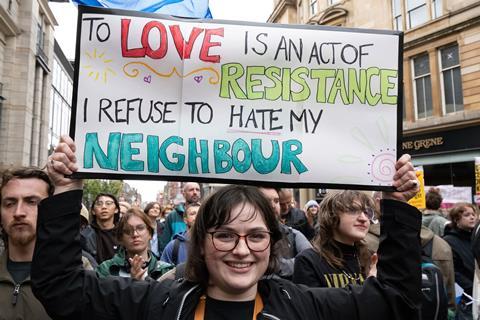
Now, 16 years after that event, racial justice is increasingly coded as a secular concern: part of the alphabet soup of Diversity, Equality and Inclusion (DEI), wokeness and progressive politics – from which some Christians believe the Church should disentangle itself completely.
For many Black people, our daily lives, politics and histories are intertwined with what Christianity says about who we are
This Black History Month, many of us are mourning how far the Church has regressed when it comes to issues of race. Five years ago, following the death of George Floyd, it felt like there was a genuine appetite for dealing with the centuries-long problem of racism in the Church. It felt like a reckoning. Today, the climate is very different. There is challenge against so-called ‘DEI hires’, and Christianity is being used as a shield for ethno-nationalist sentiment. In the public consciousness, it is often associated with exclusion rather than inclusion.
Lurking within this rhetoric is the idea that those who want a more equal world are ‘woke’ – and that wokeness is not of God. What such views fail to recognise – perhaps disingenuously – is that so called ‘wokeness’ is often the product of a deeply considered outworking of Christian theology.
For me, this is most tangible in the ways the Black Church in the US and the UK have developed a profound understanding of the imago Dei – what it means to be human – because of their reading of scripture, not in spite of it. It is not incidental that many civil rights leaders were also theologians, ministers and preachers. More than just providing inspirational quotes that make us feel better, people like Rev Dr Martin Luther King Jr, abolitionist Olaudah Equiano and Rev Jesse Jackson had a profoundly countercultural vision of the kingdom of God that held deep political and societal implications.
This Black History Month, many of us are exhausted. It does not have the celebratory feel that it once did. It doesn’t feel like the arc of the universe is bending towards justice. But my prayer is that Christians don’t simply learn Black history or pay lip service to it. Rather, I pray we remember that much of the history we have labelled ‘woke’ was Christian history all along.
























No comments yet