











In an always-on world, our capacity to dream can easily become dulled. Al Gordon shares five simple habits that can awaken your imagination and help you rediscover a sense of wonder
Her voice quivers with emotion. Her tear-streaked cheeks are crisscrossed with anxiety. Barely 25, she seems too young to be grappling with something so existential. But like so many today, she’s facing a crisis no one could have predicted at the turn of the millennium. Despite being highly educated, talented, hard-working and outwardly successful, something in her soul has reached a breaking point. Frustration has simmered to desperation, and now she can no longer contain it. The words spill out of her – part confession, part cry for help: “It’s my imagination. It’s gone. I’ve forgotten how to dream. I can’t hear myself think anymore. And it’s killing me.”
This crisis of creative confidence is something I encounter with alarming frequency – a quiet malaise sweeping through the minds of so many people I meet in our ever-connected, never-dreaming world. It does not show up in CT scans or blood tests. It’s difficult to diagnose and hard to name. Yet we can trace its shape through the silent psychological toll it takes on our lives. The great thinker Karl Barth saw this crisis coming and warned prophetically that we must “resist to the very last the peculiar habit of the modern Western mind that itself suffers above all from a chronic lack of imagination”.
There is an urgency to all of this, because without imagination, nothing new is possible. Every breakthrough, invention, story and song that has shaped our human experience flowed first from the imagination. Imagination is the place where nothing is impossible. It is the strings on which faith plays its symphony, the gentle melodic landscape where all things become possible. Your imagination is the deep water from which your heart and soul drink. If you want to solve a problem, create something new, change the world or move the human heart, there is only one place to begin: this wonderland of imagination, this world of unlimited possibility.
By allowing yourself space to encounter God, you are giving your creative soul permission to dream
So how do we find our way back to wonderland? How do we hack a system that feels so stacked against us? How do we make space in a noisy world for the sweet music of the imagination to sing? We’re going to explore five hacks that will spark the power of your creative imagination that anyone can learn to build into their rhythm. Because creativity isn’t just a gift; it’s a muscle. And like any muscle, it needs to be stretched, strengthened and awakened. You either use it or you lose it.
1. Pause

Mozart leans wearily on the window frame, yawning. The journey has been long, with spring snow leaving the road rutted in places. The frustratingly slow pace is an enforced pause in the hectic life of this celebrated young composer. It’s his second day of travelling. No piano to play, no quill and ink, no orchestra to conduct – just the rocking of the carriage, the rhythmic thud of the horses’ hooves, the rising and falling of the forests and fields. He is beyond bored. Stuck in his carriage, unable to do anything, his mind begins to wander. As the carriage rumbles through the landscape, something begins to spark. Perhaps it was the sound of the hooves, the relentless: Duh-dum-duh-duh-dum. Duh-dum-duh-duh-dum.
Mozart finds himself entering the wonderland of the imagination. Gradually, notes begin to dance in his mind. Melodies and harmonies weave together in his subconscious as phrases start to form in his imagination.
So often the most innovative breakthroughs don’t come when we’re straining to force creativity, but when we allow our minds the space to declutter, dream and wander. Rest is the root of revelation. In an always-on, overstimulated world, boredom is a gift.
God is the original dreamer, the creator of all things. Humanity has always looked back at His creativity as the origin and source of all innovation. But in those first pages of the creation story, we find something deeply significant: Rest is built into the process. The first thing God did when His work of creation was complete was to stop and rest. Genesis tells us: “Then God blessed the seventh day and made it holy, because on it he rested from all the work of creating that he had done” (Genesis 2:3).
Rest is not an afterthought. It’s part of the creative rhythm. There, in the original act of creation, God Himself built into His own creative process the priority of pausing. In the same way, we are hardwired to do our best imagining when we operate from a place of rest. If we want to create from a place of deep inspiration, the starting point isn’t striving; it’s stopping.
Slow down. Unplug. Pause.
So, take a walk, run a bath, have a nap, make a cup of coffee, or stare out the window. This may not come naturally, especially if you struggle to sit still or have bought into the myth that true productivity means relentless activity. But resist the urge to fill every moment. Instead, take a trip to your imagination. You never know what might be waiting for you.
2. Pray

CS Lewis was not the praying type. Belief in God wasn’t part of his internal world. He would later describe himself as the most “reluctant convert in all England”. But for Lewis, the ‘Aha!’ moment came while reading the works of writer George MacDonald. Something in MacDonald’s words stirred him not just intellectually but imaginatively. In his autobiographical work Surprised by Joy (Collins), Lewis described this awakening as nothing less than a baptism of the imagination – a moment when something deeper was unlocked, drawing him towards a truth he had long resisted: “That night my imagination was, in a certain sense, baptised; the rest of me, not unnaturally, took longer.”
Purpose is the rocket fuel of the imagination
For Lewis, this moment was more than an intellectual shift, it was a spiritual awakening of the imagination. Alongside his friend and fellow author JRR Tolkien, he would go on to shape worlds and stories that carried the redemptive power of imagination at their core. The world of Narnia, the epic landscapes of The Lord of the Rings (HarperCollins) and many other tales that have inspired generations can all trace their genesis back to this spiritual connection where imagination and faith merged.
An awareness of God has shaped the experience of countless creatives, from Michelangelo, who “took great pleasure from the Holy Scriptures” to musician Pharrell Williams, who, when asked by producer Rick Rubin: “What do you do outside of your creative life that has the most impact on your creative life?”, replied: “Pray!” By allowing yourself space to encounter God on a regular basis, you are giving your creative soul permission to dream. And there is nothing more powerful for your imagination than that.
3. Play

When we were children, our imaginations joyfully ruled the world. We didn’t need to be taught creativity, expression or how to dream – it all came naturally. Original ideas poured out of us in a great stream of laughter, make-believe, adventure and storytelling. We cared a little less and played a lot more. All things were possible. An old cardboard box became a fort. A few LEGO blocks, a spaceship. A simple toy, the hero of a grand adventure unfolding in our minds. Play was as natural to us as breathing.
But then, like Wendy in Peter Pan (Macmillan), we grew up and forgot the way to the Neverland of our imaginations. We forgot to fly. We forgot to dream. We forgot that play unlocked a world where all things were possible. Pablo Picasso put it like this: “Every child is an artist. The problem is how to remain an artist once we grow up.” Gradually, the realm of imagination slipped into the distance, hidden beyond the horizon of our lives by clouds of busyness, responsibility, pressures and concerns. Our mature, time-poor, sensible, vexed, educated and overstimulated souls became, well…old.
Do you remember the way to Narnia? It was little Lucy Pevensie, escaping from her brothers and sisters during a game of hide-and-seek, who pushed through the coats and stumbled into a whole new world on the other side of the wardrobe. Her playful curiosity was the key that unlocked a new reality. Worlds and wonders are waiting for us on the other side of our curiosity. Sometimes all we need to do is playfully push through the layers of grown-up concern we’ve wrapped ourselves in. Biochemist and writer Isaac Asimov made a powerful point: “The most exciting phrase to hear in science, the one that heralds new discoveries, is not ‘Eureka!’ but ‘That’s funny.’”
Creativity is a profession for a few - but a purpose for all of us
Play joyfully. Laugh deeply. Bring your curiosity. Pay attention to the odd and amusing. Pick at the frayed seams and loose stitches of your world, because beneath that fragile hem may lie a world of wonder.
4. People

Giant sequoias are some of the most extraordinary organisms on earth. These trees are among the oldest living things, with some surpassing 3,000 years in age. They are also the tallest trees on the planet, growing to more than the height of the Statue of Liberty. Standing at the base of their 6-metre-wide trunks is like standing next to a 25-storey skyscraper made of living wood. And that’s just what’s above the ground. What’s below the surface is even more remarkable. For a tree that tall, you’d expect deep roots but, surprisingly, the roots of a sequoia only reach about 8 to 12ft – extraordinarily shallow for a tree of such massive scale.
So how do these towering structures remain upright for millennia – enduring earthquakes, fires and storms? The secret is simple: They don’t do it alone. These trees only survive where their root systems intertwine with those of their neighbours, creating an unbreakable network of support. They anchor one another, providing the stability needed to endure across centuries. We, too, survive longer when we stand united. We grow taller when we share the sunlight and oxygen of encouragement. And we thrive when our creativity is strengthened by community.
Our creative interdependency should not come as a surprise to us because God is not a solo artist. The creator exists in relationship – a divine community of love and commitment within Father, Son and Holy Spirit. Heavenly creativity flows from this relationship. This is what Eastern Orthodox theologians describe as perichoresis – a dance at the heart of God in which Father, Son and Spirit exist in perfect harmony, co-creating, co-existing and moving together in love.
Who are your people? Who are the voices that sharpen your imagination? Who can you turn to when the storms come? How can you surround yourself with friends who will call you higher?
Build your creativity in relationship. Be “rooted and established in love” (Ephesians 3:17), and you’ll find yourself growing in ways you never could have imagined.
5. Purpose
Just as a plant naturally grows toward its source of energy – light – our imaginations are drawn towards whatever we have fixed our hearts upon. Meaning is the magnet that propels creativity forward. So, our fifth hack is to continually refine our sense of purpose, to ask ourselves: “What’s really driving me? What gets me out of bed in the morning? What makes me tick?” Because when our imaginations are aligned with our deepest sense of meaning and purpose, they don’t just create; they come to life.
Purpose is the rocket fuel of the imagination.
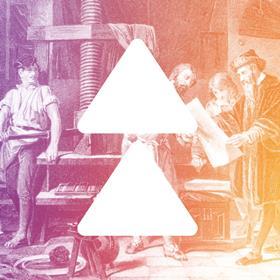
Johannes Gutenberg was a German goldsmith and inventor but, more than that, he was a man of deep faith. His desire was simple yet radical – that people might experience God’s love personally. In Gutenberg’s day, access to the Bible was controlled by the religious elites who dictated who could understand the scriptures.
Gutenberg had a vision: What if everyone could access the scriptures for themselves, in their own language? What if people were free to experience a direct relationship with Jesus Christ? This longing ignited his imagination and gave him a driving sense of purpose.
Now, what’s often missed – given the seismic impact of Gutenberg’s invention – is just how crucial his sense of purpose was in motivating his imagination. Listen to how Gutenberg described what, until this point, had only existed in his imagination: “Yes, it is a press, certainly, but a press from which shall flow in inexhaustible streams, the most abundant and most marvellous liquor that has ever flowed to relieve the thirst of men! Through it, God will spread His word. A spring of truth shall flow from it: like a new star it shall scatter the darkness of ignorance and cause a light heretofore unknown to shine amongst men.”
Creativity is a profession for a few – but a purpose for all of us. There is something inherently good about creating. It’s striking that when God created the world, He chose to define that creative act as “good” (see Genesis 1). So, when you focus your creative energy on life, love and hope, it is like connecting to the electricity grid – you turbocharge your imagination with heavenly power. The apostle Paul encouraged us towards this purpose when he wrote: “Whatever is true, whatever is noble, whatever is right, whatever is pure, whatever is lovely, whatever is admirable – if anything is excellent or praiseworthy – think about such things” (Philippians 4:8).
Welcome to wonderland
When we build these hacks into our creative and spiritual rhythm, we begin to remember how to dream again. We wake up from the stupor we’ve been lulled into. The creative adrenaline courses through the veins of our souls once more.
So here’s to embracing boredom and pressing pause, learning to step back and see with fresh eyes. Let me invite you to retrace your steps back to the garden of your creativity, where all things become new again. Here you will recover the joy of childlike play and break your imagination out of the prison of rigid rules. Here you’ll make space to prayerfully renew your spiritual connection and fuel the creative fire that ignites your sense of purpose. Here is where you’ll find the spark from heaven that will set your imagination ablaze.
Welcome home to wonderland.
This article has been adapted from Spark by Al Gordon (Zondervan Reflective) and is used with permission. For a chance to WIN a free copy of Al’s book, complete our survey here





















No comments yet