




Veronica Zundel reflects on mortality, memory and the question of what remains after we die
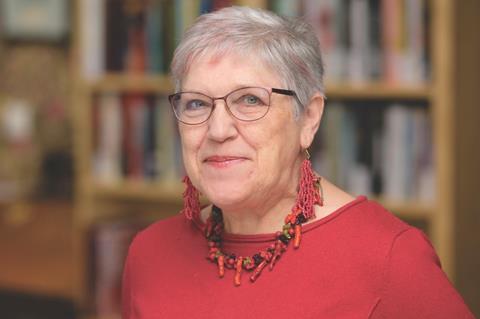
It may be the gloom of gathering autumn after the excessively summery summer we’ve had, or the fact that Hubby and I have recently revised our wills. Maybe it’s that we’re trying to offload on some unsuspecting theology library a large number of books on missionary history of which, for some reason, we’ve been in possession since their owner died 25 years ago.
It might also be my volunteering at the local Oxfam bookshop, where I often have to sort through a dusty collection of hardbacks on second world war military history or Scottish trains, obviously donated by grieving relatives.
Any of these could have turned my thoughts to mortality and, in particular, to the thorny question of not what happens after death, but of what we leave behind.
All nine books I have written or edited are now out of print, and though I have large boxes of some in my dining room, I don’t get much demand for them now. And since being put on a mood stabiliser I seem to be unable to write poetry anymore or at least am going through a fallow period. So, what will remain when I am gone?
In the (potentially) few years that I have left, can I achieve my long-held goal of writing something people will still read after I’m dead?
‘Heritage’ has been an important word in my spiritual life over the last decade or so. The children of Holocaust survivors and refugees have a complex and problematic heritage. In many Holocaust families, one person in the second generation becomes the ‘memorial candle’, the one who researches the family tree, searches for lost relatives, keeps the anniversaries and carries the pain their parents may not have been able to acknowledge. As I am the only one left of my family, that role has fallen to me, partly by default and partly by choice.
Perhaps what we inherit is blessing, not just trauma
The Psalms, however, speak often of the “goodly heritage” (Psalm 16:6, RSV) that God has given the psalmist, or of the heritage of the blameless which will “abide for ever” (Psalm 37:27, RSV). Perhaps what we inherit is blessing, not just trauma; in my case the cultural riches of the European Jewish community, its humour and its loving embrace. And perhaps what we leave behind is not just oblivion, but the little things we have entirely forgotten but others remember.
Now and then I get a message on Facebook from someone I barely know saying: “I’ve never forgotten what you said in 1980-something, it has stayed with me”, then quoting something I have absolutely no memory of saying.
Maya Angelou said: “I’ve learned that people will forget what you said, people will forget what you did, but people will never forget how you made them feel.” Perhaps that’s enough to leave behind.




















No comments yet