












Secularism has failed to deliver on its promises, says Alister McGrath. Now is the time to explain how Christianity offers stability in a volatile world
Why is there growing interest in Christianity, especially among young people?
While it’s hard to figure out what is going on, I and many others have noticed a change in the cultural mood.
Twenty years ago, the questions I was asked about Christianity by young people were shaped by the New Atheism of Richard Dawkins. How can a thinking person possibly be a Christian? Isn’t faith a dangerous delusion for the intellectually inadequate?
A changed cultural mood
I have recently retired. During the final ten years of my career as a theology professor at the University of Oxford, I was visited by many young people. They had read my books and wanted to talk about Christianity. They thought I might help them with their questions. And so they came – men and women from Europe, the United States and China. And they had questions – but not the ones I was expecting. Instead of challenging me about whether God exists or if the resurrection really happened, they wanted to understand how Christianity helped people to find meaning: How does faith bring me stability and security? They sensed that Christianity offered a deeper and richer vision of life than secularism. But they wanted me to explain more.
Some of these people had been attracted to New Atheism during their teenage years but now found this worldview vacuous and unfulfilling. Others were secularists struggling with the bleakness of their beliefs and wondering if they had dismissed Christianity too soon. And some were Christians who felt they had only skimmed the surface of their faith and wanted to deepen their understanding. They reasoned that, if Christianity has lasted for 2,000 years, it must have something important to say – but they weren’t sure what it was.
Secular worldviews are shifting sands – unstable and incapable of withstanding the storms of life
In our conversations, I helped them to rethink Christianity – above all, to realise that it is both truthful and transformative. Yes, it is based on a trustworthy set of beliefs – such as the existence of a creator God, the evidence for Christ’s death and resurrection, and Christ’s atoning death on the cross. But it is about far more than that. These beliefs help us to find meaning, purpose and value in life today.
This aspect of the Christian faith has been generally overlooked in the mainstream media coverage of gen Z’s new interest in Christianity. We have been bombarded with sociological and psychological explanations, yet this new openness to the gospel ultimately rests on theology not sociology. Christianity is transformative – it tells a truth about God and ourselves that sets us free from illusions and offers us grace to begin a new life that breaks free from the delusions of our age. It gives us a new identity and significance.
And the change in the cultural mood has foregrounded this important yet so easily neglected aspect of the Christian faith.
The new quest for security and stability
A major concern for many of my student visitors was that the world around them was changing, quickly and unpredictably. Worldviews that were fashionable a decade ago – such as New Atheism – were simply discarded, thrown away as yesterday’s junk beliefs. What they had been told was safe and secure turned out to be a house of cards. These people sensed that Christianity was tapping into something deep and significant. Some of them knew Christ’s parable of the house built on solid rock (Matthew 7:24-27). They now realised that secular worldviews were shifting sands – unstable and incapable of withstanding the storms of life.
Yet many of my visitors thought of Christian truth in purely rational terms. “I believe in God” means “I believe that there is a God”. I explored with them how Christianity was truthful – and yet that this truth was about far more than a set of beliefs. I had learned the importance of this question in debating New Atheist thinkers back in the late 2000s. I still receive letters from people telling me how important my responses were in supporting them during this period.
But there was a problem with my defence of Christianity against Dawkins and others. Let me explain.
A colleague pointed out that New Atheist writers wanted to depict Christianity simply as a set of pointless beliefs which were completely irrelevant to real life. I had limited my discussion of Christianity to defending its beliefs but had failed to explain why it connected so deeply with humanity’s deepest concerns and longings.
The truth about humanity is that we need God if we are to flourish. That point was made back in the fifth century by the Christian writer Augustine of Hippo, who argued that the Christian doctrines of creation and redemption show us both that we need God, and help us to understand the transformative impact of His presence in our lives. Augustine put it like this in a well-known prayer: “You have made us for yourself, and our hearts are restless until they find rest in you.”
Christians must rise to the challenge of showing how their faith is able to offer meaning in a culture that has lost its way
After much reflection, I realised that I had told only part of the truth about God and failed to bring out the utterly transformative impact of the presence of God in our redeemed lives. In defending the rational truth of the Christian faith, I had failed to connect this with realities of the human situation, or explore the difference that faith makes in real life.
I had limited my defence of Christianity to its rationality. Yet my Oxford visitors were now asking me to explain how the gospel brings meaning to their lives. These conversations opened my eyes to the need to rethink Christianity – to make sure I had grasped its full relevance to the human situation.
It seems to me that in many parts of the West, Christianity is facing an existential challenge, not because of external threats but its own failure to fully appreciate its own strengths and distinctive wisdom. Christians need to rediscover a vision of Christianity as a truthful, trustworthy and transformative way of thinking and living that enables people to flourish within this transient world of uncertainty and suffering.
Answering life’s deepest questions
The Harvard biologist EO Wilson offered a brilliant diagnosis of the vacuum at the heart of Western culture: “We are drowning in information, while starving for wisdom.” I used to be a scientist at Oxford, researching biomedical sciences. I love the sciences, they are brilliant at helping us to understand how our world works. But they have their limits. As Albert Einstein pointed out, they can’t help us figure out what is good or evil, or tell us the meaning of life. Yet Christianity is able to offer us a rich vision of morality and meaning, going beyond (but not against) science.
The late chief rabbi, Lord Jonathan Sacks, made this point clearly and concisely: “Science takes things apart to see how they work. Religion puts things together to see what they mean.” We need this deeper account of reality. Science can’t provide it (and that is no criticism of science), so Christians must rise to the challenge of showing how their rich faith is able to offer meaning and wisdom in a culture that seems to have lost its way.
Christianity is both truthful and transformative
A classic theme of Christian apologetics is to show that Christianity is evidentially and rationally true. That remains important. Writers such as GK Chesterton, CS Lewis and others both reassure us that this is the case, and help persuade others as well. But as Tim Keller rightly points out, we need to be able to connect these truths with its impact on those around us. How does this truth impact upon their lives?
Everyday Christians and preachers can make a significant difference to the people they are engaging through talking about the ways in which Christianity changed them – for example, in the breaking of bad habits, the redirection of their lives, finding hope in the midst of uncertainty, or realising that they really mattered to God. Each of us has a story to tell! And that story is not simply about our own transformation – it’s an affirmation that others have yet to discover the capacity of the gospel to change, renew and redirect their lives.
We live in a remarkable cultural moment in which many people are looking for a stable and reliable foundation. They are disillusioned with the quick fixes of secularism and are frightened by the rapid cultural change we see around us. They are looking for a secure base; a solid rock on which they can build their lives. And that opens up new possibilities for Christians to explain and commend their faith. It’s not enough to reassure our friends that Christianity is true. We need to explore its transformative potential with them, and witness to its power to renew, as seen in our own lives. Christianity is both truthful and transformative.
Everything new
Christianity is a transformative vision of reality – a new way of seeing ourselves and our world – that radically changes our understanding of our existence and opens up a rich and meaningful way of life. This is not a new idea; it is, however, an idea whose time seems to have come in this cultural moment.
People are looking for meaning and significance – and they aren’t finding good answers from secular culture. They want to know what Christianity has to say about these issues, and we need to be able to answer their questions.
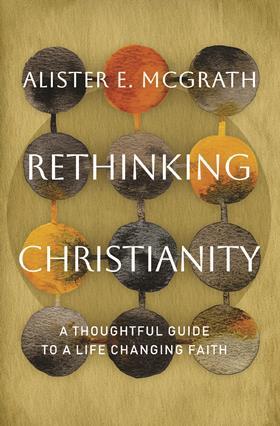
That’s why I wrote Rethinking Christianity (HarperCollins) as a response to the questions I was asked by my Oxford visitors, as they tried to grasp the deep appeal of Christianity. Our conversations helped me craft new answers to old questions. In this book, I open up the ways of explaining and exploring Christianity that my visitors clearly found helpful, in the hope that they may help you as well.
Christianity tells a truth about God and ourselves that sets us free from the delusions of our age
So how can we do this? Let me make some suggestions. One of the great themes of the New Testament is that Christ is our saviour, someone who transforms the human situation. It’s one thing to be told we are ill; it’s another to be healed. Christ both diagnoses the human situation (sin) and brings about its transformation (salvation). This theme is often echoed in popular Christian writings, such as John Newton’s well-known hymn ‘The good physician’: “How lost was my condition / Till Jesus made me whole / There is but one Physician / Can cure a sin-sick soul”.
The Christian faith sets out a rich vision of the scope of human transformation. The message of salvation in the New Testament was conveyed using language and imagery that were easily understood by ordinary people at that time. This allowed new converts to understand and put into words the basic features of their transformative encounter with Christ.
They had been ransomed – delivered from captivity to sin through the death of Christ. They were being healed by the grace of God, like patients under the care of a caring and competent physician. They were justified – set in a right relationship and finding acceptance with God. They were cleansed of impurities and sin. Each of these images of salvation asserts the reality of the transformation of believers through Christ and illuminates its many aspects, helping us to grasp the difference that Christianity makes to life – not least in the new way of life that it makes possible.
And that’s where we come in. Each of us can tell how the gospel has changed our situation. Many think that witnessing is about offering arguments in support of Christian truth. That’s an important part of the picture. But we also need to witness to the power of the gospel to transform us – to heal us, forgive us and bring us home to God. And many who might find it difficult to talk about the intellectual aspects of faith can speak meaningfully and powerfully of the difference that faith makes to their lives. How does Jesus bring you peace, stability and security? That’s what many people want to know. There is much that can be said – and each of us has something vital to offer those looking for meaning and purpose today.
Rethinking Christianity by Alister McGrath (Harper Collins) is out next month
Hear more from Alister on the weekly C.S. Lewis podcast from Premier
























No comments yet