











Common objections to Christianity are undergoing a dramatic transformation. Today’s seekers are less bothered by science or suffering and far more interested in whether faith can be trusted with their lives. A new approach is needed, says Rio Summers. The old apologetic playbook is starting to feel out of date

Something has shifted.
For years, our headlines stated: Christianity is fading, belief is outdated, and secularism has won…especially among the younger generations. But that story doesn’t quite fit the moment we’re in.
Interest in Christianity is stirring again. Bible sales are rising. Churches are reporting curious newcomers rather than committed sceptics. Public figures who once dismissed Christian faith are now speaking seriously about scripture, tradition, morality, and meaning.
For many, this ‘return’ isn’t about nostalgia or ideology; it’s about a search — searching for something that can make sense of, and hold together, a fragile world.
This raises a simple but important question: what are people actually looking for when they turn toward Christianity today?
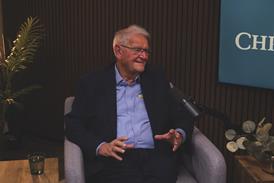
A version of this question surfaced recently in Premier Unbelievable?’s roundtable conversation among Christian thinkers reflecting on how apologetics is evolving in a post–New Atheist landscape. What emerged there echoes what many are sensing more broadly.
The questions have changed.
For much of the past two decades, apologetics, the practice of offering reasoned answers for Christian belief, was shaped by a very particular dynamic. During the height of the New Atheist movement, Christianity was often treated as a problem to be disproved.
Apologetics responded accordingly, committed to offering reason, credibility and proof to popular questions including, has science disproved God? Is faith rational? Does religion do more harm than good? How could a good God allow suffering?
Those questions mattered. And still do. But for many seekers today, including a growing number of Gen Z, they are no longer the starting point.
Today, people are arriving with very different kinds of questions that are less combative and more personal:
- Is life more than survival and self expression?
- Can love and commitment actually last?
- Is forgiveness real, and is it worth the cost?
- Does suffering mean nothing, or is it somehow held within a larger story arc?
These aren’t debate questions. They’re life questions.
And that marks a real shift. Many seekers today aren’t hostile, they’re wounded. They’re less interested in winning arguments and more interested in winning at life, and whether Christianity can be trusted with their lives.
Science hasn’t disappeared - it’s become a trust test
That doesn’t mean science no longer matters. It does, but differently.
For many people, science now functions as a credibility check rather than a starting line. They may not open by asking about evolution or cosmology, but they are still asking a quieter question: if I take Christianity seriously, do I have to switch my brain off?
And so, if faith sounds careless, outdated, or dismissive of what we know about the natural world, trust quietly erodes. And in a moment of renewed curiosity, that gap matters more than ever; especially for a generation raised on Google, YouTube explainers, and fast-moving scientific headlines.
Is apologetics stuck answering yesterday’s questions?
One recurring challenge in contemporary apologetics is repetition. It can sometimes feel as though the discipline is answering questions people are no longer asking.
Fear often sits underneath this stagnation. When new complexity feels threatening, oversimplification feels safer. Yet in an online culture where confidence spreads faster than competence, that approach can backfire.
Younger seekers, especially Gen Z, are deeply alert to performance and so polished certainty without depth doesn’t persuade. In fact it repels.
What builds credibility now isn’t having an answer for everything, but knowing which answers you don’t have, and being honest about that. It’s authentic, and authenticity builds trust.
Apologetics as accompaniment
What’s needed isn’t the abandonment of arguments, but rather it’s a shift in posture. Increasingly, apologetics looks less like constant defence and more like building trust - through intellectual humility, relational depth and the courage to say, “I don’t know.”
This reframes apologetics not only as a tool for persuading sceptics, but as a resource for equipping believers to live faithfully alongside others. In an age of spiritual searching and fragmented trust, many Christians will find themselves walking alongside friends, family members, and colleagues who are curious, cautious and carrying deep questions. Apologetics then, becomes a practice of faithful friendship.
C.S. Lewis once suggested that the most persuasive apologetics comes not from books defending Christianity, but from Christians living and working faithfully with their beliefs “latent.” In a culture quietly searching again, that insight feels newly relevant.
So perhaps this is the opportunity before us. If people are reconsidering Christianity, apologetics certainly isn’t obsolete. But it may need to sound less like debate and more like companionship. Not fewer answers, but answers shaped by doing life together. Not abandoning truth, but retelling it in ways that honour the questions people are actually carrying.
Today, the most persuasive apologetic may not be the sharpest argument, but the clearest signal that Christianity can bear the weight of real life. And for a generation like Gen Z, shaped by instability, overload, and fractured trust, that signal matters more than ever.






















3 Readers' comments