





Whether in the Church or in politics, trust is earned and every structure is only as strong as it’s weakest link, says Rev George Pitcher
Integrity is an aspirational virtue in public life. Political leaders claim it - and it’s customarily over-claimed on their behalf by their supporters. Nobody ever asks what it is – it’s just meant to suggest high-minded judgement, moral probity; someone you can trust with power.
In reality, if you want to know what integrity is really about, ask an engineer. Integrity is about the reliability of a structure. It’s about a body being only as strong as its weakest component. And it’s about the overall construction surviving safely if one part of it collapses catastrophically.
That’s why an engineer will speak of the integrity of a bridge or a plane’s airframe. It’s designed, built and tested to ensure that, within known bounds of probability, if one part fails, the whole will not; the bridge doesn’t collapse into the river, and the plane doesn’t crash to earth.
Hopes and fears
A person can possess that kind of integrity, too. They can be educated, mentally and physically fit, of sound judgement, with a functioning moral compass and a capacity for thoughtful and calm consideration before making a decision.
And, because they’re human and therefore will screw up, if one of these qualities fails, the others will carry them through the crisis - without those around them, and for whom they’re responsible, being harmed.
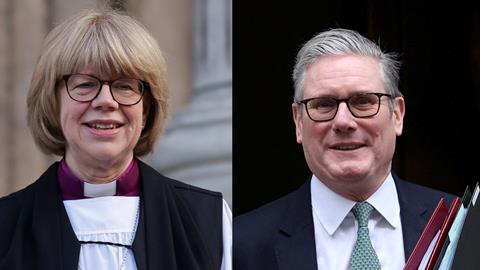
His friends claim that prime minister Sir Keir Starmer is such a person. I don’t doubt his moral fibre, but his judgement does appear to be dodgy. Whether the rest of his being can carry that weakness safely remains to be seen.
If it can’t, it’ll be that lack of judgement which brings the rest of him crashing to the ground like a damaged aircraft. That weakness - the lack of complete integrity of structure - will need to be replaced with more reliable and durable components of state.
To stretch the aeronautical metaphor to breaking point, the flock of birds that has flown into his engine are the dithering policy U-turns that culminated in the big one – his appointment of Peter Mandelson as ambassador to the US, when he knew him to be a friend of convicted paedophile, Jeffrey Epstein.
Trust is a by-product of integrity. It is also a commodity. Voters in an election, or stakeholders in an institution, invest their trust in a proposition. This is how leaders get their mandate. The currency of that investment is an individual’s hopes and fears for the future - and people expect a return. If they don’t receive one, they feel ripped off. They won’t fly on your plane or cross your bridge – or vote for your leadership - again.
A strong Church
It is the same in any kind of organisation, including the Church.
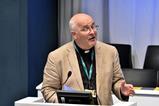
The Church of England has met this week at its winter General Synod in London. This is the nearest that our Church, established in law as cradling our national religion, gets to a parliament.
I used to attend these biannual talking shops, first to report on them for the Daily Telegraph, then as chief spin-doctor for Most Rev Rowan Williams, then Archbishop of Canterbury.
Being in the reformed tradition, the Church of England does get things done, though a tortoise racing a glacier may overtake it in the fast lane. Women were ordained priests in the 90s. Some from their number were consecrated bishops, and now we have a female Archbishop of Canterbury in Dame Sarah Mullally. So, it’s wrong to say that Synods change nothing.
But they do exude an air of nothing happening. Presidential speeches are delivered, hands are wrung and clapped, tears are shed and we return to our parishes. There’s always a feeling we have left undone those things we ought to have done.
Some may think such stasis does not matter much. It may even be seen as comforting and rather quaint, or reflective of a permanence that the Church embodies. But it does matter, because the Church is much diminished by its scandals, its indolence and its appearance of not seeming to care much about either.
Its members have invested their trust, in the currency of hopes and fears, and have seen little or no return on that investment. The Church has been in a bear market for far too long. We’re selling its stock short.
Our Church has lost its integrity. Failures of components – safeguarding the vulnerable from abuse, failing to address sexuality, abandoning parishes – are causing damage to the structure as a whole.
And until that integrity is addressed, the CofE will continue its descent.





















No comments yet