







To grasp the biggest issue facing the Church of England, the new Archbishop of Canterbury is going to need drive, determination and the resolve to do something radical, says Rev George Pitcher
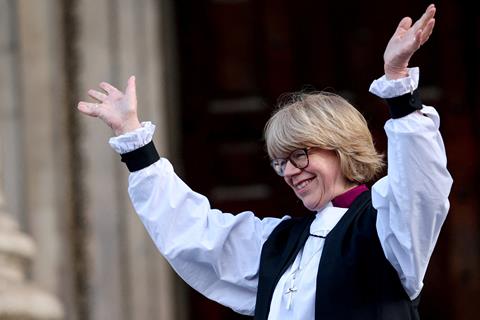
It’s perhaps a sign of the diminished status of the Church of England that the Court Circular of The Times found no room this week for the confirmation service of the new Archbishop of Canterbury, Dame Sarah Mullally, at St Paul’s Cathedral.
To be sure, this was a mainly ecclesiastical affair. She will be formally enthroned at Canterbury Cathedral on 25 March and that’s much more up the royal family’s park drive. It’ll be interesting to see who attends. The Prince and Princess of Wales have let it be known that faith isn’t really their thing, so it looks like a job for the Archbishop’s earthly boss and Defender of the Faith, King Charles, and his plus-one, Queen Camilla.
But this week’s ceremony is not insignificant. Mullally is now legally Archbishop, prima inter pares – the first time that’s been in the feminine adjectival declension – of the Church of England and Anglican Communion.
She won’t have long to sort through her in-tray at Lambeth Palace, though. General Synod, the Church’s parliament, starts the week after next week. The main agenda item, no matter how her courtiers will want to play it down, will be the parlous state of the Church’s position on sexuality. More specifically, whether same-sex couples can have stand-alone services of blessing (otherwise known as weddings) and whether gay clergy can be married.
Setting out the stall
That’s one hell of a nettle to grasp as a first challenge but grasp it Mullally must. On the morning that she took up her title, her team released a short video of what she had to say about it. She started by stating that she trusted in God, which is kind of the minimum entry requirement but fulfils the requirement for humility.
She then said she liked to work “in collaboration and in partnership” with people, which may be the same thing, then quoted Isaiah 43, saying that she knew she had been “called by name”. And that was more or less it. One longed to heckle (she had one in the cathedral, but it was too late): “What are you going to do about Living in Love and Faith, Archbishop? Is your safeguarding, er, safe? Can you hold the Anglican Communion together?”
Liberals can’t marry same-sex couples in church and conservatives are outraged at the prospect of blessing them there
Any sort of answer to these questions requires strong leadership, vision and purpose. Mullally has previously promised to lead with “calmness, consistency and compassion”, which doesn’t immediately sound like code for those former qualities. Nor does collaboration and partnership.
Instead, it all sounds a bit like the centralised managerialism and bureaucracy for which her predecessor, Justin Welby, was criticised and which, ultimately, did for him prematurely. But nobody expects her to say she’ll stick it to Synod and ride roughshod over its ditherers, so let’s judge her by her actions rather than words.
Radical revisions
We won’t have long to wait. The honeymoon ends at Synod next month. What would a triumph for her look like? Here’s a start (and it’s radical): Sort out the House of Bishops. Living in Love and Faith, the Welby-era project to solve the sexuality issues, has now come to an end - and got precisely nowhere.
Shamefully, the bishops kicked the can down the road yet again last autumn leaving the CofE in a place where no one is satisfied; liberals can’t marry same-sex couples in church and conservatives are outraged at the prospect of blessing them there.
The Archbishop could persuade the House of Bishops to withdraw from a doctrinal position at Synod and leave the issue to those at the sharp end of pastoral ministry: the clergy and laity.
The debate, properly shepherded, could lead to a place where gay unions in church are left to the discretion of local congregations and their priests. Provision from dioceses will be pastoral, not systemic. So, no separate, centralised structures for those who demur. Power to God’s people.
It’s a big ask. But no one said it was easy. Archbishop Mullally knows it isn’t. So, while she’s being consistent and collaborative, she also needs to tell her bishops which way is up.
Because nothing’s going to shift until everyone shifts. And so long as everyone has somewhere to go, all will be well (and yes, some may go to Rome). But, were she to pull it off, Mullally’s archiepiscopacy would go down as being historic for more than just being the first woman to hold it.






















2 Readers' comments