









A world champion father, a childhood shattered by addiction, and the pain of betrayal. Emma Fowle shares the remarkable story of how the radical love of a local church held her family together and ultimately led them all to Jesus
I was 13 years old when, in November 1990, my dad walked out on us for the first time.
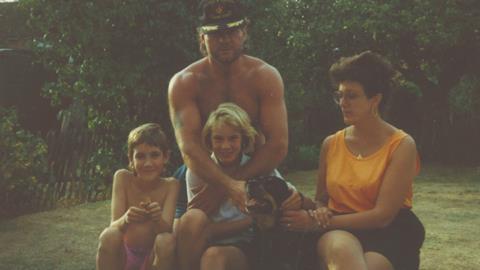
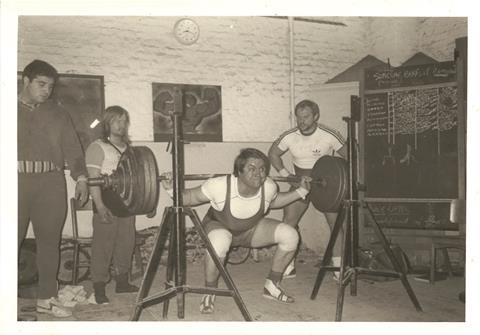
My parents had been teenage sweethearts and, up until that point, my home life had seemed happy and secure. Dad was a world champion powerlifter and owned his own building company. We had a holiday home in Spain and a red Escort XR3i on the drive.
Mine was an easy – if slightly unusual – childhood. Life largely revolved around Dad’s competitions and training schedules but, like the families of many elite athletes, we understood the sacrifices required to reach the upper echelons of sporting glory – and we were happy to make them. Dad was a seventeen and a half stone powerlifter who could lift more than three times his own bodyweight. He was the shining star around which we all orbited gladly. There was never any question of ‘my dad’s harder than your dad’ in the school playground. It was always my dad, and I loved him for it.
But beneath the surface, there was a problem brewing. We didn’t know it, but Dad had become addicted to steroids and cocaine. As well as building his body, the drugs muddled his mind; he started working as a nightclub bouncer, began an adulterous affair with a woman half his age and, just weeks before we were due to move house, left with his girlfriend and £35,000 in cash.
Dad had told Mum that the business was not doing well and we needed to downsize our home. We’d looked at numerous properties before he decided on the smallest one, promising my mum a large side extension and a great investment opportunity. In reality, the coke he’d been snorting had chewed through their finances, and he had plans for the extra cash that did not involve us.
When he failed to come home from work one day, contracts had been exchanged and mortgage documents signed. Mum did not know where Dad had gone, but we had no choice other than to move without him. It was the start of three tumultuous years, and I am not sure I would have survived it without my faith – and the love of a church congregation I barely knew.
A small safety net
A few years earlier, I had started attending church parade with my Brownie pack. Ours was not a religious household but soon, I began to bug Mum to take me to the little post-war Anglican church more often. I asked to be christened the following year for my ninth birthday. When I reached 13, I chose to be confirmed.
I knew that God was real, but it wasn’t until a friend invited me to a Youth for Christ weekend that I really understood what Jesus had done for me. Instead of an organ and choir, there were teenagers playing guitars and drums. The music was loud and the people were cool. I loved it.
When I came home, I started going to my friend’s evangelical church and attending their youth group, too. By some crazy miracle, for which I will be forever grateful to God, my youth leaders’ flat turned out to be just around the corner from our new house.
I am not sure I would have survived it without my faith
Phil and Marie-Anne were unlike anyone I knew. In their early 20s, they lived entirely by faith (a concept that was completely alien to me). They had an open-door policy and made themselves fully available to their young people practically 24-7. In the coming weeks and months, I landed on their doorstep with increasing regularity, straight off the school bus and seeking refuge from the chaos of my home life.
Each time, they’d sit me down, dry my tears and feed me biscuits, then ask if they could pray for my parents. As a new Christian, I barely knew whether I thought God could – or would – fix my parents’ marriage. I didn’t know how to pray, let alone whether I had the faith to do it properly. But I had nowhere else to be and no better ideas, so I stayed and we prayed. Their faith sustained mine and filled in the gaps where my own had not yet grown.
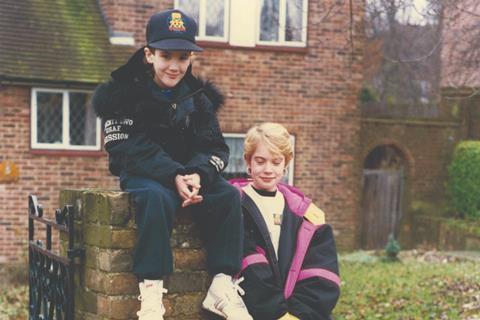
Just before Christmas, my dad came home. He arrived back in the UK without his girlfriend or any of the money he had left with. As he confessed the depth of his drug addiction, my mum tried to support him to get clean and get their marriage back on track. But it didn’t last. Just before New Year, he left us again.
Without my dad’s income, my mum had to return to full-time work. We’d always been fairly comfortable but now, she was struggling to pay the bills. Over the next two years, Dad came and went more times than any of us can remember. Each time he returned, his life had become more chaotic.
His new nocturnal life involved skirting around the edges of organised crime, working as an illegal debt collector and fighting for a living on the streets of east London. I didn’t recognise the man he had become or understand when my mum tried to excuse his actions. He wasn’t the man she’d married, she said. It was the drugs that had changed him.
It made little sense to my teenage brain.
A new family
Each week, Mum would drive me to church, but she refused to come in. I didn’t understand why – she’d taken me to our old Anglican church regularly; we’d even joined the choir for a while – but this new evangelical congregation was a step too far. She’d drop me off and walk round the green with my younger brother while I headed into the village hall to worship Jesus in a way that she couldn’t yet understand.
Then, one day, she changed her mind. I have no idea what made the difference that week; perhaps it was raining, or I wore her down with my persistent questioning. Perhaps she was simply curious about these people she did not know and with whom I spent so much time.
She walked through the doors of the church and made it halfway through the first song before running out again in floods of tears. It wasn’t the start that I’d hoped for. Nonetheless, the ladies in the congregation rallied to her side. One in particular took her hand, looked her hard in the eyes and said: “I feel like I have been crying for two years. I don’t know what you’re going through, but I know God has been there for me – and he’s here for you too.”
Through a million little miracles, Mum’s heart was softened towards Jesus
My mum had worried that she wouldn’t fit in at my new church – its pretty village setting and middle-class congregation were too far removed from the council estate she’d grown up on. These were respectable people – professors and accountants, osteopaths and housewives; our three-bed semi fitted onto the driveway of most of their houses. None of them would be able to relate to the world we lived in, with its East End wheeler dealers and knocked-off Naf Naf gear. And surely none of them, with their nice Christian lives, knew the depths of pain and disappointment and betrayal my mum was feeling. But they did. In that moment, those ladies broke through the barriers of her assumptions and misconceptions and showed her something true: love, friendship and support.
As my biological family fell apart, my new church family did what the Church should do when it functions at its best. It modelled to us God’s faithfulness, kindness and care. My friend’s parents became Mum’s friends too. We were invited to countless barbecues, movie nights, church socials and picnics on the green. Meals arrived on our doorstep unannounced. Money miraculously dropped through the letterbox just as a large bill arrived that Mum had no way of paying. Through a million little miracles, Mum’s heart was softened towards Jesus by the love of a bunch of people she assumed would not welcome her, but who did, unconditionally. It was beautiful to watch.
Starting over
Meanwhile, Dad was on his way to rock bottom. Steroids can make you feel invincible, but they can also cause depression, anxiety and paranoia, alongside a whole range of serious physical side effects. In the years that he was apart from us, my dad attempted to take his own life three times. He became increasingly immersed in a criminal underworld that was dangerous and violent. He oscillated wildly between begging for my mum’s forgiveness and trying to divorce her. It was confusing, heartbreaking and disorientating.
Eventually, one night in March 1993, my mum sat on her bedroom floor and gave up control. “I can’t fix him,” she told God. “I don’t know if you can either. But whether we get back together or remain apart, I want to follow you.”
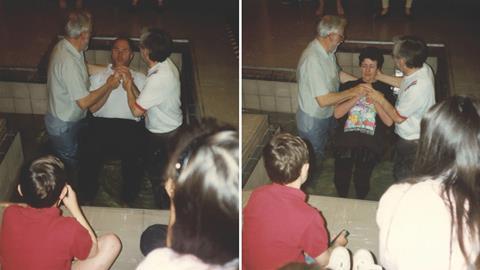
We didn’t realise until much later that, on that very same evening, my dad also gave his life to Christ, standing in the car park of Spitalfields fruit and veg market on the edge of east London. He took the diver’s knife strapped to his arm and threw it in a nearby skip. He went home and gave his stash of drugs to my nan and went cold turkey for the last time.
A few weeks earlier, he had landed on Vin’s doorstep. This gentle giant of a man had a big white beard and a Christian penchant for open-toed sandals. He was one of our church’s elders, yet if he was intimidated by a drug-addled world powerlifting champion who liked to beat people up for a living, Vin never showed it. Nor did he ever judge my dad. He simply told it straight: “You’ve got a choice, Arthur,” he said. “You choose God, you choose to be faithful to your wife, you choose to get clean and honour your family and live a good life. Or you choose to carry on down the path you’re headed.”
In the months that followed my dad’s conversion, Vin continued to meet faithfully with Dad every week. The boundaries were clear: the same time every week for one hour. If he missed it, it could not be rescheduled. Dad became reliable for the first time in years.
A protective shield
When my dad first announced his conversion to Christ, my mum was rightly sceptical. Over the previous two and a half years, he had promised her that he’d changed over and over again. Each time, she’d given him another chance – only to be let down. She’d reached the end of her tether. “Good for him,” she said when I told her. “He can go be a Christian somewhere else. He’s not coming to our church.”
Behind her hurt was actually a beautiful admission. The place she had initially been so suspicious of had become her refuge; the safe space where she was able to fall apart – and be held up by the friends she had found there. So, over the coming months, Dad went to the Anglican church on the high road instead. He was there alone, each and every Sunday. But slowly, as he stayed clean and sober, my parents began to talk again.
While we were away at Spring Harvest with our new church friends, Mum let Dad go over to our house to do some DIY jobs. One day, as I went to call my boyfriend from the payphones, Mum joined me. “I thought I might call your dad. See how he’s doing,” she said nonchalantly. I nodded, suppressing a smile and allowing myself to hope it might be the start of something.
It was.
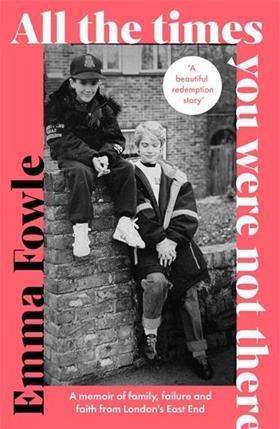
The full story of my parents’ eventual reconciliation is told in my new memoir All the Times You Were Not There (SPCK) but, in the summer of 1993, my dad moved back home for the last time. On the day of their 22nd wedding anniversary, they stood in front of our church congregation and made fresh vows to replace the ones my dad had so thoroughly trashed.
We went back to our house and celebrated as all good Essex East Enders do – with a massive house party. As the sun set and drinks were drunk, our new church family, actual family and old friends mingled together; worlds colliding in the most spectacular way.
What church can be
My story is just one picture of what church should be, can be and is, in so many places. Intergenerational. Intercultural. Cutting across class, socioeconomic status, interests and political allegiances. A place like no other – one that unites fully around the person of Jesus and leads us to love one another solely because “he first loved us” (1 John 4:19).
I can say without equivocation that the love my church family showed us saved us all. It built our faith. It was a safe place and a shelter in our storm. It was somewhere we could grow, where we learned the truth about who we were, who God wanted us to be and how he wanted us to live our lives. There was discipline and consistency. Friendship and challenge. Acceptance and instruction. Radical hospitality and deep, genuine concern.
They prayed and believed when we couldn’t. And I can’t thank them enough for the miracle that came from it.
All The Times You Were Not There by Emma Fowle (SPCK) is available now

























No comments yet