

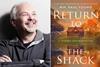
News that the bestselling author of What’s so Amazing About Grace? had committed adultery against his wife for eight years sent shockwaves through the Christian community. Does Philip Yancey’s moral failure render his work untouchable, and how might the grace he so famously wrote about be extended to his own situation?
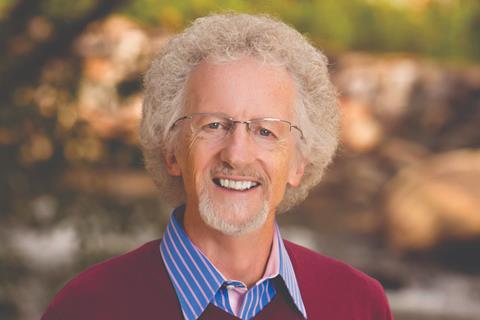
When Philip Yancey, 76, sent an email to Christianity Today (CT), the US magazine at which he worked for more than 30 years, few would have predicted its contents.
One of the most widely read evangelical authors of our time wrote: “To my great shame, I confess that for eight years I wilfully engaged in a sinful affair with a married woman.”
The affair “defied everything that I believe about marriage”, Yancey said, and was “totally inconsistent with my faith”. He added that he was “filled with remorse and repentance” and would immediately retire from Christian ministry, including writing, speaking engagements and posting on social media. Instead, he would submit himself to a counselling and accountability programme to rebuild trust and restore his marriage.
The email also contained a statement from his wife of 55 years, Janey Yancey, who wrote: “I am speaking from a place of trauma and devastation that only people who have lived through betrayal can understand. Yet I made a sacred and binding marriage vow 55½ years ago, and I will not break that promise. I accept and understand that God through Jesus has paid for and forgiven the sins of the world, including Philip’s. God grant me the grace to forgive also, despite my unfathomable trauma. Please pray for us.”
Disillusioned
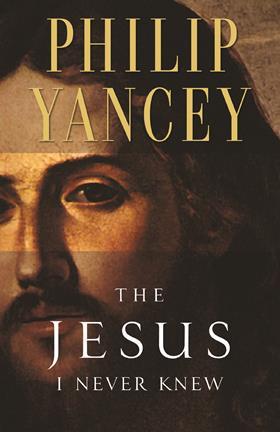
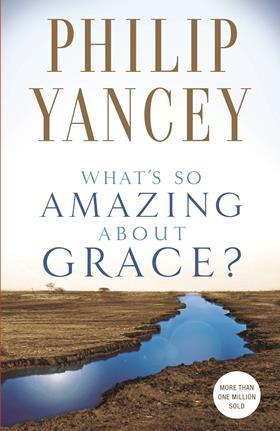
Yancey’s books, which include What’s So Amazing About Grace? and The Jesus I Never Knew, have sold more than 15 million copies and been translated into more than 50 languages. His eloquent explanations and grappling with tough topics such as doubt, suffering and prayer won him a loyal audience. Readers of this magazine have frequently cited Yancey as being among their all-time favourite Christian authors.
Yancey apologised profusely to his readers: “I have failed morally and spiritually, and I grieve over the devastation I have caused,” he wrote. “I realise that my actions will disillusion readers who have previously trusted in my writing.”
Questions remain
Many commentators reflected that as confessions and apologies go, Yancey’s was at least a good one. Premier Christianity editor Sam Hailes noted this stood “in stark contrast to the actions of too many other Christian leaders who have refused to own up to their sin, sought to minimise it, or even left their church in disgrace and simply moved a few hundred miles away and started again as if nothing happened”.
Yancey’s statement did not specify when the affair took place, and the author was clear he wouldn’t be revealing any more information “out of respect for the other family”. Speculation has abounded online concerning these details, with many wondering if he made the confession willingly, or whether he needed to get ahead of a story that was about to break.
Yancey has been living with Parkinson’s disease for the past two years and some have suggested his confession is only coming now that his professional career is drawing to a close. Yet Yancey had recently announced that a new book on writing was in progress and, prior to his confession, he had been scheduled to speak at a church in California. His name has since been removed from its speaker list.
Should we still read him?
It has been common for publishers to remove an author’s books from sale if they are caught in serious sin or scandal. For example, when the CEO of church planting movement Acts 29, Steve Timmis, was accused of ‘abusive leadership’ in 2020, his publisher, IVP, immediately pulled his books from sale. No such action has been taken with Yancey; HarperCollins Christian Publishing has confirmed to Premier Christianity that his books are still on sale.
Plenty of people are still keen to read his work. Blogger and pastor of Vanguard Church in Colorado Springs, Kelly Williams, wrote: “Yancey’s personal choices do not change the truth of what [he] wrote…I will continue to display [his books] and even refer to them as I continue to minister.”
Writing for Premier Woman Alive, a former commissioning editor at Yancey’s publisher, Amy Boucher Pye, shared a different viewpoint. “I think I won’t keep his books, sadly, and instead will see if I can find alternatives to recommend by authors who aren’t so well known. People of colour; women with stories to share who haven’t had the gift of the platform he enjoyed.”
I realise that my actions will disillusion readers who have previously trusted in my writing
Scandals involving Christian leaders have continued to be frequent in recent years, so the question of whether to carry on consuming their content is not new. In the same month that Yancey made his confession, a new website was set up to sell archive audio recordings of Ravi Zacharias’ sermons, despite widespread and confirmed allegations that the Christian apologist, who died in 2020, groomed and abused multiple women.
Responding to the question of whether Christians should still read Zacharias’ books, the host of many of Premier’s apologetics podcasts, Ruth Jackson, answered an overwhelming ‘no’. “Out of respect for the victims, it is not appropriate to continue providing a platform to someone who ruined countless lives”, she said, adding that it would be “grossly inappropriate to bankroll unrepentant fallen leaders who are still alive, or fund organisations that facilitated abuse”.
There are differences between Zacharias’ unconfessed abuse and Yancey’s repentant admission of adultery, and the question of whether to read Yancey’s books ultimately comes down to personal choice and conviction.
“What do we do with the books now? The passages we underlined, the chapters we pressed into the hands of struggling friends?” asks Australian author and theologian, Graham Joseph Hill. “Grace was always, by definition, for failures and hypocrites…And yet something feels different when the writer of grace books is revealed to have been living a lie. The words came from a divided heart, a compartmentalised life. They were true, but they were also, in some sense, a performance. That complexity is hard to hold.”














2 Readers' comments