



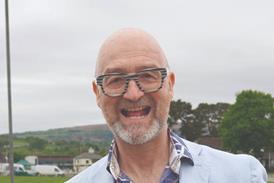

Beatrice Scudeler thought confirmation wasn’t for her. She explains how the Christian faith of her favourite author helped change her mind
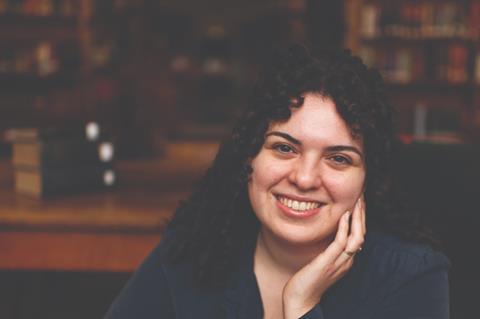
I grew up in a small town in Italy. Most people went to the Catholic church, even if they did not believe. But my parents were different. I guess you could describe them as hippies. We really only went to church at Easter and Christmas. When I said that I did not want to get confirmed, or attend RE lessons at school, they supported me. I was only twelve years old when I decided that I did not believe in God. I thought all the other kids were hypocrites – they were just going through confirmation for the parties and the presents. I wanted nothing to do with it.
When I was 16, we moved to the UK. I won a place at Durham University to read English literature. While I was there, I met a girl who became my best friend. She was a Northern Irish Protestant, so our religious backgrounds were as different as they could be.
One day, my friend asked if I wanted to go to church. I could have very easily said: “We’re friends. I love you, but I don’t really want to go to church with you.” But instead, I said “yes” pretty much immediately. It was a big, evangelical church, full of students, and I loved it. I went for about a year and a half.
A genuine faith
At the end of my second year, for some reason, I felt that I wanted to try the local Catholic church. It was a very beautiful experience. I had these beliefs from my childhood, which I had always associated with: This is constricting. This is hypocritical. The people who go to church don’t actually believe in God. But the students at that church in Durham showed me genuine faith.
Around the same time, I was studying Jane Austen, who is one of my favourite authors. I love her stories, the characters that she created and the moral and ethical issues that she explored through her writing. Then I found out that her father was a minister, and that she had a very devout faith. Growing up, I hadn’t really experienced that in real life, but I was seeing it in what I was reading.
I’m very moved by music, and the Catholic church had a wonderful choir. I’m not someone who likes talking about how I feel about faith - I’m much more comfortable explaining why I think it’s true – but I did have what I would consider a spiritual experience. I felt like I was in God’s presence, and that’s when I knew: OK, I think I need to properly commit to living my life differently. I made the choice that day that I wanted to have a relationship with God.
Looking back, I don’t think I ever truly stopped believing that God exists. I told myself that I did – and I think that’s many people’s experience. You always have a desire to believe that God is real. You can repress that desire, but it was there the whole time, under the surface.
The greatest story of all
The books that I loved predisposed me to come back to the Christian faith. If I hadn’t been reading stories that asked deep questions about what it means to be a good person, to live well in community with other people, to have faith, to have hope, to have these virtues that are clearly Christian, my friend could have invited me to church, and maybe I would have just said: “No, I’m not interested.” But the stories that really spoke to me had done the initial work. I was open to the idea of God.
Humans have always told stories about who we are in order to make sense of our existence. Realising that I did believe in God came from realising that no story other than Christianity fully makes sense. To exist without despair, it felt necessary to believe in the Christian story. Nothing else explained it in a way that wasn’t just horribly meaningless.
Fiction can really open your heart to the Christian story
CS Lewis famously said: “the story of Christ is simply a true myth”. Lewis taught literature, and when I started reading his work, something clicked. Fiction can really open your heart to the Christian story – which is the best story. I don’t mean that it’s objectively good or entertaining or compelling – which it is – but it’s also true. And deep down, there is something about it that we know feels true. As I was reading and thinking about these things, I realised: Oh, I’ve been looking for the Christian story in all the books I’ve been reading.
I finally got confirmed [into the Catholic church] in June 2019, right before I graduated.
A few years ago, I discovered that Jane Austen had written some prayers. They are preserved in two manuscripts; the second is partially in her hand. Sometimes, if I’m going through something difficult and I don’t feel like praying, I pray those prayers. Now, my friend jokes that I’m going to try to convert her to Catholicism, just like Tolkien tried to convert Lewis. But to begin with, it was the other way around. I was the one who didn’t believe, and she did.
Beatrice Scudeler was speaking to Emma Fowle

















No comments yet