






The backlash against Nicki Minaj shows that speaking out about your Christian faith is still a no-no in Hollywood, says Lois McLatchie-Miller. But record sales and public support show that ordinary people agree with her stance on religious persecution and traditional Christian ethics
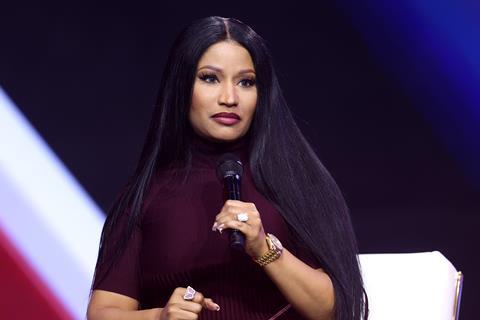
Nicki Minaj – the star known as “the Queen of Rap” - has fallen decisively out of favour in Hollywood recently. Her former peers and collaborators, including Britney Spears and Little Mix, have removed their joint songs from online streaming services. Her close friend Ariana Grande allegedly snubbed her in an interview. Comedian Trevor Noah mocked her at the Grammy Awards – even though she was not even in attendance at the event.
None of this is because she has committed a crime or courted scandal – it’s because she has refused to keep quiet about her faith-based convictions.
While celebrities are warned to keep their faith private, ordinary people are buying Bibles in unprecedented numbers
Nicki Minaj is a Black woman from a working-class background who arrived in the United States illegally as a young child and built an extraordinary career. Her story is one that a progressive culture usually elevates. Her refusal to conform to liberal elite expectations, however, is not. In LA, diversity of identity is celebrated; diversity of belief is not.
What went wrong
The backlash against Minaj began late last year, when she started speaking out about the mass killing of Christians in Nigeria - a humanitarian crisis that sits uncomfortably with Western activist narratives and is therefore often ignored.
She expressed gratitude that the American government had picked up the issue. In recent days, she has also expressed the belief that children are too young to consent to irreversible medical interventions such as puberty blockers and has also tweeted about her belief that Christ is Lord.
In December, she shared a quote from the classic Christan hymn ‘My hope is built on nothing less’ with her 26 million social media followers: “On Christ the solid rock I stand / All other ground is sinking sand”. In an industry that increasingly treats religious conviction as a liability, her willingness to name Christianity as the source of her values is an act of bravery.
On Christ the solid rock I stand.
— Nicki Minaj (@NICKIMINAJ) December 12, 2025
All other grounds is sinking sand.
All other ground…
is sinking sand
FREE THE CHRISTIANS IN NIGERIA!!!!!!!!!!
🇳🇬🇳🇬🇳🇬🇳🇬🇳🇬🇳🇬🇳🇬🇳🇬🇳🇬🇳🇬🇳🇬🇳🇬🇳🇬🇳🇬🇳🇬
STOP THIS NOW!!!!!!!!!!!!!! #FreeChristians
Her most recent provocation was appearing at a Trump press conference to support a new policy that would give every child born in the next three years a $1,000 government-backed investment account. On paper, it is the kind of intervention that progressive politics claims to champion. In practice, Minaj’s endorsement of a Republican policy was treated as a moral transgression by Hollywood’s liberals.
Against all odds
Yet the cultural shunning she’s endured has failed to translate into public rejection. This week, Minaj’s music career reached new heights, with her music surging back into the charts and securing her 26th number one on the rap digital song sales chart.
Within one 24-hour period last week, at the height of hostility against her, she gained more than 75,000 followers on X. The public support is a sign that, outside the Hollywood bubble, ordinary listeners are not frightened by a woman who speaks openly about faith, children and moral limits.
After all, the positions getting Minaj into trouble are not extreme. Many – like the fact that Nigerian Christians should be free to live in peace, and children deserve the best start in life - are held by parents, church communities and ordinary citizens across the political spectrum.
The fact that Minaj’s supporters continue to multiply despite the attacks levelled against her points to a bigger picture. Hollywood’s hostility towards Christianity is increasingly out of step with the wider culture.
In LA, diversity of identity is celebrated; diversity of belief is not
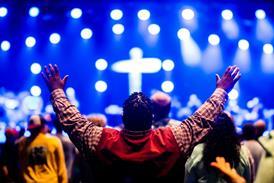
In Britain, Bible sales have hit record highs, with experts pointing to a surge of interest in religion among Gen Z driving a reported 134% increase over the past six years. Far from fading into irrelevance, Christianity appears to be resurgent among those raised in an era of moral confusion and spiritual emptiness.
This contrast is striking. While cultural elites scramble to suppress Christian conviction in public life, younger generations are seeking it out. While celebrities are warned to keep their faith private, ordinary people are buying Bibles in unprecedented numbers. The gap between elite opinion and popular reality is widening.
The lesson here is a simple one. Christianity has endured far greater hostility than a celebrity blacklist, and it has survived every attempt to suppress it. The truth of the Christian faith is irrepressible - not because it is protected by worldly power, but because it speaks to something deeper than cultural approval.





















4 Readers' comments