










Stranger Things is devoid of God but heavy on the supernatural, unseen realms and the battle between light and darkness. Martin Saunders reflects on how Christians can best join the conversation about Netflix’s most watched show
Here is another world that runs parallel to our own. Most of us are ignorant to it, yet this alternate dimension is teeming with evil and danger. Dark spiritual forces conspire within it, plotting to burst out of one reality and corrupt our own. Though these demons can be violent, their real power comes through influence and mind control. And while a light shines in the darkness, evil looks like it might prevail – or at least, win some brutal victories – if a few good people choose not to resist it.
You’d be forgiven for thinking that I’m describing a Christian perspective on spiritual warfare; that this could be a passage straight out of a Rick Joyner prophecy. In fact, it’s an attempt to provide a spoiler-free precis of one of the most popular TV shows of the streaming era. Welcome to the slimy, scary and spiritually significant world of Stranger Things.
Other worlds than these
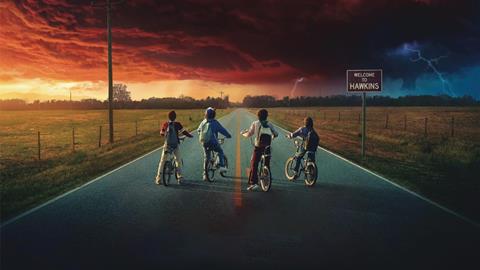
It’s 1983 and you’re in the small town of Hawkins, Indiana. Nothing bad ever happens here. Four twelve-year-old friends cycle blissfully around neighbourhoods so safe that they could be lined with bubble-wrap, then head each night to one kid’s basement to play marathon sessions of role-play games. They’re proudly nerdy and look up to a separate group of brother and sister figures who are a few years older, coming of age and discovering a slightly more grown-up set of pastimes. We could be watching almost any 1980s teen movie. The innocence is palpable.
Then, something bad does happen in Hawkins. Will, one of the twelve-year-olds, vanishes in the night. Dysfunctional, donut-chomping police chief Hopper (David Harbour) suspects his mildly neurotic mother (Winona Ryder) has simply lost track of the boy. Then she and Will’s friends find breadcrumbs that suggest something much more sinister has happened – and they’re right. Will has been snatched by a terrifying faceless monster and dragged into a hellish alternate reality: a world that runs parallel to our own.
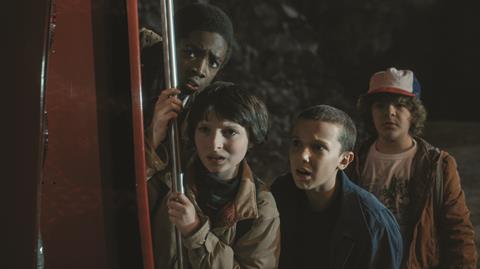
As the darkness begins to rise, a hero emerges; a small, shaven-headed girl in a medical gown, named only by the tattoo of a number on her forearm. If the Hawkins’ boys have experienced a threat-free childhood of innocence and wonder, Eleven (Millie Bobby Brown) has been subjected to the complete opposite – spending her early years in a research facility that was experimenting on and enhancing her unique superpowers. She can lift trucks with her mind; she can snap someone’s neck with an angry glance…but all she really wants is to be a normal girl. Having escaped from the clutches of the shadowy research base, she is welcomed into the show’s weird, warm and wonderful family of friends. She finds her place – and her chance of a childhood – and also becomes the group’s best defence against the evil forces that have taken Will, and are planning a much greater assault on Hawkins.
Rise of a phenomenon
One of the first shows to turn Netflix from a novel technological advance into a must-have monthly subscription, Stranger Things has steadily grown into a global phenomenon, making megastars out of its young protagonists, and reigniting the careers of almost-forgotten actors like Ryder and Matthew Modine. That the final two seasons were delayed by Covid and Hollywood strikes only added to the anticipation, although the slow-burn of its release – which crescendoed with the final episode at the very end of 2025 – did require us to believe that the now 20-something actors are still 16-year-old high-schoolers.
Consistent across the stories is the idea that the light shines in the darkness and is not overcome by it
The show is the brainchild of two brothers, Matt and Ross Duffer, who had only a handful of writing and production credits on their joint CV. Their concept – a homage to 1980s culture, and the sci-fi, horror and small-town yearning of Steven Spielberg, Stephen King and others – was quickly picked up by the ravenous and well-funded Netflix content machine. The first series appeared in 2016 and quickly grew a cult following, especially among teens.
Yet this was far from just a kids’ show. Part of the genius of Stranger Things is its broad appeal; though the smart writing and astonishing FX connects with younger people, the 80s setting and deliberate casting of stars barely seen since that era activates a profound sense of nostalgia in viewers aged 30-60 too. If you grew up on ET and The Breakfast Club, the show is almost irresistible.
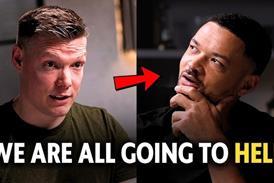
One of the recurring motifs is another 1980s staple, the tabletop role-playing game Dungeons & Dragons, through which the show’s various villains are nicknamed. There’s a fairly heavy nod to the church-led ‘satanic panic’ around the game that was particularly strong in that time period, as Christian leaders warned of it being a dangerous pathway to the occult. More recently, Christians have taken to social media to warn about the dangers of engaging with Stranger Things itself, arguing that its ‘doorway to demons’ concept could create exactly that for viewers. Just as with Harry Potter almost 30 years ago, the argument goes that fascination can lead to participation. Yet to reduce the show in this way misses a potentially huge opportunity for Christians to engage with one of the biggest spiritual conversations in our culture.
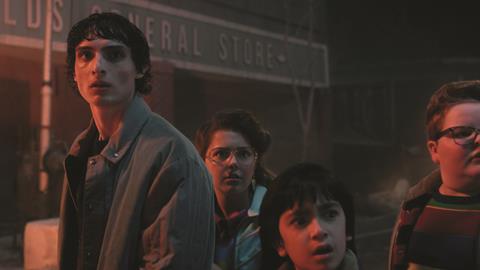
Visions of hell
The alternate dimension in Stranger Things – from which Will is eventually retrieved but evermore connected – is called ‘the Upside Down’. It’s not quite hell, but it’s a place where nothing is quite as it should be. Although all the physical features of Hawkins are present, light is replaced with darkness; the sky broods with a flashing red storm, and slithering, slimy creepers cover everything. It’s the sort of post-apocalyptic vision that was popular in an age preoccupied by fears of looming Armageddon. Aside from occasional interlopers from our world, the Upside Down is populated by an array of demonic forces. There are the foot soldiers, the fearsome Demogorgons that roar with a million teeth, and a series of more intelligent and malevolent monsters behind them pulling the strings.
We actually know relatively little about hell and the enemy from the Bible itself, and much of what we tend to extrapolate theologically is extra-biblical, but this picture of a dark dimension is fairly consistent with Christian teaching. What’s particularly resonant is the agenda carried by this evil. In the Bible, we read that “the devil prowls around like a roaring lion looking for someone to devour” (1 Peter 5:8); in Stranger Things we repeatedly see this violent – and sometimes apparently random – behaviour from the Demogorgons and terrifying big-bad Vecna.
Jesus calls the devil “the father of lies” (John 8:44). Elsewhere he’s referred to as “the accuser” (Revelation 12:10); Vecna traps his victims by whispering deceit and then accusing them of their gravest sins. John also records Christ saying that “the prince of this world is coming” (John 14:30). Both in real life and in Hawkins, there’s a growing sense that the demonic is seeking to break out of hell and into this world. Many in the Bible are demon-possessed and must be liberated before they are destroyed, although in the Bible Jesus does the liberating, and in Stranger Things it’s partly thanks to Kate Bush.
Also consistent across the two stories is the idea that the light shines in the darkness and is not overcome by it (John 1:5). Eleven is a messianic figure, emerging each time evil rises, and frequently laying down her life for her friends. Yet while she’s the one with supernatural power, she also needs help from those around her. It could almost be an imperfect illustration of the way in which Jesus wins victory over the enemy, but calls his community of believers to join in the battle too. In short, these are far from anti-Christian ideas; they’re positively complementary.
Stranger Things is positively teeming with aspiration for a better world
That said, Stranger Things certainly doesn’t promote some kind of subtle Christian worldview. God is almost entirely absent from the story, aside from one quirky Christian character whose faith is more of a joke than a plot point. No one prays for help; Jesus is only ever referenced as a swear word; there’s no Knives Out-style pastoral figure quoting biblical wisdom. What it does carry is a warning about the other side. “How do you expect to stop the devil if you don’t believe he’s real?” asks one character in the show’s darkening fourth season.
Whatever kind of revival you might believe is happening at the moment, it seems indisputable that there’s a rapidly growing interest in the supernatural. This show certainly taps into that trend by acknowledging the existence not only of a spiritual realm, but of the battle between good and evil. Like Star Wars, and so many other epic stories, it provides a fantastic jumping-off point for discussions about spirituality, but it doesn’t provide us with the full, neat picture in the way that, say, Narnia does.
The gospel according to Stranger Things
Although the show doesn’t promote an explicitly Christian worldview, it does affirm a number of themes which absolutely resonate with one. Here’s your sermon-prep cheat sheet for some of the Duffer Brother’s most biblically sound ideas:
The reality of spiritual warfare
Paul writes in Ephesians 6:12 that “our struggle is not against flesh and blood, but against the rulers, against the authorities, against the powers of this dark world and against the spiritual forces of evil in the heavenly realms”. Stranger Things contains plenty of blood, but also a five-season battle of wills between a few heroes and evil forces, both on earth and in another realm.
The prophetic voice of youth
Paul encourages Timothy despite his youth; Jesus calls teenage followers and affirms childlike faith. In the same way, Stranger Things casts children and young people not just as figures of hope, but active proponents of it.
Redemption through suffering
One long-running plotline in the fourth season sees Hopper tortured and pushed to his limits in a Siberian labour camp (part of a cold war subplot). Emptied of all but love, his repeated self-sacrifice fuels his personal transformation; he no longer lives for himself but for others. In doing so, he’s following Jesus’ way without knowing it.
The importance of community
There is a central ‘family’ at the heart of Stranger Things, into which more and more characters are invited. They’re on a shared mission; they fight together against the forces of darkness; they offer healing for one another’s trauma. The lonely – like Eleven – are set in a family, just as Psalm 68:6 describes.
Death does not have the final word
Stranger Things is jam-packed with resurrections of different sorts. Every time you think a hero is dead, the Duffers find a way of bringing them back – and sacrificial love is always part of the picture. In the same way, the Bible teaches us that Jesus’ self-sacrifice was followed up by glorious resurrection, and that the same journey is possible for all of us.
Looking backwards
Stranger Things is also positively teeming with aspiration for a better world. In part that is directed into nostalgia: the sense that the world was safer when you could ride your bike around the neighbourhood, simpler when you didn’t spend your time wedded to a smartphone, and more innocent when fashions and hairstyles made everyone look so utterly cartoonish. It also finds its hope in children, empowered to outwit – and even save – the adults around them. Both ideas find resonance in our time; the world feels unstable and uncertain, and much of its fragile hope seems to rest on the idea that the next generation might heed the lessons of the last.
As a youth worker, I’m anxious about placing that weight of expectation on our young people; the truth is that neither they, nor glancing backward into an imagined golden era, can provide the answer to our current travails. Only God, the character who is not even hinted at in Stranger Things’ one-sided spiritual universe, has the power to save us. The good news is that it’s absolutely his desire and plan to do so.
There are some pretty terrible ways to engage with Stranger Things (witness the ‘Manger Things’ Christian Christmas jumper above), and plenty of voices suggesting we should avoid it altogether. But the best way for Christians to think about it is to recognise the questions it raises – to which we have great answers.
The storyline repeatedly returns to the corruption of innocence – from experiments on children to demonic forces devouring happy lives – as the ultimate evil. This is a profoundly Christian idea: we were created innocent, and sin entered the world through the Fall. Yet while scary spiritual forces are a reality of that fallen world, so is the road back to innocence; we have redemption through Jesus’ blood (Ephesians 1:7).
In Acts 17, Paul enters into the biggest cultural stories of his day. He identifies the unresolved questions within them and points to the “unknown God” who will make sense of his listener’s world. Stranger Things is the biggest story in popular culture right now, and it also presents a universe that does not know but badly needs God. We shouldn’t fear the show; it opens up a portal into a spiritual world. Our job is to encourage people that today, in their world even more than in Hawkins, the light really does overcome the darkness.

























No comments yet