











The shocking death of Cambridge University’s youngest Black professor comes after weeks of relentless press scrutiny. Rev Dr Israel Oluwole Olofinjana wonders whether Black success will always be on trial
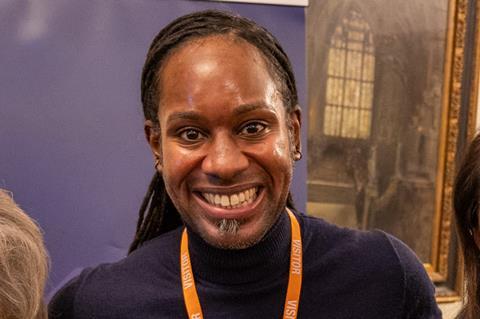
In 2023, when Jason Arday was appointed Professor of Sociology of Education at the University of Cambridge, he was just 37 years old. His appointment made him the youngest Black professor in their 800+ year history.
Now, his tragic and untimely death has shocked the world - and impacted the Black community deeply.
An estimated 30,000 people attended a vigil held at Trafalgar Square, and a petition calling for an inquiry into his death has now received more than 100,000 signatories. It attests to the fact that Arday was loved by many, and many now mourn his death.
It has dealt a particularly grave blow to Black academics and scholars, including myself. Arday’s death has affected me personally, both mentally and psychologically, and has led to much ongoing self-reflection.
This is not the first time that Black success has been on trial
Lee Jasper’s soulful Substack essay ‘Professor Jason Arday is Dead. Britain needs to look in the Mirror’ gives an insight into some of the reasons that Arday’s death has had such a significant impact. But I want to explore just one: how the circumstances surrounding his death have led us to ask: Why does Black success always have to be on trial?
A public lynching
To use a friend’s comment, the “public lynching” of Jason Arday - through the excessive media and social media interrogation into his academic work, background, upbringing and life in general - raises the question: Can Black success truly be accepted for what it is?
This is not to ignore criticism or valid interrogation, as that is always important part of life, particularly in academic work. Jason Arday was accused of plagiarism in some aspects of his academic work and it was important to investigate this allegation. But the investigation took a different turn when his entire life was brought under scrutiny and a dehumanising interrogation took over. Our public criticism requires an ethic of constructive criticism, not destructive interrogation. The latter seems to have triumphed here.
Can Black people be exceptional without without the assumption of cutting corners or cheating, without diversity, equality and inclusion (DEI) frameworks, without some form of societal help? In essence, can Black success be credited on its own merit, or does it always require some societal advantage?
This is one of the important questions that Arday’s death has brought to the fore - and we must reflect on it together as a society. Arday had a Christian faith - and the Church must also process this theologically, in order to avoid tokenism and cheap diversity tactics. Instead, we must develop a hermeneutic of empowerment that allows the agency of Black Christians to flourish in our churches and faith communities.
Systematic suspicion
It is important to recognise that this is not the first time that Black success has been on trial. History is full of this almost systemic suspicion. When Rt Rev Samuel Ajayi Crowther, the first African Anglican Bishop of West Africa, was ordained in Canterbury Cathedral in 1864, parts of the Christian world rejoiced that Africa now had an African bishop.
Despite this, towards the end of his life - which was spent raising and developing indigenous African clergy and scholars - his work was interrogated by a commission set up by Western missionaries. They sidelined Ajayi’s authority and concluded that, although the bishop was a man of integrity and character, the Niger mission he helped to pioneer was a failure due to his lack of administrative skills and management. To the Africans, Bishop Ajayi on trial was Africa on trial, and to pronounce his great work in the Niger mission a failure was to insult African intelligence in an age that defined Africans as ‘inferior’.
We must develop a hermeneutic of empowerment that allows the agency of Black Christians to flourish
In the wake of Arday’s death, Professor Anthony Reddie, Oxford’s first Professor of Black Theology, revealed on social media that journalists have threatened to “dig into his life” if he does not respond to their enquiries; others have questioned whether he was a ‘diversity hire’ like Arday.
Jason Arday’s tragic death, alongside these two examples - one historic and the other contemporary - explains why asking whether Black success is always on trial is a legitimate question. It is a grave concern that requires all of us to work together. Addressing this question collectively is important in creating spaces for healing a wound that has been ripped open once again.
























6 Readers' comments