










Amid the good news of quiet revival* among Gen Z, many young Black Christians are struggling with the Church they grew up in – and some are abandoning it altogether. Susan Akyeampong asks why – and what the Church can do to stop it
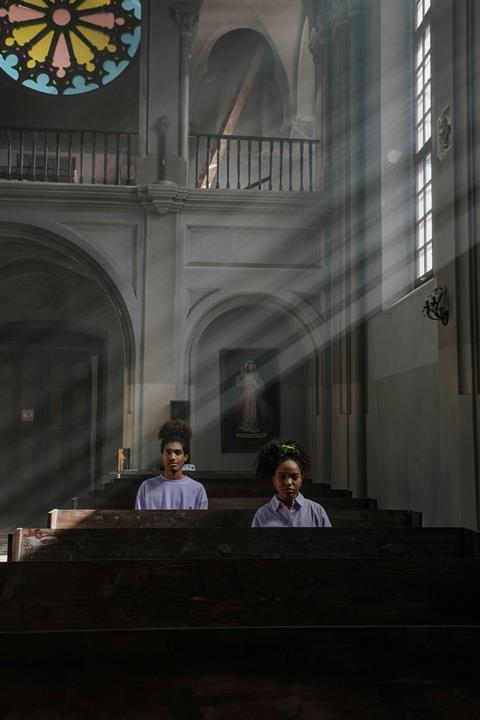
In the past few years, much has been said about the exodus of young, Black Christians from the Church in the US. While there are no firm statistics to confirm that the same is happening in the UK, online discussions suggest a similar trend may be taking place.
A recent debate on X, started by a single tweet, seemed to capture why. One user announced that she had organised her first event for Black agnostic and atheist women in London, creating a space for young Black Brits who have stepped away from the Christian faith.
The post quickly went viral, gaining over two million impressions and thousands of likes. But many Christians were outraged, with some calling the gathering satanic or demonic. One user described attendees as “a collection of witches”.
Ironically, the intensity of the backlash serves only to reinforce long-standing concerns about how Christians respond when their faith is questioned. Much of the vitriol revealed how unequipped we are to defend what we believe with grace and understanding.
Moments like these deepen the growing scepticism of those already questioning whether the Church truly stands for justice and truth.
Connection and community
It is important to understand that for those identifying as Black agnostic or Black atheist, gatherings like this are not simply about unbelief in God but about connection, community and solidarity, creating spaces of belonging where the Church has too often fallen short.
That reality is evident in replies from those who attended the London event, which is one of many similar meetups across the city. One attendee shared: “It was a great time where we discussed our experiences with religion without judgement (!!!), played games, found more common ground and made many like-minded friends in a safe space and I truly enjoyed myself.”
Defending the gospel is about removing the barriers that prevent people from seeing Christ clearly
Others described the relief of finding community without fear of correction or condemnation. Yet others explained why spaces like this feel necessary. “As a neurodivergent, heavily closeted young Black girl, the Church was never a safe space for me,” one wrote. “Even when it was the only community my immediate family had.”
For many, rejecting the gospel in this way is inseparable from stepping away from the Church as they have known it, particularly the Black Church, with all its history, cultural significance and expectations.
A place to belong
Historically, Black British Christianity - particularly within evangelical and Pentecostal traditions - emerged as a response to exclusion, offering dignity, community and a spiritual home when mainstream churches rejected Caribbean migrants. For generations, faith and cultural identity were inseparable, shaping not only worship but social life, leadership and belonging.
British apologist Clare Williams-Sarpong acknowledges and honours the foundation laid by earlier generations of Black British Christians, but stresses how much has changed for younger generations. Two generations on from Windrush, she observes, we live in a culture that values facts and education. Our thirst for knowledge is reflected in our appetite for user-generated content.
When young people ask questions and are dismissed, Williams-Sarpong says that it is simply “not good enough” and drives people away from the church or toward alternative spaces. “The Bible calls us to love God with all our heart, soul and mind, which means the Christian faith has always been meant to make space for thoughtful questioning and intellectual engagement,” she adds.
For many young Black people, leaving the Church is less about unbelief in God and more about experiences of exclusion, silence or hypocrisy within Christian spaces, Williams-Sarpong observes. When churches fail to speak honestly about racism, historical injustice or the realities of sexuality and identity, Christianity can feel less credible and compassionate. In these moments, faith itself risks being perceived as oppressive rather than liberating.
Better representation
The experiences of exclusion and lack of representation that drive some young Black Christians away from their original churches have, in certain cases, led them to seek new spaces rather than leave the faith altogether. I now attend a large, predominantly Black non-denominational church where I’m involved in the young adults ministry. Many students I meet grew up in Afro-Caribbean church traditions but were drawn to non-denominational settings in search of spaces that better reflect their generational identity and cultural realities.
The Black Lives Matter movement in 2020 prompted a reckoning within many UK churches, bringing testimonies and investigations into racism and exclusion to the fore. For young Black believers, the failure of churches to consistently engage with issues affecting their communities can signal that their culture and concerns are peripheral rather than central to church life.
That has prompted some movement towards Anglican churches, where young Black Christians are finding renewed trust and belonging. Rt Rev Esther Prior, Bishop of Aston, has observed this quiet shift firsthand, noting that her predominantly white congregations have become more diverse over time.
When young people ask questions and are dismissed, it is simply not good enough
“In my own experience,” she explains, “that shift hasn’t happened by accident. Representation has been a significant factor. Some young Black Christians disengage not because they’ve lost faith, but because they haven’t seen their culture, gifts, or questions reflected or valued.” She adds that accountability and shared oversight can offer reassurance to those disillusioned by other traditions, creating a sense of safety and sustainability.
Bishop Esther argues that this renewal must be tangible. She points to churches where faith and social engagement are visibly integrated, suggesting that younger generations respond when justice flows naturally from the gospel, rather than replacing it. As she explains, these efforts must always be rooted in Jesus; when justice is grounded in faith, the Church speaks with integrity and power.
Williams-Sarpong emphasises that Christians shouldn’t depend exclusively on white scholarship to deepen theological understanding. She points to newly published works such as EP Louis’ Black, British and Dechurched (SCM Press), a major ethnographic study that gives dignity to the reasons people leave church, and notes leaders such as Dr Lisa Adjei and Jeronne Rudder, who are actively working to bring change.
Defending the gospel, then, is not only about doctrine; it is about removing the barriers that prevent people from seeing Christ clearly. The work ahead for the Church is to make the good news credible again through humility, repentance and a faith that dignifies people’s lived experience.
Biblically, the case could not be clearer. If the gospel is good news of great joy for all people, then our witness and our apologetics must reflect that not only in what we say, but in how we love.
*Editor’s note 27/03/26: In April 2025 Bible Society published their ‘Quiet Revival’ report, based on polling by YouGov which claimed to show a significant increase in the number of people attending church in the UK. Following widespread debate and questioning of the data in the press, YouGov, admitted “human error” in the way data had been collected and apologised unreservedly to Bible Society, who withdrew their report in March 2026. See Premier’s news story and Premier Christianity’s editorial for more information.






















No comments yet