







As celebrity families turn surnames into trademarks, many of us feel the pressure to manage identity and image. But the Bible’s vision of a “good name” challenges a culture obsessed with control, reputation and performance, says Ayoola Bandele
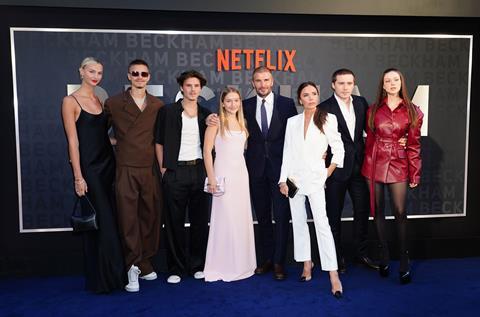
It’s easy to dismiss celebrity family drama as cheap entertainment. Yet the recent conversation around “Brand Beckham” reveals something far more familiar and far more uncomfortable. In modern Britain, a name is no longer just what you’re called. It’s a legacy, a search term, a business interest - and sometimes a battleground.
This past week has been a reminder that names do some heavy lifting. On a recent visit to Scotland, Prince William and Princess Catherine were referred to by different titles - the Duke and Duchess of Rothesay - as part of long-standing royal tradition. It wasn’t a rebrand so much as a reminder: even for royalty, names can change, depending on place, role and expectation.
Then there is the ongoing saga surrounding Brooklyn and the Beckham clan. Whatever is really going on in the famous family’s private life (and we should be cautious about pretending we know it) — the public conversation is revealing.
We are fascinated because we recognise the pressure. We are watching a family name be treated like an asset: something curated, protected, negotiated and, at times, contested. It isn’t only about the Beckhams. It’s about us - and what we now believe a name is worth.
Brand control
Once, a surname mostly told you where you came from. It signalled lineage, yes, but it also carried something gentler: belonging. It was shorthand for your people.
Today, however, names do a different kind of work. A name can be searched, monetised, trademarked and defended like intellectual property. We talk about “building a brand”, but brands do what families were never meant to: they simplify. They smooth out contradictions. They present a story with clean edges. Families are inherently messy. But brands depend on control.
Even outside celebrity culture, the shift is easy to recognise. LinkedIn bios read like press releases. Instagram encourages us to curate a life, rather than live it. When relationships fracture, adult children choose different paths and private conflict becomes public content, the stakes feel higher than ever.
At the same time, naming itself is being renegotiated. Double-barrelled surnames are common. Many women keep their names after marriage. Some couples invent new names altogether. In South Africa last year, a Constitutional Court ruling made headlines by challenging the long-held assumption that only women change their names after marriage. Husbands, the court ruled, should be able to take their wives’ surnames too.
What’s in a name?
Names are not neutral. I have known that since childhood. Growing up Nigerian, I knew that if my mother called “Ayoola!” at the top of her lungs, it meant I was in trouble. Years later, at university, an acquaintance called me “Ayoola” casually and I was genuinely offended. Why were they calling me my full name? They, on the other hand, were understandably confused.
Over time, I learned that Ayọ̀ọlá means “joy in wealth”. I remembered a Yoruba saying I grew up with: orúkọ ọmọ a máa ń rò ọmọ - a child grows into their name. Something shifted in me. I began introducing myself as Ayoola deliberately. The name didn’t change, but the meaning I attached to it did.
If the family is a brand, then belonging becomes conditional
That matters, because names carry memory. They hold fear and affection, expectation and belonging. Yet modern brand culture takes something deeply emotional and makes it transactional.
In scripture, names are bound up with story, character and calling. Abram becomes Abraham. Sarai becomes Sarah. Jacob becomes Israel. Simon becomes Peter. These are not PR moves, but markers of transformation; moments where identity is reshaped from the inside out.
Proverbs 22:1 says: “A good name is more desirable than great riches.” In today’s language, we might say a good name matters more than a perfect image. A good name is not the same as a famous one. It is not a protected trademark. It is closer to character - the reputation formed over time through truthfulness, consistency and how someone treats others when there is nothing to gain and no one watching.
The Beckham story presses on a question many of us are living, even if we never trend online: are we building a life, or managing an image?
A lineage of grace
Scripture records genealogies not because it idolises ancestry, but because it locates people within a larger story. Yet it also disrupts the idea of lineage as status. It speaks of adoption - of a belonging received by grace rather than performance.
Brand culture quietly reverses that grace. If the family is a brand, then belonging becomes conditional. The unspoken pressure shifts from “be my child” to “protect the narrative”. Deviating can feel catastrophic. But love was never meant to work like this. There are gentler, truer ways to live.
First, we can resist turning family pain - celebrity or otherwise - into entertainment. If Christians believe people are made in the image of God, we do not get to consume their suffering as content.
Families are inherently messy. But brands depend on control
Second, we can recover a healthier idea of a “good name”. Not something defended through optics, but something lived with integrity.
Finally, we can remember that a name can be precious without becoming an idol. Your surname is not your salvation. Your legacy is not your lord. Your reputation cannot carry the weight of ultimate meaning without cracking under the strain.
The Christian alternative is not to stop caring about names, but to put them in their place. Let a good name be good because it is grounded in love and truth, not because it is polished.
Ultimately, “What’s in a name?” is really a question about where we locate our worth. If it is in a brand - whether Beckham or Bandele - fear is never far behind. But if it is in the God who names us, holds us and calls us beloved, we are finally free to stop managing our identity as if it is a fragile product.
Not everyone can protect a brand. But anyone can pursue a good name.




















No comments yet