







Church of England bishops have a significant opportunity this week to guide our nation toward more godly laws, says Lois Mclatchie-Miller. Will they take it?
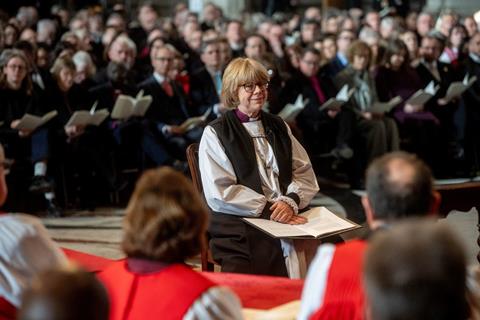
The Church of England enjoys a constitutional privilege that no other denomination in Britain possesses: 26 bishops sit automatically in the House of Lords, with the power to vote on legislation shaping the future of our nation.
For years, this power has been the subject of growing scrutiny. In an age suspicious of inherited privilege, many ask why unelected church leaders should automatically hold seats in the legislature. The usual answer is that the bishops are there to offer a moral voice - to reflect the Christian foundation of the country, and remind Parliament that good law should protect and uphold human dignity.
If that argument is to mean anything, it must be proven in moments of real moral consequence. This week is one of them.
On Wednesday, the House of Lords is expected to vote on amendments to the Crime and Policing Bill that could determine whether abortion is to be decriminalised all the way up to birth in the UK. The amendment would remove the legal deterrents which currently prevent women at late stages of pregnancy from obtaining abortion pills over the phone and self-administering them at home – a move that not only kills their baby, but poses serious risks to their own health.
The amendment was originally campaigned for on the grounds that a small number of women have been prosecuted in recent years for having these kinds of illegal abortions. Carla Foster, for example, went to prison for 35 days in 2023 for ending her baby’s life at home at around 33 weeks (almost 8 months) of pregnancy.
Carla had called an abortion provider and taken advantage of the “pills-by-post” policy, brought in during covid, to allow women under 10 weeks’ pregnancy to order the abortion pills to their homes and take them without an in-person examination or medical supervision. The policy itself was medically risky. Emergency ambulance responses for complications arising after a medical abortion are three times higher for women using pills-by-post at home compared to clinic-based medical abortion. But the policy also opens the door to illegal and dangerous abortions by failing to safeguard against women at a later term in pregnancy acquiring the pills and taking them dangerously late. And so Carla, who was carrying a well-developed, sentient baby capable of survival if born alive, acquired the pills by convincing the abortion provider that she was only 7 weeks pregnant. She took the pills that ended her child’s life, leading inevitably to her delivering the almost full-term baby on her own at home. The child was born without breathing, pronounced dead 45 minutes afterwards. Later, Carla named her dead baby “Lily”, and referred to the experience as being “haunting”.
Carla spent an astonishingly short time in prison, considering the normal sentencing one might expect a parent to receive for deliberately killing their baby. The judge, lenient because of Carla’s emotional state, released her early on appeal.
These votes represent a defining moment for the Church’s public witness
What we can draw from this sorry affair is that the current law against illegal late-term abortions is there for a reason. It isn’t overly punitive. But it does provide a strong deterrent that protects most women from following Carla’s path, keeping women and children safe at this vulnerable stage.
The House of Lords, then, must now consider whether to remove the law preventing self-performed late-term abortions, opening the door to unparalleled danger to maternal health. Two amendments seek to mitigate or remove this proposal. One, tabled by Baroness Monckton, would remove the clause entirely, and keep the current law intact. Another, from Baroness Stroud, would restore in-person consultations before abortion pills are prescribed, thus ensuring that these situations don’t arise in the first place.
These votes are not merely another legislative skirmish. They represent a defining moment for the Church’s public witness. Because if there is any purpose to bishops sitting in Parliament at all, surely it is to speak - and vote - on questions like this.
Yet all too often, the reality is sobering. According to the House of Lords Library, between 2005–06 and 2016–17 the average attendance rate for bishops was just 18% of sittings, compared with 58.5% for the House as a whole.
More recent debate in the Lords has suggested the rate may be even lower - roughly 14% of sitting days.
In other words, the bishops attend at roughly a third - or less - of the rate of other peers.
Of course, bishops have dioceses to run. No one doubts their pastoral responsibilities. But constitutional privilege carries constitutional responsibility. If the Church insists on retaining a voice in Parliament, that voice must be, at least occasionally, heard.
Indeed, the decision the bishops make on Wednesday will be a litmus test for the kind of Church the new Archbishop of Canterbury wants to lead. It has been less than 50 days since Sarah Mullally was confirmed for the role, in a moment marked by a flurry of controversy. Now, it’s time for her to show how she will direct the flock.
At present, she’s scheduled to embark on a pilgrimage to Canterbury on Tuesday in a symbolic step into her journey at the helm, thus not planning, as far as we know, to attend the vote. But surely this urgent opportunity to be the voice of the Church at Westminster is a far more concrete way to take leadership on upholding Christian truth, and defending Britain’s most vulnerable. With Day 2 of the long walk set to begin within London anyway, a brief adjournment to attend parliament would be significant for Christians across the country.
The question hangs in the air. Will she preside over a Church that speaks into the moral crises of the nation – or one that merely wrings its hands from the sidelines?





















1 Reader's comment