





The physical places visited by the celebrities on BBC’s The Pilgrimage affected them profoundly. A trip to the birthplace of Mozart and the death camp of Dachau had a similar effect on Derek Hughes. We shouldn’t be surprised, he says. The Christian story turns on the claim that God did not send information but came to meet with us in real time and space
The floorboard creaked and something in me broke open.
Part-way through an interrailing trip, I was in Salzburg. Standing in the room where Mozart was born. Worn wooden boards, low ceiling, ordinary light coming through an ordinary window.
I’d played Mozart’s ‘Fantasia’ hundreds of times. Studied him at college. Watched the films. Yet the moment my weight shifted and the floor moved beneath me, something landed in me that years of knowledge had kept at a distance.
Mozart had stood here. On these exact boards. It felt real in a way that listening to recordings and reading Wikipedia pages can never get close to.
We’re not after information. We’re longing for encounter
A few days later, I entered a different kind of place. I thought I knew Dachau before I walked through the gates.
I’d read about the first and longest-running concentration camp, built by the Nazis in 1933. Seen it in films. Felt like a person who knew. But I was wrong about what knowing meant.
Walking the rows of cells, seeing the faces on the walls - prisoners, names, people - something split open in me. My hands went cold. The air felt heavier than it should. The facts were the same, but I wasn’t.
Sacred spaces
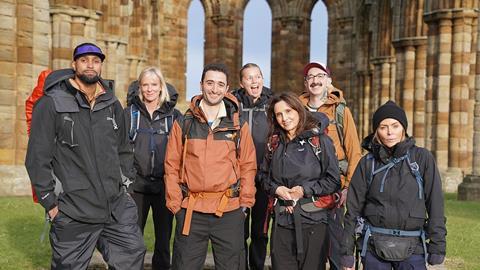
Watching the latest series of BBC’s Pilgrimage, I saw this same collision of presence and place all over again.
I expected scepticism, polite curiosity, maybe the odd moment of openness. What I didn’t expect was how all seven celebrities shifted in some way as the sacred places slowly undid each person.
Love Island star, Tasha Ghouri, went in as an atheist. No religious background, no faith she’d grown up inside. Holy Island didn’t argue with her. It just did what it did. She came out saying: “I really, really do believe there’s something there. It’s just a question of what it is.”
The physical presence of a place can so something that the digital version of it cannot. Everything is available to stream, download and view online now. And yet Ghouri didn’t find what she found on Holy Island by watching a documentary about it. I didn’t feel what I felt in Salzburg by streaming a Mozart concert.
Somewhere between the algorithm and the inbox, this truth gets buried. Until a floorboard creaks or a cathedral door opens and surprises us once more.
God incarnate
But perhaps it shouldn’t. The whole Christian story turns on the claim that God did not send information. He came. Incarnation is the insistence that presence and place matter; that a body in a specific location on a specific day changed everything. The tomb was really empty. The bread is actual bread.
We gather in actual rooms with actual people. Shoulders touching, voices joining, the specific weight of being known by those around you. Not because we haven’t discovered a better technology but because this is the point.
Which is perhaps why pilgrimage keeps surviving everything we throw at it. We have YouTube, Netflix and AI. And still we walk. Because we’re not after information. We’re longing for encounter.
I was wrong about what knowing meant
People who have left the church find themselves walking to somewhere that matters. An atheist from Love Island stands on Holy Island and can’t quite explain what happened - but knows that something did.
Most of us have a place like this. Somewhere we’re longing to go, or somewhere we’ve already been that split us open for a moment, before life closed back over it.
There are places that will do something to you that no screen can. A cathedral you’ve driven past a hundred times. A stretch of coast. A small church on an island. The room where something began.
I played Mozart’s ‘Fantasia’ when I got home. My fingers found the same keys they always find. It sounded the same. But I don’t think I was.





















No comments yet