





When Megan’s marriage collapsed amid revelations of serious sexual crime and infidelity, her world shattered. This is how she discovered that even in life’s darkest moments, God’s presence can still be found
I am not good at remembering dates. I rely on reminders for birthdays and anniversaries. But 13 July 2013 is etched into me like a scar.
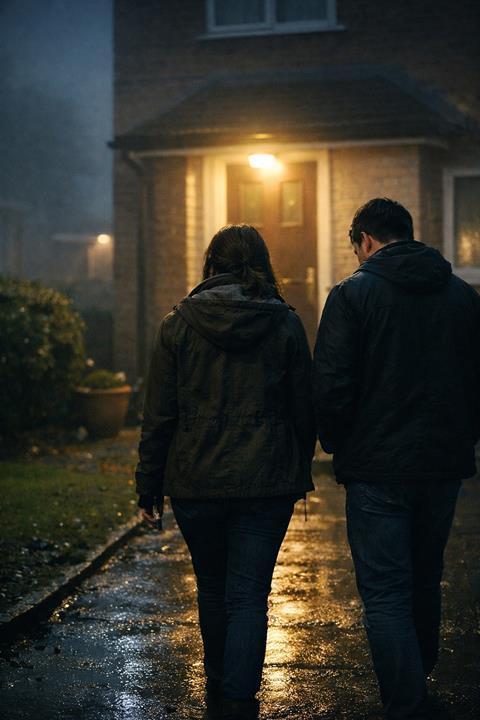
I remember the walk up to John’s front door. My feet felt heavy, as if my body knew what my mind was still resisting. The air was damp, the kind of cold that seeps through your coat and settles into your bones, the sort of night that makes you wish you had stayed home. But the home I shared with my husband, Andy, was no longer safe. It had become a place of silence and deflection, of questions that went unanswered. This was the only place left to go.
John, my parents’ church pastor, though never officially ours, opened the door almost before we knocked and ushered us in with a clipped, “Come on then,” as though we had been summoned rather than invited. Andy had always been drawn to John’s more rugged, uncompromising style of leadership. It was one of the reasons we were here. I had agreed to it for Andy, as I so often did, putting him first even when I felt myself slipping further down the list.
John’s living room smelled faintly of old carpet and cooling tea. Books lay stacked in uneven piles. The sofa sagged in the middle. Usually, these things comforted me; they were evidence of a man who did not perform or curate his life. That night, none of it mattered. The lamp cast its yellow light across the coffee table like a spotlight. A stage set for a truth I wasn’t ready to hear.
Andy sat beside me, though he felt miles away. His elbows rested on his knees, his hands pressed together so tightly his knuckles shone. He would not look at me. I wanted to shake him, to plead with him to speak. Tell me I’m wrong. Tell me I’m not losing my mind.
For days I had asked him about Rachel. I was 22 years old and two years into a marriage I had believed was unbreakable, already reeling from the shock of police involvement and courtrooms after he’d been caught exchanging explicit photos with a 15-year-old girl. It was a nightmare I had convinced myself we had somehow survived. So when my instincts stirred again, I didn’t want to believe them. For days Andy told me I was imagining things, that I was paranoid, oversensitive, still traumatised from everything that had happened. He said it so calmly and convincingly that I began to distrust my own mind. But the unease would not leave. That is how we ended up at John’s door that night – it was the only place left to go for the truth.
I told John about the photographs. About the 15-year-old. About the legal proceedings that followed, and my decision to stand by my husband because I had made vows that I did not yet know how to release. Then I told him about Rachel, and about the messages Andy refused to let me see. He claimed they were only him “slagging me off”. The logic of it made no sense. He would show me evidence of criminality, but not those texts? What could be worse than illicit photos sent to a child?
The moment
John leaned forward, eyes fixed on Andy, and asked the question I had been too afraid to voice.
“How long have you been sleeping with her?”
The silence that followed was unbearable. I stared at Andy, willing him to deny it. To laugh. To rage. To do something that would stitch our world back together.
He did not answer.
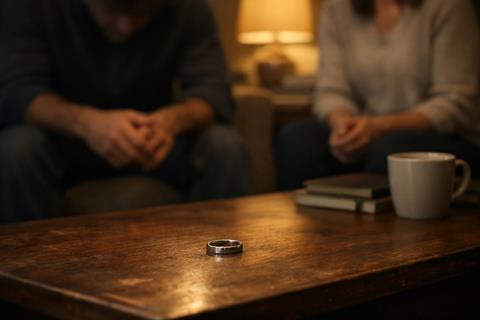
Instead, he reached for his wedding ring. He twisted the silver band once, slid it from his finger and placed it on the coffee table.
The drive home passed in silence, broken only by Andy’s crying. Not the sobs of repentance, but the hollow weeping of someone who had been caught
The sound it made, metal against wood, was somehow deafening, world-shattering. It sounded, to me, like a nail being driven into something that could never be repaired.
That ring, once a promise of forever, now lay between us like evidence. Not just jewellery, but the visible end of a life we had sworn to build. My mind went blank. My body shut down. There were no tears, no anger, only an eerie, hollow stillness.
Andy stood and walked out of the room without looking back.
When John returned a few moments later, his voice was quiet. “He’s outside.”
He was waiting by the car when I stepped into the night air, shoulders hunched, face streaked with tears. He slid into the passenger seat without a word.
The drive home passed in silence, broken only by Andy’s crying. Not the sobs of repentance, but the hollow weeping of someone who had been caught. His shoulders shook beside me while I stared at the road, gripping the steering wheel until my hands ached. My body moved on autopilot – mirror, signal, turn – while my mind shut down completely. Drive. Breathe. Don’t feel. It felt like the long silence of Holy Saturday, when nothing moves and hope seems buried.
When we reached the house, the home that had been ours until the truth began surfacing, he got out and closed the door softly behind him. He did not look back.
I drove on. When the truth about the messages began to surface a few days earlier, I had taken our son Jonah and gone to stay with friends. Now there was no question of returning.
By the time I reached Suzie and Nathan’s house, I was running on fumes. Suzie opened the door. Behind her stood two other friends, Claire and her husband, Ed, who had been helping care for Jonah and waiting, quietly, in case I fell apart. Suzie didn’t ask questions. She simply made space. Inside, the warmth wrapped around me, but it could not thaw the ice lodged in my chest.
Then I saw Jonah, asleep in Claire’s arms, his small body warm and heavy, his breathing steady and untroubled. I took him from her and held him close. He was safe. Oblivious. And my heart broke all over again.
I sat down, clutching him to my chest, and finally, the words escaped.
“He’s been sleeping with Rachel.”
What followed was not restrained grief but collapse. I sobbed until my body shook, until it felt as though years of love, trust and hope were pouring out of me all at once. My friends did not explain, theologise, or rush me towards a resolution. They simply bore witness.
That night, lying beside my son as he slept peacefully in his cot, I stared at the ceiling and understood that I had entered a life I had never chosen.
The fallout
There are moments that divide life in two: before and after. The moment when Andy placed his wedding ring on the coffee table was mine. I did not yet understand how deeply betrayal would fracture not only my marriage, but my faith. How it would unsettle everything I thought I knew about trust, prayer and God’s presence.
In many Christian spaces, betrayal is followed swiftly by instruction. Forgive. Pray. Reconcile. Move on. These words are often well-intentioned, but when spoken too quickly, they can deepen the wound, placing spiritual expectations on people whose lives have just fallen apart.
Scripture offers a different pattern. The Bible gives us lament before resolution. The Psalms are filled with unfiltered cries of grief and protest. Jesus Himself wept, raged and asked why He had been forsaken. Christian faith does not begin with denial, but with truth-telling. Before resurrection, there is always death.
The days that followed blurred together. I did not shower for weeks, not out of rebellion, but because caring for my body felt pointless when everything else lay in ruins. Jonah anchored me to survival: nappies to change, food to prepare, tiny clothes to fold and unfold again. In many ways, he kept me alive.
Scripture did not minimise my pain, it dignified it

Ordinary moments became unbearable. Standing in the supermarket, paralysed by which nappies I could afford. Sitting in the GP’s surgery, pen hovering over the line that asked for the father’s details. Walking into church alone, Jonah strapped to my chest, surrounded by couples singing resurrection songs I was not ready to believe.
Some people were kind. Others whispered. One woman suggested maybe I had not been enough, which is why my husband had had to look elsewhere to be satisfied. Shame settled over me like a second skin.
And yet, there were mercies scattered among the wreckage. Friends who opened their homes when nights felt unbearable. Meals that were left quietly on my doorstep. A text that simply read: “Thinking of you.” Small acts of faithfulness that reminded me I had not been entirely abandoned.
Where are you God?
For a long time, God felt absent. Prayer felt thin and dangerous. Scripture felt like a minefield of promises I no longer trusted. It wasn’t only my husband’s betrayal that had shaken me; it was what that betrayal seemed to say about God. I had prayed for our marriage. I had believed God was protecting it. I had trusted that obedience and faithfulness would somehow keep us safe. When everything collapsed it wasn’t just my relationship with Andy that felt uncertain. It was my understanding of God Himself. Had I misunderstood Him? Had He failed me? Or had I built my faith on promises He never actually made?
Slowly, painfully, I began to realise that faith does not collapse under honest questioning. Often, it is only stripped of illusion. The God I encountered in those months was not the one who rushed me towards answers. He was the God who stayed. The God who did not recoil from anger or doubt. The God who, in Christ, knows betrayal from the inside.
In those early weeks, I remember thinking: Surely I am the only one who feels this broken. Surely no one in scripture could understand betrayal like this, this disorientating mix of grief, shame, anger and fear. But the more I read, the more I realised how wrong I was.
The Bible does not shy away from betrayal. It names it. Records it. Again and again, it shows God meeting people right in the middle of it.
I saw it in Hagar, weeping in the wilderness, convinced her story was over, only to discover she was seen. I saw it in Hannah, pouring out prayers so raw they sounded like madness, yet still heard. I saw it in Joseph, betrayed and abandoned, yet never abandoned by God.
The Psalms gave me words when I had none: “Even my close friend, someone I trusted…has turned against me” (Psalm 41:9). Scripture did not minimise my pain; it dignified it.
And then there is Jesus. Betrayed with a kiss. Abandoned in His darkest hour. Condemned by those He came to save. Jesus does not merely understand betrayal; He lived it, reaching a depth of suffering the Church remembers each Easter. Yet His story did not end on Good Friday.
The Bible never pretends betrayal is small. But it also never allows betrayal to have the final word. I know that now not because I read it in a book, but because I lived it.
Slow healing
In the weeks after 13 July, my world shrank to survival. I moved into friends’ spare rooms with a baby on my hip and a heart that felt like shattered glass. My life fit into suitcases. I couldn’t sleep. I couldn’t eat. I floated through conversations, numb and ghostlike, while kind people told me I was “coping so well”.
Friends folded Jonah and me into their family rhythms until I could breathe again. One night, exhausted and pacing with a crying baby, Nathan took him from my arms and soothed him in seconds. It was a small moment, but it reminded me we were not alone.
Healing came slowly, unevenly, more like thawing than transformation. I wrestled with anger and shame. I wrestled with God. Some nights I lay awake replaying everything, fury tightening my chest as I asked Him how forgiveness could possibly be required of me.
Yet, over time, something began to change.
A hope and a future
I began to see redemption not as a dramatic miracle but as a series of small resurrections. It appeared in the women who whispered: “That’s my story too,” when I spoke honestly. It appeared when I could hold a friend who had just been abandoned and say, truthfully: “You will survive this.” My pain became a bridge instead of a wall.
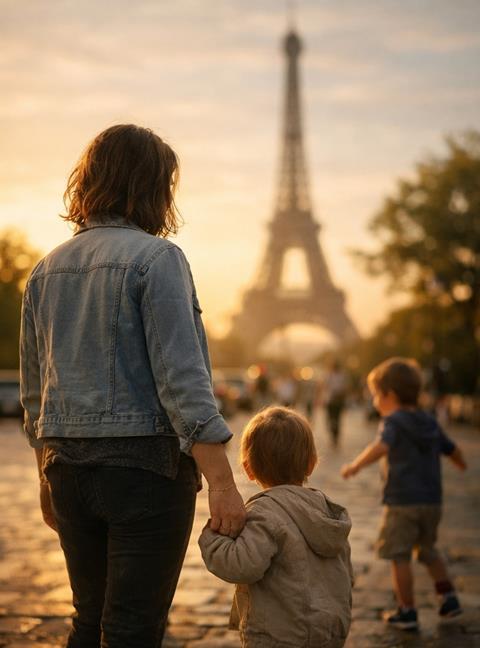
Years later, I stood in Paris, the place I had honeymooned with Andy, and saw the life in front of me: my children’s laughter, steady love beside me, joy I once thought was gone forever. I couldn’t recover what had been lost. But I discovered something better: God had not restored the old life. He had made something new. Not a return to what had died, but the quiet astonishment of something raised.
That is what I mean when I say every story bends towards redemption. Not that every wound is undone. Not that every marriage is saved. Not that every scar fades. But that God does not stop writing when the page goes dark.
Infidelity fractures trust: in others, in ourselves, in God. But faith that survives betrayal is not weaker for having been tested. It is humbler. Truer. Less afraid of the dark. It knows how to lament, how to wait and, in time, how to hope again.
I would never have chosen this story. But I have discovered that even here, God remains. And for anyone walking this road now, that is not a small hope. It is enough. It is life where I thought only death could be.
Megan works for a local church and writes from her own experiences of loss and hope. She lives with her husband and children and seeks to offer encouragement and insight to others navigating life’s harder seasons
*names have been changed




















1 Reader's comment