






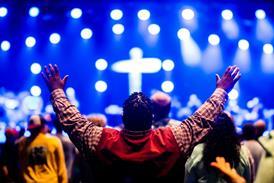





YouGov has admitted the data that suggested a massive increase in church attendance among young people was flawed. It’s bad news. But we shouldn’t lose hope, says Sam Hailes. It might not be a Quiet Revival, but many other stories and statistics from across the UK suggest we are living in an exciting new era
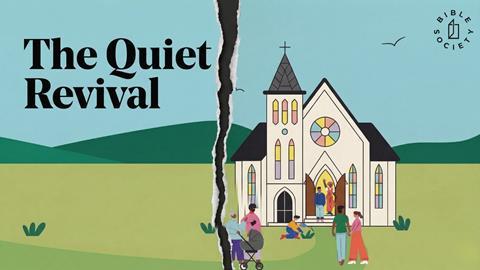
The much discussed and widely praised Quiet Revival* report, which claimed church attendance in the UK was increasing, has been found to be unreliable.
The polling company YouGov who carried out the surveys has apologised to Bible Society, who commissioned the report. YouGov say they take “full responsibility” for their mistakes.
The specifics of what went wrong are unclear beyond “human error” at YouGov, but the fact Bible Society are pulling the report in its entirety suggests the errors were fundamental.
This news is shocking, not to mention disappointing. Since the report’s release last April, a number of sceptics have cast doubt on the validity of the research. Writing on this website, Christian journalist Tim Wyatt pointed out, “To maintain the Bible Society’s claim you either have to believe that one YouGov poll is more accurate than decades of professional statistical reports from both the Anglican and Catholic church. Or you have to believe that while those two enormous denominations have been declining or stagnant, there has been astonishing growth - in the order of millions of new believers - across the plethora of smaller churches who don’t produce their own stats. Neither claim is remotely credible, unfortunately. I wish it were not the case, but Britain is not the grips of a quiet revival.”
At the time, Bible Society stated YouGov were a reputable polling company who would not put out faulty numbers. It now seems clear the Quiet Revival sceptics are owed an apology.
As much as Bible Society will understandably lay the blame at YouGov’s feet this is nevertheless embarrassing for an organisation that has invested so much time and energy promoting (and at times vociferously defending) their report.
Polls come and go
I was always upbeat and excited by what the Quiet Revival report was suggesting. So I’m not going to try and spin today’s story as good news. It isn’t. While we did publish critics of the Quiet Revival, the vast majority of this magazine’s coverage has been exceptionally positive, and knowing what I now know, I regret running a regular column entitled Quiet Revival Analysis. We will also be adding an editorial note to previous online articles on the topic, to ensure readers are aware of today’s news.
When the Quiet Revival was first published, this magazine sought a wide range of views on how we should respond to it, publishing a cover story on ‘Are revival fires spreading again?’. At the time, I confess to being slightly disappointed by Rt Rev Graham Tomlin’s response. That’s no longer the case. On a day like today, I take great comfort in his words:
“I’ve never taken the predictions of the Church’s demise too seriously. Which is why I’m not one for putting out the bunting when the predictions go the other way. Christianity’s claims to truth are not dependent on a referendum. Our faith remains true whether or not people believe it. The appeal of Christian faith is precisely the fact that it centres on an event where the eternal became temporal, where God entered into human history. It therefore transcends time and space, opinion polls and surveys. It gives a confidence rooted not in the swinging mood of public opinion, up one minute and down the next, but something lasting, permanent and reliable.”
Where do we go from here?
All that said, we also shouldn’t miss the wider context. Namely, that many other reports have also pointed to a change in the spiritual atmosphere. The specific Quiet Revival claims around how much UK church attendance is increasing by has been shown to be false. But the fundamental principle that we are seeing increased interest in Christianity remains, in my view, 100% true.
See, for example these other pieces of research showing:
- UK Bible sales increased by 134% between 2019 and 2025 - SPCK
- Church attendance at UK evangelical churches is rising - Evangelical Alliance
- Church attendance among young people aged 11-to-18 has doubled, from four per cent in 2020 to eight per cent in 2025 - Youth for Christ
- Students are more open to reading the Bible than ever - Fusion
- Record number of confirmations in the Catholic Church are expected this Easter
- 74% of all parents with children under the age of five have attended a church activity in the past 12 months
- Alpha has just had a record breaking year
There’s more to this trend than one faulty report. Plus, look at the multiple phrases - all of which have sprung up in recent years - to describe our current cultural moment. Vibe shift, slow awakening and Justin Brierley’s Surprising Rebirth of Belief in God all come to mind. Some of these terms pre-date the release of the Quiet Revival report.
I speak to a different church leader most weeks of the year. Almost all of them agree something significant is going on. Al Gordon said to me. “I’ve been involved in church life for 30 years…And this is definitely not business as usual.” Many have stories of young people walking into church uninvited and of a desire for what’s been dubbed ‘full fat’ faith ie people who take Jesus seriously, and want to give their lives wholly to Him.
Just yesterday Luke Smith from the student ministry Fusion told me he noticed a significant change in the missional environment at the beginning of 2023 (around the time of the Asbury awakening), and it’s continued ever since. He even went as far as saying this is “the biggest missional moment for the church since Billy Graham” (you can hear the conversation soon on ’The Profile’ podcast).
What’s in a name?
Two things are true. Firstly, the Quiet Revival report was likely so flawed in its claims about increased church attendance it had to be pulled. Linked to this - we should probably all stop using the phrase. But secondly, it remains plausible that we are at the beginnings of a genuine move of God. In that sense, not everything the Quiet Revival report affirmed was necessarily incorrect (and more research is already being planned). It may not constitute revival, but something is happening.
Interestingly, “revival” - even a “quiet” one has often been a problematic term. Many leaders I spoke to would understand why Bible Society used it, and were impressed with the clever name, but would gently point out revivals in history aren’t quiet and they tend to happen in specific geographical locations.
The “quiet revival” phrase must, like the report, die its death.
What won’t die are the incredible, genuine stories of God at work. We at Premier are continuing to bring these to you on a daily basis. Like this story of an 8 year old boy who was miraculously healed and called Premier Praise to share his story live on air.
We will continue to tell these stories under the banner of ‘renewal’ because I remain convinced we are living in a new era. The days of Richard Dawkins style atheism are long gone. In its place is a genuine curiousness from a new generation who are open to faith. I pray today’s news only spurs us on to fulfil the great commandment and the great commission.
*Editor’s note 27/03/26: In April 2025 Bible Society published their ‘Quiet Revival’ report, based on polling by YouGov which claimed to show a significant increase in the number of people attending church in the UK. Following widespread debate and questioning of the data in the press, YouGov, admitted “human error” in the way data had been collected and apologised unreservedly to Bible Society, who withdrew their report in March 2026. See Premier’s news story and Premier Christianity’s editorial for more information.























5 Readers' comments