






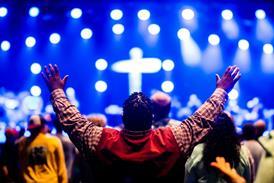





In just a few years, Victor Oladele’s small local church has grown from around 30 adults to two Sunday services - with a significant number of young people coming through his doors. It’s not revival, but it is definitely something, he says, and that must not be denied
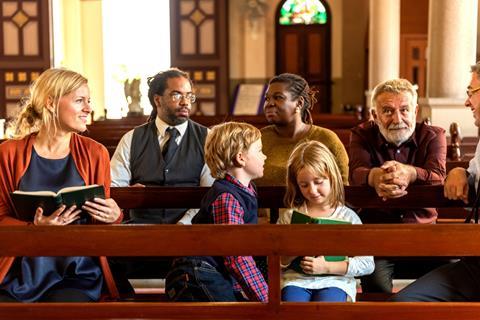
The recent withdrawal of Bible Society’s Quiet Revival* report has, understandably, caused both disappointment and debate. For many Christians, it appeared to confirm a long-held hope: that faith in Britain might be experiencing a revival. Its retraction was due to flawed polling data by YouGov.
But if the use of the word ‘revival’ was misplaced, it would be equally misleading to assume that nothing is occurring. From my perspective, as a local church pastor in the UK, the reality is more nuanced - and perhaps more hopeful - than either extreme suggests.
Our church is not large. At full capacity, our building can accommodate around 105 adults. However, since May 2024, we have been running two Sunday services to ensure sufficient space for people to worship comfortably. This growth has not been sudden or dramatic, but steady, consistent and - most importantly - noticeable.
What is particularly notable is the demographic. A significant portion comes from young people; teenagers and young adults, many of whom are not accompanied by their parents but attend independently or through peer connections. Some arrive with friends; others start attending quietly and, over time, settle into the life of the church. These are not mere abstract trends to me. They are faces, names, and stories.
Authenticity, community and clarity of witness will determine whether curiosity turns into commitment
This is not passive attendance. These young people are actively participating. They serve in media and technical teams. They sing in the choir. They have established a youth fellowship that now meets regularly. In some cases, even after joining the youth group, they continue to volunteer in the children’s ministry. What we are witnessing is not merely presence, but ownership.
Our latest baptism service in November 2025 offers a revealing snapshot. Of the 14 candidates baptised, 11 were aged between 13 and 22. This is not an isolated event, but part of a wider pattern we have been observing.
Interestingly, many of these young people do not come from churchgoing families. However, when significant moments such as baptisms occur, their parents often attend. Although this might not (yet) turn into regular church involvement, their presence suggests that faith still holds cultural and relational importance, even when it is not practised regularly.
Patterns of growth
It would be naïve to ignore the impact of migration on churches such as ours. As members of the Redeemed Christian Church of God (RCCG), we are part of a wider diasporic movement, and demographic shifts naturally affect growth patterns. However, migration alone does not account for what we are observing.
For several years, our church had a stable core of about 30 adults and their children attending regularly. Many of those children are now teenagers and young adults, and notably, some have remained involved beyond their teenage years. More than that, they are now bringing others along. What we are witnessing is not merely continuity but emergence.
It also reflects broader trends that others have started to notice. For many years, secularisation theory indicated a steady decline in religious belief and practice in Western societies. More recently, however, thinkers such as Grace Davie have proposed a more complex picture in which belief has not vanished but changed form.
Some now contend that the key shift is not from belief to unbelief, but from institutional allegiance to personal exploration. Young people may be less inclined to inherit faith, but they are not necessarily resistant to it. Instead, they often encounter it through relationships, personal searching and lived experience.
This closely aligns with what we are observing on the ground. The young people joining our church are not motivated by institutional loyalty, cultural or familial expectations. They are responding to invitations, curiosity and a deeper search for meaning and identity. In a time characterised by digital saturation, social fragmentation and increasing mental health issues, the significance of genuine community and a sense of transcendent purpose must not be overlooked.
The chaos of renewal
None of this constitutes a revival in the traditional sense. Throughout the country, church attendance continues to decline, and any honest account must recognise this fact. But neither does the language of decline fully describe what is occurring at the local level.
What I and many others in pastoral ministry are noticing is a renewed openness among younger generations: a willingness to explore faith, ask questions and participate in Christian community in ways that challenge the usual story.
What we may be witnessing is a reawakening of spiritual curiosity - a subtle yet significant shift in the cultural and generational mood. It is an early-stage movement that is not yet visible in national statistics but is increasingly apparent in local contexts. Theologically, this calls for vigilance rather than triumphalism.
This growth has not been sudden or dramatic, but steady, consistent and - most importantly - noticeable
Christian history reminds us that renewal movements are often chaotic, ambiguous, and hard to quantify. They seldom start with large gatherings or dramatic increases in numbers. More commonly, they develop quietly within small communities, among unexpected individuals, and through slow shifts in perception and desire.
As a pastor, I would describe what I am witnessing in straightforward terms: the stirrings of the Spirit. That may not be a category found in sociological datasets, but it is one that those in ministry learn to recognise over time - through the questions people ask, the commitments they make, and the lives that start to change.
The challenge for the Church, then, is not to overemphasise the moment or, alternatively, ignore it. Because if there really is renewed openness to faith among younger generations, what they experience in church matters. Authenticity, community and clarity of witness will determine whether curiosity turns into commitment.
If a genuine revival does occur, it will not require a survey to declare it. It will be unmistakable. But in the meantime, we would do well to observe what is already happening - quietly, locally - and perhaps more significantly than we yet realise.
*Editor’s note 27/03/26: In April 2025 Bible Society published their ‘Quiet Revival’ report, based on polling by YouGov which claimed to show a significant increase in the number of people attending church in the UK. Following widespread debate and questioning of the data in the press, YouGov, admitted “human error” in the way data had been collected and apologised unreservedly to Bible Society, who withdrew their report in March 2026. See Premier’s news story and Premier Christianity’s editorial for more information.






















No comments yet