









In a recent column for The Spectator, author Bijan Omrani recalled his days at the University of Oxford in the 1990s, when college chapels were deserted. Today it’s a different story, says Rev Dr Robert Wainwright. Students are seeking something substantial - and finding it in early morning, traditional church
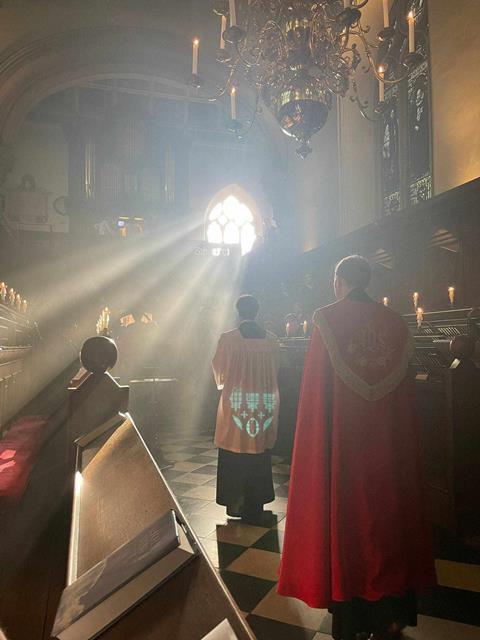
At Oriel College, Oxford, everyone knows that the biggest religion is rowing. A close second these days, however, is chapel. Each morning there are enough students praying in chapel to man at least one coxed eight and often a four as well.
If you’re not into rowing, that’s between nine and 13 people. I say ‘man’ intentionally because most, though not all, of these students are male.
It’s not that these are especially large numbers. What’s remarkable is that any students at all are getting themselves out of bed for an 8am prayer meeting every day of the week. (Admittedly one of them consistently arrives at 8:02)
Long gone are the days when chapel attendance was compulsory in Oxford. For decades, the daily office became a solitary affair between God and the chaplain but, in recent years, I can count on one hand the number of times I have prayed Matins alone.
Like the dodo, the Oxford college chaplain was supposed to become extinct
I say ‘Matins’ because all the services in the college chapel are according to the Book of Common Prayer (1662). The first question I was asked by the student rowing captain was: “What do you think of the BCP?” The right answer was: “I’m a fan.”
Possibly the prose and structure hold an atavistic appeal for members of Gen Z. Perhaps when “we do not know what we ought to pray for,” (Romans 8:26) the Holy Spirit initiates us into a language familiar to our forebears.
There is an air of sagacity and substance about a liturgy so far removed from shallow sentimentalism or entertainment. It conveys the soul of a culture to young people unsure of their own identity.
Discipline and community
The preponderance of male students seems to be more than chance. A cold, dimly-lit chapel isn’t quite as ascetic as a rowing outing, but there is team spirit.
“I like the fact that people notice if I’m not there”, says one physicist. “I don’t want to let them down.” A philosopher highlights the appeal of “doing something uncomfortable for God.” The young men all mention a discipline of prayer that doesn’t depend on how they are feeling.
Interest in the alleged ‘Quiet Revival’* has inevitably focused on numbers. Here at Oriel, Choral Evensong on a Sunday has seen steady - albeit not dramatic - growth: between 80 and 110 fill the chapel consistently.
In an era of poor mental health, students are reaching for more than therapy
Some come to hear the superb choir sing. Most wear their academic gowns. Tradition and community are characteristic of Oriel. One Roman Catholic student describes himself as a “formal Protestant” – he attends Anglican Evensong before dining with his friends at Formal Hall.
Plenty of students in the pews will be unsure of what they believe exactly, but they will always hear Christ proclaimed. Each year someone with no church background is baptised; numerous others have come to own faith for themselves.
Many chapel-going students also attend a local church. It’s hard to think of a denomination that is not represented, but they share a commitment to pray for their college and a mutual trust based on the faithful reading and preaching of scripture. Evensong is not a concert, it’s an authentic worshipping community appropriate to a 700-year-old Christian foundation with a diverse student body.
Not extinct
Like the dodo, the Oxford college chaplain was supposed to become extinct – to smile and to say nice things to nice people. No one expected students to be confessing their sins or talking about the supernatural or the communion of saints.
In an era of poor mental health chaplains can easily find work as ‘welfare providers’, but students are reaching for more than therapy. I’ve been approached more than once this year by a young person who says: “I think what I need is God”. We then have a conversation about what it feels like to have faith.
As the birthplace of the Oxford Movement, Oriel College has a long history of associating intellectual endeavour and spiritual formation in the pursuit of truth. The chapel holds these together. Some apply to Oriel for that reason; others discover it when they get here.
One student recalled his discovery that there was a chaplain at the college: ”When I turned up I thought: I’m not particularly religious personally, I won’t really talk to this person. But the chaplain is actually a really lovely guy…so nice just to sit down and have a chat with. He gets involved in the rowing a lot.”
Not everyone at Oriel rows; not everyone at Oriel prays either, at least not regularly. But Oriel is a place where neither rowing nor praying seem strange. In fact, both of them are things students are willing to try.
*Editor’s note 27/03/26: In April 2025 Bible Society published their ‘Quiet Revival’ report, based on polling by YouGov which claimed to show a significant increase in the number of people attending church in the UK. Following widespread debate and questioning of the data in the press, YouGov, admitted “human error” in the way data had been collected and apologised unreservedly to Bible Society, who withdrew their report in March 2026. See Premier’s news story and Premier Christianity’s editorial for more information.






















No comments yet