










In striving to be ‘normal’, the Church has committed a grave missional error, says Tim Alford. If we want to reach a spiritually open generation, it’s time to make space for people to encounter God – even if it looks weird
It was not what I was expecting to see on my morning run through the streets of Great Malvern. In the window of a tearoom located in the upmarket Mount Pleasant Hotel was a poster that read: “Halloween Psychic Night: Connecting with the Spirit World”. I did a double take – and not just because of the brazen normalisation of the occult. I was struck that not once in my decades of ministry have I seen a church take a similar approach to its marketing: “Join us this Sunday, connect with the spirit world!”
Why? Perhaps because we are afraid that this language might be repellant to the average unbeliever. But what if the Mount Pleasant Hotel is onto something the Church is yet to catch up with? What if connecting with the spirit world is exactly what this generation are hungry for?
If you’ve been around the church for a while, you’ll be familiar with the language of seeker-sensitivity. The idea that we should avoid being weird at all costs, in case it is the barrier that unbelievers cannot overcome on their journey towards Jesus; that we should be winsome in our outreach. It was with this principle in mind that “culturally relevant” became the evangelistic buzz-phrase for many ministries in the 90s and noughties, including my own.
We do want to communicate timeless truths in a way that people understand, and we don’t want to create unnecessary obstacles. But the unfortunate side effect to this approach is that our churches became a subculture rather than a counterculture. In our attempt to make Christianity cool, our churches – especially our youth ministries – became imitations of culture with a ten-minute God-slot thrown in – if we could convince the young people to listen for that long.
Yet in robbing Christianity of the very thing that makes it so powerful and compelling – the presence of God – we’ve committed a grave missional error. Although this generation may be less religious than those who preceded it, it is certainly not less spiritual. The explosion of young people exploring witchcraft provoked the New York Times to write an article asking: “When Did Everybody Become a Witch?” On social media, hashtags such as #astrologytiktok, #tarot and #zodiacsigns all reach billions of people. This is a generation that is seeking the spiritual, not afraid of it. So, when we hide, dilute or dumb down our spirituality in an attempt to reach them, we are achieving the very opposite.
Personal relationship with God is born of personal encounter with God
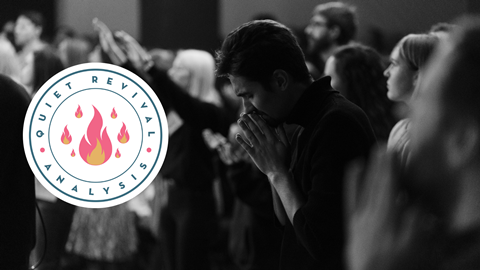
Over the last four years at Limitless Festival, we have seen 2,540 young people respond to the gospel. I have been involved in youth ministry for more than two decades and, in all that time, I have never experienced anything like it. Bible Society has called it “a quiet revival*”. But why are we seeing such a dramatic response to Christ right now? Because of my great preaching? In fact, it’s precisely the opposite. We’ve learned to stop talking and let the Holy Spirit do what the Holy Spirit does. As we take a back seat, the Lord moves in power. As young people see and experience the power of God for themselves, they are moved to respond. Personal relationship with God is born of personal encounter with God.
There has been a spiritual shift in our nation. These days are rich in gospel opportunity. But if we are to take hold of it, we must learn how to host, not hide the presence and power of God. People do not need to attend your culturally relevant church service to experience great coffee and good music. But they are longing for the transcendent.
We are inherently spiritual people. The One we call Lord was killed and came back to life. We believe in a Holy Spirit, in angels and demons, in a spiritual realm, in a coming resurrection, in eternal life, in a God who heals, speaks and baptises people in His Holy Spirit today.
So let’s shift from being churches where people sit and watch services performed at them, to those that facilitate transformational encounters with the Holy Spirit who works in them. Because, in the words of Paul: “the kingdom of God is not a matter of talk but of power” (1 Corinthians 4:20).
*Editor’s note 27/03/26: In April 2025 Bible Society published their ‘Quiet Revival’ report, based on polling by YouGov which claimed to show a significant increase in the number of people attending church in the UK. Following widespread debate and questioning of the data in the press, YouGov, admitted “human error” in the way data had been collected and apologised unreservedly to Bible Society, who withdrew their report in March 2026. See Premier’s news story and Premier Christianity’s editorial for more information.

























No comments yet