







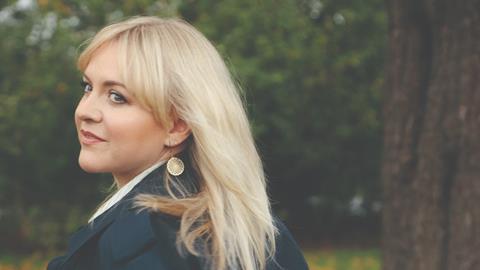

In a world that tells young women they’re not enough, Philippa Hanna is using her voice to say the opposite – and thousands are listening. Coming from a long line of musicians, the singer reflects on finding her identity in Christ after years of industry pressure, why she wants people to know Christians on stage are still works in progress, and how an unexpected message from a long-lost brother added a remarkable new chapter to her story
If you’ve been to a Christian festival or event in the last decade, chances are you’ll have seen Philippa Hanna and her now-trademark oversized white guitar, busting out some beautifully upbeat country-inspired Christian pop. And if you have young tweenage daughters or grandchildren, those chances are even higher.
Singing songs about “struggling to find belonging but then finding your identity in Christ” has become something of a calling card for Hanna. The tracks she is most famous for, such as ‘Arrow’ and ‘Raggedy doll’ resonate especially strongly with her young, female fanbase – many of whom can relate to the issues that she sings about on stage.
In many ways, her journey towards becoming a professional musician was written in her DNA. She grew up watching her father perform at holiday camps; her brother is a founding member of the bestselling funk band Jamiroquai and her cousins formed 90s rock band Embrace. Then last year she received a random email from a half-brother she never knew existed – who happened to be one half of D:Ream, whose 1994 hit single ‘Things can only get better’ became the soundtrack to Tony Blair’s election campaign three years later.
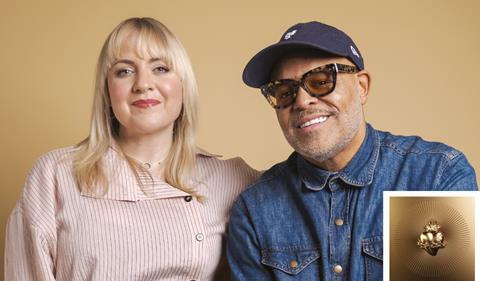
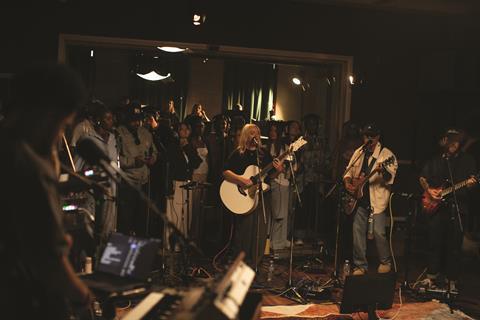
As a singer-songwriter of some acclaim, Hanna has toured with the likes of Little Mix, Lionel Ritchie and Leona Lewis. She’s recorded five studio albums – the latest of which is a collaboration with worship leader and gospel legend Israel Houghton – and written two books. Yet when she found faith in her early 20s, she was at her lowest point – trying to break into an industry intent on objectifying her. “People in power wouldn’t think twice about telling you that you needed to lose weight, change your appearance, wear less clothes,” she remembers.
It is in direct opposition to how God made it to be, says Hanna. And that’s one reason why she is so committed to doing it differently, to being vulnerable and using the platforms that she stands on for good, and not for harm – even when it provokes unsolicited advice from well-meaning Christians…
What did your journey towards Jesus look like?
I didn’t grow up in a Christian home. My mum always had a Bible by the bed. She was very sympathetic towards faith, but we never went to church as a family. My dad was an entertainer. I grew up watching him perform, thinking that he was as famous as Elvis!
My first time on stage was when I was about two years old; it was a talent competition at a holiday park, and it wasn’t a good experience. I went to pieces and was carried off crying. At 13, I was given a keyboard for Christmas, and every day, I would write a song – or two even.
The music industry objectifies what is essentially sacred – people and music
I was bullied and teased from a young age. That really impacted my self-esteem. I got in with the wrong crowd and that led me into a lot of trouble. By the time I left school, I felt like a failure.
[By the age of 19], I was not in a great place. I’d been trying to get signed [to a record label] and facing a lot of rejection; I went to a jam night in Preston, and I met this guy, Roo. He became a Christian and I saw this transition in him – he was just so full of life. I was super jealous of that spark. He dragged me to his baptism. I met his pastors, and thought: Wow! There’s more of these shiny, happy people. They said such lovely things to me, like: “Philippa, you know you were made for a purpose.”
I argued with them about the age of the universe and dinosaurs and other faiths – all the arguments that agnostic people have with Christians – but they continued to pray and show up for me. Eventually they invited me to a concert in Sheffield, which was actually a worship night with a guy named Godfrey Birtill. He sang some songs and I found myself asking Jesus into my life. It wasn’t an official altar call. I was just like: “God, if you’re real, I really need to start over.”
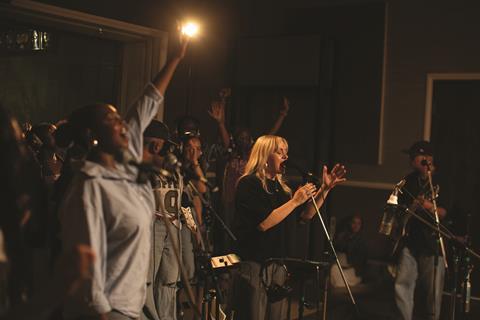
I love that, as someone who loves writing songs, God met you in music…
The whole journey was marked out by Him. He knew He’d be able to use even the stuff that’s not good. Being teased, feeling like I didn’t fit in – they’ve become my calling cards; singing songs about struggling to find belonging, but then finding your purpose and identity in Christ.
What happened after you gave your life to Jesus?
I went home that night, and nothing felt particularly different. But I woke up the next day, and there was a newness. I felt compelled to find the New Testament I had been given at school. I found it in my bottom drawer, and it was like the words of Jesus were just for me. Everything that I was asking in my head, I was finding responses to – it actually freaked me out a bit.
Later that week, I got invited to another event by Roo and a guy called Andy Baker, who went on to be my manager for ten years. I was watching a Christian girl band called TBC sing songs about young people’s identity and worth. And I was like: Wow, this has really got value.
On the way home, I said: “I’d really like to do that. Maybe I should contact their team.” Andy Baker was like: “Philippa, you’ve literally just got saved. You might want to just sit with Jesus for a bit and figure that out. Focus on your own journey.” I was super offended, but I did. I threw myself into church, did an Alpha course with my mum. She became a Christian and got baptised.
I met my husband, Joel, about six months later. He was a pastor’s kid, and my teenage years had been crazy. I was very liberal and experimental in every way. I felt like I didn’t really deserve him. He invited me on a coffee date, and said: “I’ve been praying, and I think God’s revealed you as my wife.” I thought: This poor little pastor’s kid, he’s got no idea. I felt like I had to do a disclaimer, like: Here’s all the things I’ve done that you probably haven’t done, and you probably deserve somebody who’s got a bit more Christianity under their belt. He just laughed and said: “Listen, you’re a new creation in Christ. I see an amazing woman of God in front of me.” He is such a gentle human, and I thought: I could get used to this.
Did that sense of not being good enough affect how you saw yourself before God, too?
It was a process. The soul can be healed – the inner self made whole – but you’ve still got muscle memory and trauma. Maybe some people are delivered instantly, but most people have some things that lay dormant until they’re awoken – by marriage or even by becoming a mum.
Just when you think you’re happy in your body, you have a baby, you hit perimenopause, things start to change
About two years into our marriage, I got into a massive fight with my sister in front of Joel. As it was happening, I was so aware of Joel’s eyes on me. I think that added embarrassment to how vile I was being. I locked myself in the spare room. Joel wouldn’t leave me alone. I was in the foetal position, and he got into bed beside me and said: “I’m not going anywhere.” I thought: OK, so this is what unconditional love looks like. When we’re at our least attractive, it’s somebody who’ll be like: I’m still here.
It was a really good example to me of what God’s heart actually looks like.
What do you hope to communicate through your music to anyone who might be in a similar position to where you were as a teenager?
That you were created for a purpose. That you’ve been custom crafted by the master designer, and He’s very intentional about everything – your personality, your likes and dislikes, your looks.
I’d be lying if I said that I’m a perfect subscriber to that truth. Different seasons introduce new insecurities. Just when you think you’re happy in your body, you have a baby, you hit perimenopause, things start to change. It’s a constant walk with God to understand that He created you and will work through you if you let Him.
That must be challenging for someone who lives their life in the public eye. How has your faith helped you to navigate that?
OCD (obsessive compulsive disorder) is something I’ve had all my life. It showed up when I was about ten, with obsessive behaviors and intrusive thoughts. It got worse around the age of 13, got better, then around the time that I had my first and only baby, it came back with a vengeance. It’s very connected to my hormones.
One of the symptoms of OCD can be looking for reassurance – googling health symptoms frantically, or whatever you’re fixating on. But actually, the word of God is amazing to fixate on. It continually reassures us of our identity, purpose and value. If it wasn’t for the word of God, I would be in a very dark place.
Before you became a Christian, you were attempting to break into the secular music industry. What was your experience of that?
Some of it was good. But people in power wouldn’t think twice about telling you that you needed to lose weight, change your appearance, wear less clothes. It’s objectification. The music industry objectifies what is essentially sacred – people and music.
Music is one of the greatest gifts God has given us. It can cause deliverance. It’s got a spiritual dimension to it. We use it for worship. So, I think it’s a shame the music industry commodifies that.
The Christian music industry has not been without its critics in recent years either. As someone who spends their life performing at festivals and events, how do you defend the Christian platform?
It’s a resource, and it’s a currency. I’ve always been aware that after you’ve been on a platform – even if it’s in front of 100 people – if you’ve done a good job, your opinion will matter to the audience. So, when someone queues up with their 14-year-old, and they whisper in my ear: “She’s really struggling right now. Thank you for the concert. Will you sign her book?” I pick up the book, and I write: “You’re going to be OK. You’re fearfully and wonderfully made” [Psalm 139:14]. Or I’ll say: “Listen, I know you’re going through something hard, but if God can sort me out, He can sort you out.”
I’m aware that, because of that platform, those words just hit harder. So, for that reason, it’s got value.
Do you ever feel the weight of responsibility being a role model in some way?
Yes and no. It’s good because it makes me think about my choices really carefully – whether that’s what I post on Facebook or how many glasses of wine I drink. It makes a difference, and I don’t think that’s a bad thing. But as the same time…nobody is perfect. I think Christians can do better at being vulnerable and open, because a lot of Christians on the platform can appear super holy when, really, just because we lead worship doesn’t mean we’re any better. We’re all works in progress.
You share very openly on social media. Has that ever been costly for you?
It only really started to bother me when I had my daughter, Ozma. I realised that, as I was sharing my struggles, I was inviting unsolicited parenting advice. It was the first time I’d ever encountered people stampeding in with: “Do this”, or “Don’t do that”; even zooming in on pictures of what she was eating or saying: “That’s too much screen time.”
At that point, I was like: OK, maybe I should minimise my parenting journey online, for Ozma’s sake – and also because it’s nobody’s business really. I’ve got people who I trust speaking into my parenting.
At the end of 2025, you found out that you had a half-brother. Can you tell us about that?
This time last year, I was looking through my emails and saw one that said: “Looking for Pat Hanna”.
It said: “In 1966, I was adopted in Northern Ireland, and in the 90s, my birth mother reached out to me. She told me that my father was someone called Pat Hanna. I can’t be sure, but we might be related. Please contact me if you’d like to.”
The name at the bottom said: “Peter Cunnah, D:Ream”. I remembered the band from the 90s – ‘Things can only get better’ was a huge song. That made it seem less like a mistake, because everybody in my family is musical. Three years before, I had done a DNA test for Ancestry – for fun, to see if there was anything exotic in my past. I said to Peter: “If you do an Ancestry DNA test, you’ll see if we’re a match.” He did – and we were!
He grew up in a family that wasn’t musical, but he picked up guitar and was fantastic at it. The first gig he went to was Johnny Cash, which I was raised on. We all love country music. We connected straight away, but it was emotional. It is a lot to take in.
How did your faith help you navigate that?
There’s lots to learn from it about identity, family, adoption – how beautiful it is that his family loved him so well, even though they’ve no blood connection with him.
It made me think a couple of things: firstly, the idea of God planting music into a bloodline. Even though Peter was raised in a non-musical environment, he ended up as a full-time musician. It also made me feel super honoured that I am the first Christian musician in my family. It is a bit crazy, but God’s timing is perfect, so I’ll accept this narrative, even though it’s a bit unusual.
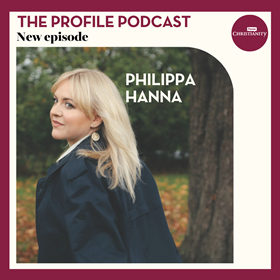
To hear the full interview, listen to Premier Christian Radio at 8pm on 2 May or download ‘The Profile’ podcast




















No comments yet