

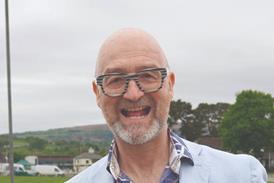
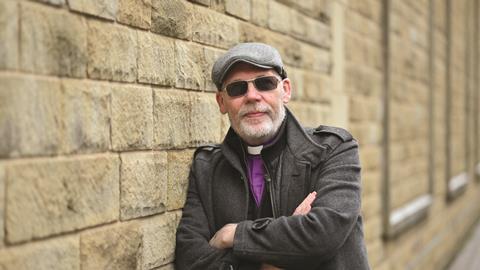

Needle exchanges, overdoses, rough sleepers and prayer. In Burnley, Pastor Mick Fleming runs a church unlike many others. AJ Gomez followed the addict turned pastor to witness what building a church for those on the margins really looks like
A woman in a beige parka stood among a small crowd gathered at the base of a stairwell, voicing a grievance. I couldn’t immediately tell who or what had drawn her frustration, but her raised voice, besting the others who were trying to reason with her, made it clear that someone had.
Having grown up on a council estate where drug use was commonplace, the scene felt familiar. I recognised the textured speech that comes from missing teeth, the prematurely aged faces, weathered garments and irritability as indicators of lives shaped by a long proximity to addiction.
I had just walked from Burnley train station to a postcode Pastor Mick Fleming had texted me, with only a vague sense of what his ministry would look like in practice. The commotion unfolding in front of me was a strange confirmation that I had reached the right place – even before I looked up and noticed the blue Church on the Street sign projecting out above the pavement.
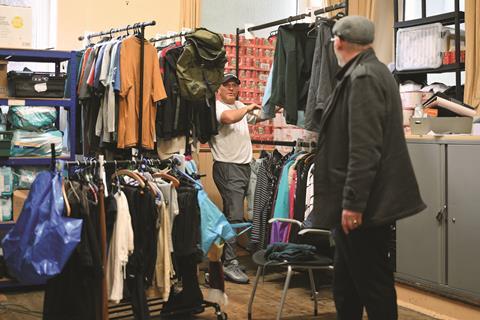
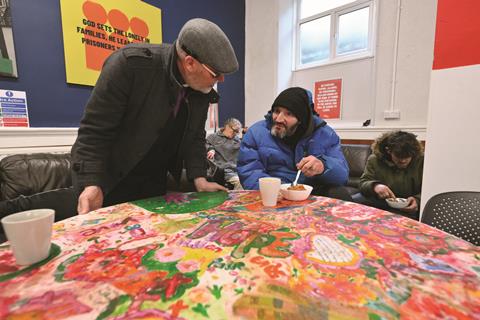
I stepped inside the aged chapel and found a man sitting on a staircase, balancing a fry-up on his knee. It was one of many free breakfasts that Pastor Mick’s ministry provides to those in need every Thursday.
Where the streets gather
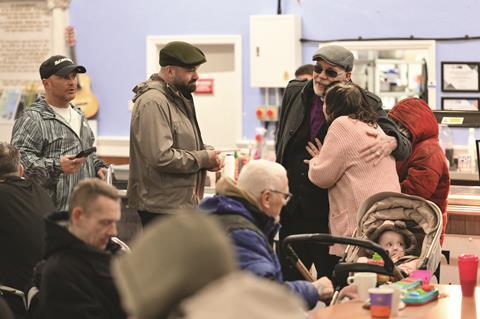
I took a moment to scan the setting, which resembled a secondary school cafeteria.
Small circular tables were arranged around the hall, each marked with signposts for different organisations and services. Two tables offered free NHS mental and physical health support. Between them sat Red Rose Recovery, an organisation that creates opportunities for people affected by substance misuse and offending behaviours.
On the walls, framed prints displayed the words of Jesus: “Ask and it will be given to you; seek and you will find; knock and the door will be opened to you” (Matthew 7:7). Another read: “Come to me, all you who are weary and burdened, and I will give you rest” (Matthew 11:28). Around them, smaller notices forbid the sale or consumption of drugs, violent behaviour or abusive language.
Eventually, I was led upstairs to Pastor Mick’s office. After a few minutes of chat, he rose from his desk and walked over to the window. He gently ushered a framed picture aside. Behind it sat two medium-sized cardboard boxes.
“They’re the ashes of two friends,” he said simply. “They had no one else.”
Both men had been members of the church. Pastor Mick had forged close personal bonds with them before they died from overdoses. When they passed, Mick explained, there was no family to claim them. So, the boxes remain with him instead.
Outside these walls, many of those gathered downstairs have experienced the same isolation. Here, however, they are known. When Pastor Mick and I returned downstairs, his reception was a vivid demonstration: A hug. A kiss on the cheek. A firm handshake. A pat on the back. A witty joke.
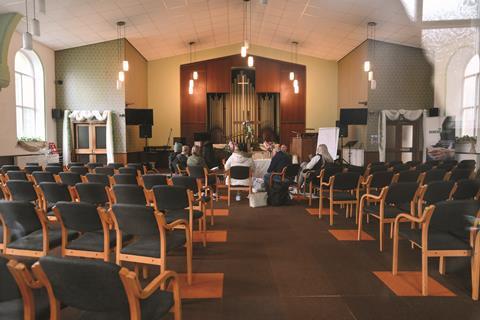
Every few steps someone called out to him with a warm greeting. These are his people. The same individuals who fill the hall, Mick says, will be the same individuals who occupy the chairs upstairs for this Sunday’s service. Outreach to the marginalised can appear extra-curricular in some churches, but here, the marginalised are the congregation.
Keeping people alive
That reality became even clearer as Mick guided me to the basement of the building and began explaining some of the services operating there, including a clean needle exchange.
The church, in partnership with NHS drug and alcohol services, provides sterile injecting equipment to people still actively using drugs. It is, Mick acknowledged, controversial. “I was on Radio 4 once, and an evangelical Christian was having a go at me because he felt we were helping people to sin. I felt he misunderstood grace. They’re two different theologies – but I believe in keeping [people] alive long enough to hear the gospel.
“If we don’t do this, there’s more chance of them dying because they’re sharing needles.”
Next door was an NHS-standard medical room where members of the congregation suffering from deep vein thrombosis – a condition common among long-term intravenous drug users – come to have wounds cleaned and bandaged.
That’s not witchcraft, man. That’s Jesus Christ
Mick explained that after years of injecting, veins collapse. Over time, circulation deteriorates, leaving the flesh so fragile that a mere cut is enough for it to begin to rot. NHS services agreed to operate from the church, but only if the facilities met strict clinical standards. “You won’t believe it,” he said, gesturing toward a medical grade sink. “That cost about 20 grand.
“They wouldn’t come in unless we did it. And they wouldn’t pay for it. So, we did.”
Mick insisted on building the space on the basis that many of the people the church serves won’t access these services anywhere else. “They’re erratic. They drink; they take drugs. A lot of them are mentally ill. They miss appointments and get struck off.
“The name is Church on the Street but it’s sort of become the Church for the street,” he says.
The day Mark overdosed
Over the next 24 hours, Mick shared a number of remarkable stories with me. Financial breakthroughs, vital provisions appearing from seemingly nowhere, or his sharing the gospel to 80 million people through a global BBC broadcast. There was even one story about a man named Mark who was apparently raised from the dead.
“We were out one day and he overdosed. Just hit the floor,” Mick said. “Paramedics arrived quickly and began working to resuscitate him. “They tried everything, Injections. The [defibrillator]. CPR.”
Eventually, one of the paramedics noticed Mick’s clerical collar. “The paramedic said: ‘Pastor, there’s no more we can do. He’s gone. If you want to say a few words…’”
By the point the paramedics had stepped away to retrieve a body bag, a crowd had amassed. “I told everyone: ‘If you believe in God, pray. If you don’t believe in God, just wish him well,’” Then, Mick placed his hand on Mark and prayed. “I just said: ‘Lord, just give him one last chance to know you.’
“And honestly,” he says, “he went *coughs* and sat up.”
The reason I go to the poor is because they let me know who the real poor are – me
According to Mick’s re-enactment, the paramedic who returned moments later struggled to comprehend what he was seeing. “He said: ‘That’s f****** witchcraft! He was dead!’”
Mick replied: “That’s not witchcraft, man. That’s Jesus Christ.”
When I meet Mark, he confirms the story: “I was gone. It was over,” he says matter-of-factly. “But when he prayed for me, that was the first time in my life I knew someone cared.” Mark has been clean for over a year now. He attends Church on the Street and helps others reach the rehab that eventually saw him through recovery.
Where Jesus is
“We see a lot of things we can only explain through Christ,” says Mick. “Our theology isn’t me standing over you praying. It’s me and you sitting down together praying. That’s where Christ is, in that gap between us.”
That vision comes from Mick’s own story. “When I was homeless, I went into a church in Manchester. They were really nice people, but I knew they wanted rid of me.” Outside, he says, the freezing, December cold quickly became dangerous.
“I was an alcoholic and drug addict, and I could feel a fit coming. There was a guy sat in a shop doorway, and he waved me over…he said: ‘Where are you sleeping?’ I said: ‘I don’t know.’ The man proceeded to share what little he had.
“He took his hat off and put it on my head. He got his quilt and wrapped it around me…he poured cider into my mouth till the shakes went, he rolled a cigarette, put it in my mouth and said: ‘You’ll be alright.’”
Mick says that night planted the seed that sprouted into the ministry he stewards today. “I knew I met Jesus in that shop doorway because I couldn’t find him in the church. When I’ve looked back over the years, it’s what’s led me to set up Church on the Street.”
A reciprocated need
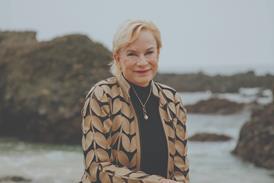
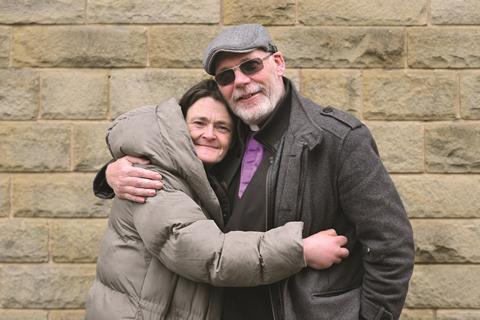
After some hours at Church on the Street, we headed to our next stop. Walking towards the car, the woman I’d seen on arrival approached us. She was keen to ensure her sentiments were included in Premier Christianity’s coverage: “The love and support I get from these people is amazing, I’d be dead without them,” she explained. “People don’t get it until they become homeless and need places like this. Just make sure you know – ’cos there is not enough support out there for this church.”
Her name is Claire (pictured above). She is schizophrenic, a former prisoner, currently sleeping rough and recovering from substance abuse. When I asked about the spiritual side of what she had found here, she said she had only recently started attending church. “I love it. I’ve started praying…When I started praying it was weird, Mick.”
“I know, it’s good, innit,” Mick replied.
Travelling light is my theology. They’re God’s burdens to carry, not mine
She looked at me: “I am not that calm ’cos I am on the street, but when I pray, I go right chilled and it’s mad.”
The congregation’s dependence on the ministry is plain, but it works because Mick recognises that, in their shared human frailty, he receives something just as essential in return. “The reason I go to the poor is because they let me know who the real poor are – me. I can see my own lack of tolerance. I get resentful. They show me my own sin. I need them more than they need me.”
Travelling light
Very little about this ministry feels orthodox. But why would it? The man who founded and stewards it is anything but. Which helps explain why, later that afternoon, we found ourselves driving towards a motorhome parked in a secluded residential area.
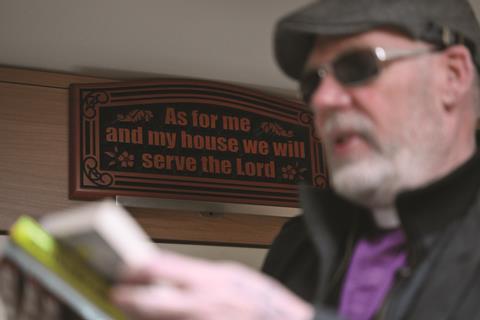
Nine months ago, Mick left his rented home in exchange for a modest second-hand motorhome. The oak-wood interior affords it a cosy aesthetic. Three floral-patterned suede benches line the sides of the vehicle, split by the small dining table on which Mick’s Bible sat.
Above the driver’s seat hung a framed board bearing the words of Joshua 24:15: “As for me and my house, we will serve the Lord.” A fitting choice, considering Mick’s rationale for this “church on wheels” is that it enables him to disciple people across the region.
He told me about the familiar faces he finds sitting outside Asda, whom he invites in for a cup of tea. The times he has met someone slipping back into drug use in the city centre and asked them to climb in, talking and praying together on their way to a hot meal.
“Jesus leaves everything for the one. What’s an authentic conversion for Christ? It’s relational. It’s getting to know someone; it’s journeying with them.”
Does the motorhome allow him to do this better? “Yeah,” he says. “It’s organic. And it works, they come back into the church and stay connected.”
Mobility also provides a measure of protection. As Mick explained, the economics of addiction make his work unwelcome in certain circles. “The average drug dealer will make about £1,000 a week from a user dependent on crack cocaine,” he says. “If we take five people off the streets and detox them, that’s £5,000 out of their pocket.” Threats against his life have come with that territory. Moving between “base camps”, as he described them, ultimately means he can stay safe.
The love and support I get from these people is amazing, I’d be dead without them
Mick told me the initial move came while reading passages of scripture that speak to travelling light. “It kept coming strong to me,” he says. The idea appears to resonate emotionally as much as it does physically.
On the walk to the car, I asked about the scent he was wearing – a thoughtless enquiry that started a conversation about our shared passion for fragrance. Creed Aventus, he revealed. “It’s my guilty pleasure,” he says, before adding poignantly: “I smell death every day.”
It is a window into the weight he carries, the pressing need to let it go and how the motorhome, in part, provides an outlet to do so. “Travelling light is my theology, it’s not just figurative. They’re God’s burdens to carry, not mine. And I am not equipped to do God’s job for him. I don’t want to, either.”
The other side
The following day, Mick arrived to pick me up from my hotel around 11:30am, and I quickly discovered he’d had an eventful few hours.
One of the church volunteers had found a woman collapsed drunk outside the building. Paramedics were called. Not long after, Mick received word that another person connected to the church had overdosed. Unfortunately, they died. Later that day Mick would meet the family to discuss funeral arrangements.
Elsewhere, someone had their car broken into and Mick had spent part of the morning comforting them through tears, trying to help work out what to do next. And he’d just come from a King’s Trust event where a group of disenfranchised young people – who had spent weeks painting the church building as part of a programme – were graduating.
He recounted this sequence of events with a calm detachment that felt misplaced given the weight of what he was describing. I pointed out what seems obvious: “You do realise that what you’ve just dealt with in one morning is what a curate in a quiet rural parish might deal with over three months?”
Mick concurred: “Oh yeah.”
“You wouldn’t have it any other way, would you?” I asked. He shook his head: “No.”
And the way he entered ministry testifies that is entirely true. He quite literally chose this.
The origin story
After completing his studies at Nazarene Theological College, Mick was invited to the home of Bishop Steven Lyn Evans and given a choice. “You can take your dog to the countryside,” Mick recalls the bishop telling him. “You’ll have a nice little salary…or you can take this £10 note and do it yourself.” The arrangement was simple: if Mick was to forgo the Church of the Nazarene route, then Bishop Steven’s International Christian Church Network would instead provide an accountability structure. But beyond that, Mick would be entirely on his own. “So I went away and thought about it,” Mick says. “Then I rang him back and said: ‘Give me the tenner.’”
What’s even more remarkable was that Mick was homeless at the time. He believes the symbolism was intentional. “It was basically saying: God’s called you to go out and do it yourself.
“It had to be that way for me; I just want to do what God wants me to do. No matter what that is.” He laughs as he adds: “I just pray it doesn’t hurt too much.”
As he told me this story, the road out of Burnley gave way to the gentler countryside – we closed in on Barnoldswick, a small market town. It is quieter, older and slower; quaint in the way that quintessentially English villages are. Here, Church on the Street runs a cafe and a charity shop.
If Burnley reveals one side of the ministry, the cafe shows another entirely. Inside, the tables were filled mostly with pensioners. The meals are free here too, though where poverty is less pressing, that comes secondary to the connection people find with one another. The struggles here may be less visible, but they are no less real. Loneliness. Isolation. The quiet erosion of community that so often trails ageing.
Our theology isn’t me standing over you praying. It’s me and you sitting down together praying
Different places. Different people. Different problems. But Mick explained how, as alternatively functioning parts of the church, they serve one another. The older regulars from the cafe volunteer at Church on the Street in Burnley, where Mick says they have naturally become “the mothers to the church”. At the same time, the family running the cafe come from the very circumstances you’ll find in Burnley town centre.
Adam sat down with us and briefly shared his story. Raised in Manchester, he struggled with amphetamines for much of his adult life. In December 2023, he went cold turkey after being unable to reach his dealer, nearly dying as a result. Through Church on the Street, Adam found faith, got through detox and began rebuilding his life. Today he works in the cafe alongside his family, serving the community that gathers here. It is one example of the exchange that now exists between the two places.
As we returned to the car, I was still trying to process it all – how something this sprawling, this intricate, had begun with just £10.
As I recounted all I had observed God cultivate from Mick’s decision to bypass a more traditional route, he was quiet for a moment. As we stepped onto the pavement, he raised his voice loud enough for it to carry across the road, calling out with a grin: “The £10 is still rolling!”


















No comments yet