








Premier Christianity editor Sam Hailes explores the worrying decline in reading—and why a Church that neglects books risks losing depth, curiosity and spiritual growth

Ever since the end of the second world war, intelligence has been rising in most Western nations. The commonsense assumption that if you educate and nourish people well, they perform better in IQ tests has largely proven true. This steady rise in average IQs became known as ‘the Flynn effect’ and, for decades, it was taken for granted.
Until now.
For the first time in perhaps a century, IQ results are flattening – or even falling in many countries, including the UK. I first heard about this concerning trend from The Times columnist James Marriott who, in a much-discussed Substack essay, pointed out that reading rates across much of the West are in freefall. The National Literacy Trust reports a “shocking and dispiriting” decline in children’s reading, now at its lowest level on record. Nearly half of adults say they no longer read for pleasure.
Much more is at stake than merely keeping the local library open. As Marriott argues: “Print requires us to make a logical case for a subject…You can’t just assert things in the way you can on TikTok or on YouTube…print privileges a whole way of thinking… that is logical, that is more rational and intellectually challenging. If you lose these things in our culture…it’s not surprising that people are getting stupider.”
Nearly half of adults say they no longer read for pleasure
Recently, while helping to lead an Alpha course, I found it surprisingly difficult to facilitate a discussion on the question: Why and how do I read the Bible? Not because guests had strong objections, but because many had simply never thought to open a Bible – or any other book. Almost everyone at our table said they “never” read for pleasure.
Reading rates were already falling before 2010, but the rise of the smartphone appears to have accelerated the trend. It might be too neat to blame falling IQ results solely on a lack of reading, or to draw a direct line between lack of reading and increased smartphone use. Still, I recognise in my own life how easily social media fragments attention and how picking up a book can feel harder than it once did. I’ve also noticed that people who boast about never reading often seem to lack curiosity, depth and humility – essential qualities for spiritual growth.
So what can be done?
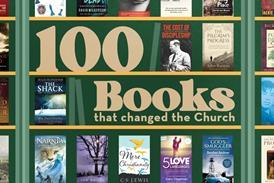
Thankfully, a much-needed national campaign is already underway, with 2026 being dubbed “the Year of Reading” – and organisers aiming to “help more people rediscover the joy of reading”. With World Book Day around the corner, Premier Christianity magazine has been collaborating with publishers and experts to produce a list of ‘100 Books that changed the Church’.
Compiling this list has been a joy. And perhaps joy is the key word. People won’t return to reading because they feel guilt-tripped, or even because they want to raise their IQ. It’s the pleasure of reading that will bring them back.
Have a look at the feature and let me know which title most shaped you – and why. Have we missed any books you think should be included? And perhaps most importantly: how can we cultivate a richer culture of reading in our churches?
Read this month’s cover story: ‘100 books that changed the church’























No comments yet