









What happens when our prayer meetings start to sound like the news cycle? For Derek Hughes, the answer came after a meeting following Russia’s invasion of Ukraine, which left him with an anxiety heavier than when he walked in. In moments like these, he asks whether we are bringing our fears to God or just spreading them around
I wasn’t worried when I walked in.
Russia had invaded Ukraine. The headlines were doing what headlines do — worst case, end times, the world tipping toward something unthinkable. And I’d managed, somehow, to stay steady. Concerned. But steady.
Then someone started to pray.
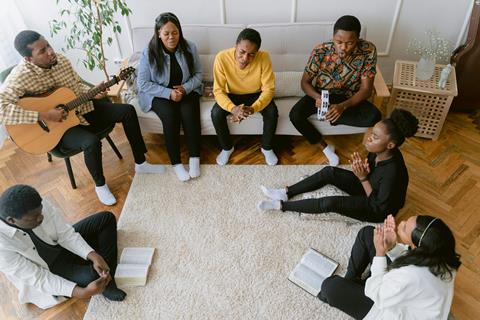
The first prayer drew me in. Someone named the cities — Kyiv, Kharkiv — and prayed for the people in them. It felt honest. Grounded. Human.
The second prayer went further. Civilian casualties. Hospitals hit. Children in basements. Still felt real, still felt like prayer.
The third brought the scale of Russia’s military. The fourth, the possibility of nuclear escalation. By the fifth, someone was praying about World War Three.
And then it tipped.
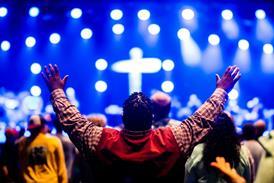
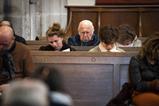
I couldn’t tell you exactly when. There was no dramatic moment. Just the build up. Prayer after prayer, concern after concern. Until something that hadn’t been in me when I arrived was now sitting in my chest. I walked out of that prayer meeting more anxious than I walked in.
I’ve been trying to work out what happened ever since. Because nobody did anything particularly wrong. These were genuine people with genuine fears, bringing them honestly to God. That’s what prayer meetings are for, isn’t it? You don’t leave your reality at the door. You bring it in.
And yet.
Something in that room wasn’t working. The more we prayed, the heavier it got. The fears weren’t being lifted. They were breeding. Passed around the room, then handed back with interest. The language was prayer. The energy was something else.
Closer to collective panic than an encounter with God.
That prayer meeting stayed buried until recently. America and Israel launched their strikes on Iran. The headlines did what headlines always do. Catastrophe, collapse, the pull toward the worst. I noticed the familiar tug. The urge to check, refresh, not look away.
I didn’t.
I made a deliberate decision to step back from the daily news cycle. Not ignorance just resistance. Because I know what the media is actually selling. It isn’t information. It’s agitation. I didn’t want to keep feeding something designed to frighten me. I’d faced that before — in a prayer room in 2022 — and I knew where it led.
And then someone mentioned a prayer meeting.
I noticed something in me hesitate. I wasn’t sure what to do with that. Because I believe in prayer. I believe in gathering. I believe that when everything is fracturing, the right instinct is to bring it to God. But I also know what it feels like to walk out of a room more frightened than when I walked in. And that didn’t feel right.
What is prayer actually for?
The Psalms are the most honest prayers in existence. They don’t avoid the darkness. Psalm 22 opens with abandonment. Psalm 88 never resolves. The writers bring everything — fear, rage, confusion, despair. Nothing is sanitised. And yet there’s a movement in almost all of them, even the darkest ones. Not from the wound to the cure. Not from fear to certainty. But from the crisis at the centre to God at the centre. The weight shifts.
The same situation looks different because the frame has changed. That’s what I think prayer is supposed to do. Not fix the world. Not smooth things over. But reorient us — move the centre of gravity from the crisis to the one who holds it.
What happened in that prayer room wasn’t dishonest. It just never made that turn. We named the fears. We listed the catastrophes. We handed them to God in the language of prayer. But we never actually shifted. We stayed inside the crisis, circling it, feeding it.
And walked out carrying more of it than we brought in.
The fears weren’t being lifted. They were breeding
I think about what it would have looked like if someone had prayed differently. Not denying what had just been said but refusing to stay inside it. Taking everything the previous prayer had named and placing it in larger hands. Reminding the room that God had not been caught off guard. That he was sovereign before this started and would be sovereign when it ended. That his faithfulness is not conditional on the stability of governments or the restraint of armies.
The fear would still be there. But it would no longer be the ceiling.
I haven’t stopped believing in prayer meetings. I haven’t stopped believing that the right response to a world that feels like it’s coming apart is to bring it to God — together, honestly, without sanitising what we feel. But I think there’s a question worth sitting with, next time we gather in a crisis.
Are we bringing our fear to God — or just spreading it around the room?
Because when prayer works, it really works. I’ve been in rooms where something shifted. Where the weight didn’t disappear but it moved. Where I walked out lighter. That’s what prayer is actually for — not to fix the world, not to smooth things over, but to remind us we’re held by someone who is ever-present and unchanging.























No comments yet