







Suicide has been legal in the UK since 1961 - but has the tide of public opinion turned on co-opting the health service into colluding with it? Following the fall of the Terminally Ill Adults Bill, Rev George Pitcher is praying that society learns to properly value the life-saving and life-enhancing role of our NHS
One of my fondest memories of working as a columnist for the Daily Telegraph, some 20 years ago now, was the comment thread below my online offerings. Digital journalism was still in its infancy and there was a certain innocence to readers’ responses back then.
“I’ve just discovered this bloke’s a vicar”, wrote one (I wasn’t a vicar, I was a priest, but same difference). “Religious people have caused all the wars and conflict in the world. I’d take them all outside and shoot them.”
I’d been writing in opposition to assisted dying, in those days more honestly called assisted suicide or, sometimes, voluntary euthanasia. Other pro-euthanasia readers didn’t wish me such a swift execution. They wrote to say that they hoped I died a long and agonising death from cancer - and they claimed to be on the compassionate side of the debate!
It is morally dangerous when a state endorses in its legislature that some lives are not worth living
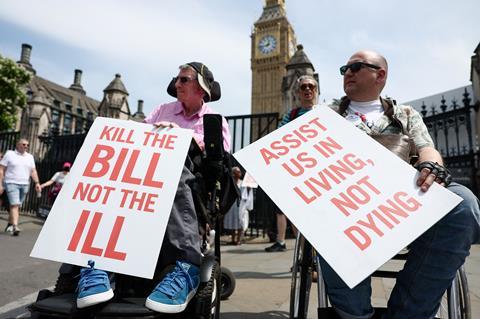
A change in the law to allow assisted suicide was widely considered to be inevitable then, but lately, the tide seems to be turning. The Scottish Parliament voted down an assisted dying bill last month and while a vote in Westminster narrowly passed in the House of Commons, it fell through lack of parliamentary time in the Lords last week.
Howls of complaint that the bill was defeated by filibustering are misplaced. It was a very poorly drafted private members’ bill that would have led to chaos and high jeopardy in the NHS. You wouldn’t be able to suggest 1,200-plus amendments to a bill that was safe and well-crafted. The Lords performed its job of scrutiny honourably.
Turning the tide
Outside of the legislature, and perhaps more anecdotally, there’s a detectable sea-change in public opinion, too. Wendy Duffy, a 56-year-old who was in otherwise good physical health, died in a Swiss clinic last week, heartbroken over the death of her only child.
While she would not have met the requirements for an assisted death under the UK proposals, her statement “my life, my choice” is the slogan at the heart of them. And that slogan doesn’t withstand examination. Suicide has been legal in Britain since 1961; it’s co-opting a health service to collude in it that’s the issue.
There’s a strong feeling that we’ve stared into the abyss and stepped back. Scotland did. Then the UK parliament showed how dangerously a capricious bill could change the State’s relationship with its citizens on matters of life and death.
Duffy had wished an assisted death was available to her in the UK. Her tragedy shows where assisted dying, however well-intentioned for the terminally ill, ultimately ends up – as a “treatment” for depression.
Hypocrisy and hope
But while we might be tempted to suppose assisted dying’s moment has passed in Britain, its enthusiasts will be back. And their hypocrisy is breathtaking. They complain that the unelected House of Lords blocked the will of the elected Commons. Yet they have, in 2003 and 2014, tried to introduce assisted dying through amendments to existing legislation solely in the Lords, avoiding the Commons altogether.
Lord (Charlie) Falconer of Thoroton is euthanasia’s poster boy in the upper chamber. He chaired a supposedly ‘independent’ commission in 2012 that was nothing of the sort. It was stuffed with supporters of assisted suicide who, rather unsurprisingly, published a report commending it.
More recently, Lord Falconer has accused the Home Secretary, Shabana Mahmood, of opposing assisted dying because of her religious beliefs. The law of the absurd opposite might be applied. If we lived in a theocracy – and thank God we don’t – would Falconer accuse someone he disagreed with of being influenced by their atheism?
You wouldn’t be able to suggest 1,200-plus amendments to a bill that was safe and well-crafted
Of course not. Yet Mahmood, who is a Muslim, and countless others are routinely charged with imposing “religious beliefs” on those who don’t share them. This thoughtless device ignores that religious belief forms people. Christian ethics, in particular, are the foundation on which British institutions are built.
As it happens, the objections of many religious people to assisted suicide are based on mainly secular principles: That it is morally dangerous when a state endorses in its legislature that some lives are not worth living; that the disabled and terminally ill shouldn’t be coerced into an assisted death; that a healthy society channels all its efforts and resources into palliative care.
Falconer, back in his bogus-commission days, couldn’t guarantee that legal safeguards would prevent anyone (like Duffy) dying an assisted death that shouldn’t have happened. Once again, we must ask him: how many such deaths are worth him having what he wants?
It feels like we’ve come to our senses in the UK, if only briefly, on assisted dying. Let’s take a breath and value what we have. A brilliant health service committed to care and the protection of life. And then let’s resolve to cherish and keep it.