








Bucking the current trend, the Scottish Parliament has failed in its most recent attempt to legalise assisted suicide. There’s many good reasons for that, says Nathanael Smith, but the country’s long history of revival, the unity of the Church and the prayers and actions of Christians all played their part
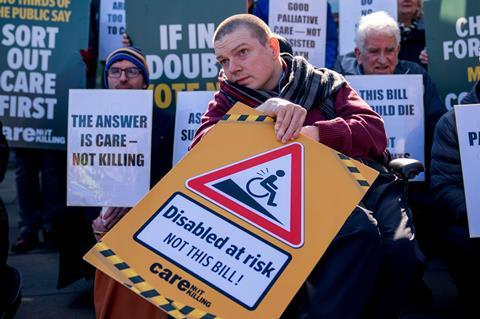
This week, MSPs in the Scottish Parliament rejected the latest attempt to legalise assisted dying. A vote that many commentators said was on a knife edge turned out to be a significant defeat. The Assisted Dying for Terminally Ill Adults (Scotland) Bill failed to pass by 69 votes to 57.
I, for one, was immensely grateful and relieved at this result. But I also think that it signals something wider: Christianity still has a part to play in shaping policy and culture in Scotland.
My country is often portrayed as having more progressive values than our neighbours to the south. Online agitators, quick to decry the Scottish as “woke”, would have you believe that Scotland is a test case for secularism gone mad, and a warning to the rest of the UK about what happens when you force Christianity out of the public sphere.
Churches rallied in prayer in a way that few other pieces of legislation have mobilised believers
Such language, while unnecessarily divisive and over-the-top, has some basis in reality. The most recent census indicated that the majority of Scots have no religion. Advocates for freedom of religion point to legislation such as the Hate Crime Act and the introduction of buffer zones around abortion clinics as a sign that Christian voices are not being heard, and that there is a concerted effort to push prayer and scripture out of public life.
It perhaps didn’t help this perception that, on the day of the final assisted dying vote, the official Time for Reflection was led by someone from the Humanist Society of Scotland. But dig a little deeper and it is clear that not only is the Church in Scotland still active, it still has the power to shape politics today.
Mobilised and motivated
Take this anecdote I heard from someone who works in an MSP’s office: the time that they received the most campaign emails against the bill was on a Monday morning, as countless Christians contacted their MSPs after attending church on Sunday. The nationwide Church was not silent on this issue.
I know that churches rallied in prayer, too, in a way that few other pieces of legislation have mobilised believers. In my own city of Edinburgh, dozens of church leaders from different denominations gather together every week to pray for the city and for Scotland - no doubt assisted dying was a regular topic at these remarkable weekly meetings.
The role of faith in Scotland surrounded discussions around this bill. Torcuil Crichton MP, who represents the Western Isles in Westminster, voted against the UK’s Terminally Ill Adults (End of Life) Bill recently. Ahead of the Holyrood vote on the Scottish version, he wrote a column in The Times, describing his constituency as one of the most “religiously observant parts of the UK”. Indeed, the home of the Hebridean Revival still closes down on a Sunday. The Christian faith remains embedded in that community in a way rarely seen elsewhere in these Isles.
A strong faith heritage
John Mason, an independent MSP, said one colleague told him religious people should “be up front” about the fact that they “oppose the bill because of their belief in God.” But it just isn’t as simple as that. While a scant few of Holyrood’s 129 MSPs attend the monthly Parliamentary prayer meetings, there are many more who hold to a cultural identity of Christianity, and this continues to shape their outlook.
Many will have attended one of Scotland’s 369 Catholic schools, which maintained a faith-centered approach to education even after being brought into the state school system in 1918. I heard from colleagues that several MSPs reckoned with their Christian heritage as they wrestled with these life and death questions.
My country is often portrayed as having more progressive values than our neighbours to the South
There were many good reasons that this bill didn’t pass that had little to do with Christianity. Issues of coercion, the rights of disabled people and the challenges around conscientious objection laws put off many MSPs. The tension of making these provisions in Scotland when not all of the powers were devolved to the Scottish Government left too much uncertainty hanging over the bill. After hundreds of amendments, the final version still lacked safeguards that more sympathetic MSPs had hoped would be included by the time it came to the vote.
Bucking the trend
But, at the end of the day, assisted dying legislation still failed to pass in Scotland, thus bucking the current trend in the Western world, where such provisions are increasingly becoming the norm. I wonder if the legacy of Christianity in Scotland played a part in this surprising result.
For a moment, people were forced to reflect on the value of life, the dignity of caring for the old and infirm, and what these things say about the country we want to build. And in that moment, Christian voices were clear, compassionate and played an undeniable role, through prayer and petition, to stop this bill from passing.
So, to the Church in Scotland, take this as an encouragement: your voices are not silent, especially when united, and your opinions can still shape politics.
Perhaps we just need to speak up more.

















No comments yet