



A dubious claim about an archbishop’s complaint over The Archers reveals the BBC’s troubled relationship with religious programming. The corporation consistently misunderstands people of faith, says Rev George Pitcher
Trying to get the dogs fed before presiding at an early Eucharist in a neighbouring parish last Sunday morning, my old friend Ed Stourton caught my ear on Radio 4. He had an item on the 75th anniversary of The Archers and interviewed a writer and an actor from the vintage soap.
The actor was John Telfer, who plays Rev Alan Franks in the show and, as I bundled my stuff into the car, I heard him say that when his character married a Hindu in 2008 “the team” received a phone call from the Archbishop of Canterbury’s office demanding: “What the hell do you think you’re doing?”
Hmm, I wonder who that was, I thought as I drove. I’d worked at Lambeth Palace shortly after the alleged phone call. And I wasn’t the only one wondering, it turned out. Another friend and fellow Anglican priest, Guy Wilkinson, who was with me at Lambeth, got in touch soon after.
The BBC’s religious output has degenerated into a blancmange of ethics and culture
He was rather more exercised about it, as he was then-Archbishop Rowan Williams’ interfaith chief at the time and would have had no problem – indeed, would have celebrated – a priest marrying a Hindu. Even a fictional one.
“It’s nonsense,” Guy told me. “It’s not my language. I have real clergy friends married to Jews and Muslims, so why would I or the Church of England object to a fictitious Hindu spouse? I assume this is just another, probably invented, stick to beat the Church with. Let the BBC tell us who said it and whether they recorded it verbatim.”
Over to you, BBC. I’m sure Stourton, as a good Roman Catholic, wouldn’t stand for England’s established Anglican Church being slandered in any way. But it did set me thinking about how religion is treated at the BBC.
Religious output
Under Ofcom’s 2023 operating licence, the Beeb is required to offer a “suitable quantity and range” of religious programming to reflect the diversity of beliefs and cultures across the UK. This rubric replaces the old mandatory hour quotas for BBC’s religion output as a public service broadcaster.
In those old days, the BBC tried to get as much of its religious hourage into the Sunday ghetto. Churches are all about Sunday, you see. Hence Songs of Praise, which insiders have long told me the corporation wanted to axe but couldn’t because it was too successful.
What was slightly hilarious about this Sunday policy (and it’s telling that Ed’s programme is simply called Sunday) is that it largely didn’t reach its Christian audience at all. I lost count many years ago of the times I was invited on to the BBC to discuss some church matter on a Sunday morning and the slight surprise when I said I couldn’t. Because I was at church.
Most of us might be normal, but we’re not ordinary. Faith is an extraordinary thing
The way I styled the intro to this column was illustrative; Christians are often dashing about on Sunday morning. This has adversely affected those congregants who might like to listen and participate, as well as we clergy. Meanwhile, the BBC’s religious output has degenerated into a blancmange of ethics and culture; a passing nod to the humanities while hurrying along its austere secular path.
Then there’s BBC drama. Not so long ago, clergymen (and it was men) were portrayed either as bumbling old fools with broken biscuits in their pockets, or sinister creeps likely defrauding their parishioners’ funds. Or they were a diversionary suspect in a murder mystery.
The portrayal of priests
Rowan’s successor as archbishop, Justin Welby, summed it up in a 2021 speech when he said TV depictions of priest were either as “rogues or idiots”. I’m perfectly willing to accept that I’m both of those things, but a lot of priests are neither and it’s not just unrepresentative. It points to an indolent attitude among commissioners.
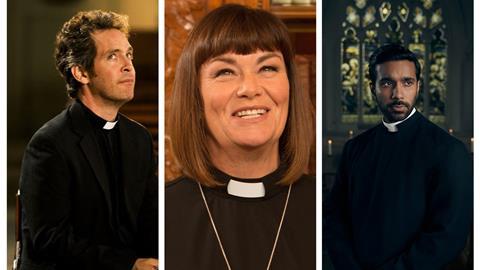
In fairness, matters have improved. TV priests have become engaging and funny (Rev, The Vicar of Dibley) or sexually hot (Fleabag, Grantchester). I guess that’s an improvement at least. We seem to have gone from rogues or idiots to satirical or sexy.
But what broadcasters don’t seem to have grasped is that all people of faith, not just priests, are usually quite normal. There’s a tendency to camp us up or send us up, if we’re not ignored altogether.
Ultimately, though, I guess that might be flattering. Most of us might be normal, but we’re not ordinary. Faith is an extraordinary thing that doesn’t fit easily into the parameters of BBC programming.
So we’re mocked and misrepresented. But, BBC, don’t be surprised if priests like me and my friend Guy watch and listen to those programmes and say right back at you: What the hell do you think you’re doing?





















2 Readers' comments