









The Bible teaches us that right judgement is a vital part of godly leadership. Yet the chaotic appointment of Peter Mandelson as US ambassador reveals more than civil service protocol failures – it exposes a prime minister dangerously lacking in discernment, says Rev George Pitcher

Daytime television isn’t all tosh. It can educate, deepen understanding and remind us who we are. Watching Sir Olly Robbins, the recently-sacked foreign office permanent secretary, being grilled by MPs over the mis-appointment of Peter Mandelson as the UK’s ambassador to Washington, I was reminded of the mysterious ways in which the civil service moves, its wonders to perform.
As a young journalist in the 90s, I worked the beat for a national newspaper during the Thatcher government’s privatisation of the UK’s utilities. I had to develop contacts among civil servants who could tell us what was going on. In search of a scoop, the favoured method in those days (when journalists still enjoyed lavish expense accounts) was lunch at a decent Westminster restaurant and a bottle or two of good claret.
On occasions when the wine did not loosen the tongue of the mandarin I was entertaining, the process could be frustrating. What I learned was how to ask the right question.
A direct question could be offensive. “Is the government going to sell-off the water companies?” wouldn’t get me anywhere, even on the second bottle. But: “Would the minister be minded to support primary legislation to maximise tax receipts from the industry?” might elicit an: “I’m glad you asked me that”.
Questions and answers
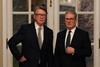
It seems to me that in his haste to appoint Mandelson to his post, Sir Keir Starmer - unusually for a barrister - never asked Robbins the right question. Had he asked: “What would you say if I sent Mandelson to Washington?” he may well have received a similar response to that often quoted by Sir Humphrey Appleby in 80’s sitcom Yes Minister: “Very brave, prime minister”. Which Starmer should have found startling enough to stop him in his tracks.
Quoting from a somewhat darker TV drama, House of Cards, if asked whether Mandelson was a risk bordering on reckless, the answer might have been: “You may think that – I couldn’t possibly comment.”
Being “furious” when it’s too late isn’t the exercise of judgement
This language is not just theatrical. In his interrogation, Robbins went on about due process and used the dreaded word “guidance” (dreaded because no one ever says what it is) several times. On more than one occasion, Robbins made it clear that it wasn’t his job to tell the prime minister what to do, far less to tell him what was in the vetting files.
Just as I had to do as a journo back in the day, the PM had to ask the right question. That he didn’t do so is, in my view, evidence that he lacks good judgement, or perhaps any judgement at all.
One can argue that the No 10 machine was in a hurry to appoint Mandelson before the inauguration of President Donald Trump; that they didn’t care about vetting and didn’t tell Starmer before he signed off the press release, but the buck stops with the person in charge. Otherwise, well, he’s not in charge.
Godly judgement
Being “furious” when it’s too late isn’t the exercise of judgement. And judgement – as is justice – is a Christian ethic. The scriptural injunction to “judge not that you be not judged” (Matthew 7:1) is interpreted as a condemnation of hypocritical judgementalism, enjoining us to remove the plank from our own eye before spotting the mote in another’s.
Turned grammatically from a passive negative to an active positive and we might live in the knowledge that, if we judge, then we will be judged. That’s the essence of leadership, political or otherwise.
The buck stops with the person in charge. Otherwise, well, he’s not in charge
A slight challenge arises in the dual definition of judgement. There is judgement as in the identification, condemnation and punishment of vice, wickedness and evil. Then there is judgement in the sense of wise discernment in a considered course of action.
These are reckoned to be separate things. For right or wrong (scholars argue about it forever), the former is associated with divine judgement and a God of wrath. The latter is altogether more temporal, the sort of judgement one uses for ordering a wine for a senior civil servant.
What life experience tells us is that discernment of what is right and wrong – and for many of us that’s what the fear of God means – is the start of wisdom. For the famously atheist Starmer, that may just be a lesson learned too late.






















6 Readers' comments