









After 16 years of Viktor Orbán, Hungary has elected Peter Magyar as its new Prime Minister. But while some are assuming the country will now take a fast, handbrake turn in a different political direction, David Campanale believes Hungary will maintain its same conservative, Christian ethos
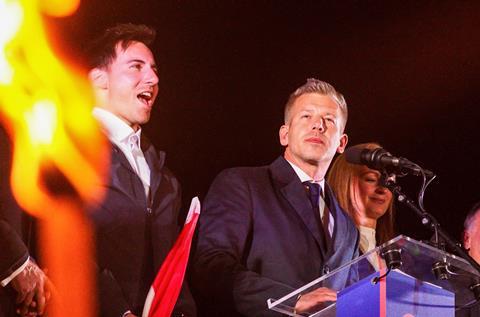
After 16 years of Prime Minister Viktor Orbán, Hungary’s electorate has voted to maintain the national, Christian, conservative direction of the central European country. They did so by removing his Fidesz party from power and electing Peter Magyar’s opposition Tisza Party in his place. Hungarians wanted Orbán’s policies, but without the allegations of cronyism and corruption hanging over his government.
Due to the way Hungary’s electoral system is designed to reward the winning party, Tisza captured two-thirds of the seats up for grabs but with just 53% of the vote. This ‘super-majority’ allows them to amend the national constitution, if they choose. Magyar’s new government has 136 MPs, to the 57 mandates won by Fidesz.
The far-right ‘Our Homeland’ platform is the only other party to enter Parliament, with six members, having crossed the 5% threshold. No parties of the left won even a single seat.
Different vehicle. Same direction
With all the exultant jubilation on the banks of the river Danube in the capital, Budapest, a non-Hungarian observer might imagine the country had just taken a fast, handbrake turn in a new political direction. But though the make of the political vehicle has changed, the direction of travel remains very much the same. Until 24 months ago, Magyar was a junior Fidesz functionary who broke away to establish a new centre-right alternative. His commitment to staying the government’s political course worked in successfully winning over the wavering.
As with Orbán, Magyar opposes the European Union’s migration pact, which requires member states to physically host a share of asylum seekers or pay €20,000 for every rejected migrant. The incoming Tisza Prime Minister also voted against the EU’s planned €90 billion loan to Ukraine.
Magyar made plain he wants strong borders, even threatening to cancel the work visas that Fidesz issued to foreign citizens employed in Hungary. And on the huge issue of the country’s strategic dependence on Russian oil and gas as a land-locked country, he says he won’t change anything before 2035.
Judging by the evidence of his winning election campaign, Peter Magyar’s policies look no different to Viktor Orbán’s. This suggests at first sight that Hungarians didn’t vote to change ideology but voted instead for a change at the top. What was there not to like about Magyar? Tisza pledged to introduce anti-corruption reforms, address rule of law concerns, make public appointments based on merit and secure the unlocking of frozen EU funds. Voters who’d had enough of 16 years of Orbán could satisfy their desire for change and in doing so, keep things the same.
Fidesz made their mark in 2011 by adopting a new constitution which recognises “the role of Christianity in preserving nationhood.”
Other issues were also at play. Hungary’s economy has been stagnant for four years, with flatlining living standards, while those elsewhere in central Europe have surged ahead.
Any financial reward to voters from Brussels for removing the pugilist Orbán will make a difference to deteriorating services, such as health and schools, where teacher pay has been particularly poor. A massive €35bn (£30bn) in funds owed to Hungary has been held back by Brussels, over so-called ‘rule of law’ concerns. But Fidesz loyalists say it’s to punish Orbán for refusing to surrender national sovereignty, such as Hungary’s ‘child protection’ measures on LGBT issues.
Fidesz literally means ‘faith’. Though founded by a group of twenty-something students in 1988 as a socially liberal party, the Christian Democrats in Fidesz took the ascendancy a few years later. With Viktor Orbán making more of his Calvinist presbyterianism, the party moved in a different, more socially conservative direction.
Fidesz had been the first political party to be registered in the dying days of Communism anywhere in the Soviet bloc. Their leaders were determined to keep Hungary politically neutral, but firmly within the European family of sovereign, independent nations. These remain their goals.
As a 24-year-old Young Liberal Democrat councillor visiting from Britain, I spoke at the first Fidesz party congresses in Budapest in 1988-89, even having a few drinks in a beer cellar with Viktor Orbán himself. As a young television journalist, I also produced the first and only broadcast interview he gave in Britain, for Channel 4 in 1990, until Miriam Cates secured a sit-down discussion a few weeks ago for GB News. However, as Lord Acton once famously said, power tends to corrupt and absolute power corrupts absolutely. And answering for his actions in government hasn’t been an Orbán strong point.
Christian in policy; less Christian in power
In those early days, I had hoped Fidesz would pursue centre-left positions on economic, environmental and foreign policy priorities, while also embracing a more relational and covenantal Christian approach to politics. In throwing out their Communist era constitution, Fidesz made their mark in 2011 by adopting a new constitution which recognises “the role of Christianity in preserving nationhood.” It also defines marriage as “the union of a man and a woman”, includes the “duty to help the vulnerable and the poor” and promises that “life shall be subject to protection from the moment of conception.”
But did they break covenant with God and the people by how they pursued and held onto power? It seems it’s this form of idolatry where it all went wrong. For God’s work should rely on God’s ways. As one Hungarian commentator said following the result, “Orbán did not lose the argument. He lost the trust” of voters.
Even here, this assessment needs qualification. As if winning four successive super-majorities since the general election of 2010 wasn’t enough – an unprecedented record for any modern political party anywhere in Europe – the 38.4% poll support Fidesz obtained in 2026, if repeated under Britain’s first past the post electoral system, would have given Orbán a massive win, under normal party politics. After all, Labour secured a far smaller 33.7% of the national vote in the 2024 UK general election but attained 411 seats and a majority of 174 seats in the House of Commons.
Hungary’s opposition learned that the only way to secure change, after recurrent defeats for Magyar’s predecessors, was for their disparate efforts from the centre and the left to unite behind someone credible, but from the right of the spectrum. And this is what they did.
Is it too early to write off Orbán? He is still young for a politician. He has promised to build on this significant vote. All the talk that he is an authoritarian opposed to democracy doesn’t hit the mark. After all, which autocrat rings up his opponent to concede defeat, congratulate him, then plan the handover of power? One option is that Orbán takes place front and centre in the European Parliament, following future EU elections. He might then have a bigger audience for his desire to bring Christian renewal to the foundations of Europe direct to Brussels.
But the pursuit of political position in the hope of pursuing the right isn’t enough. As scripture warns in the Book of Romans, no-one should ever hope to succeed by saying, “Let us do evil, that good may come.
























3 Readers' comments