










The revelation that Peter Mandelson was flagged as a security risk yet still appointed US ambassador has plunged the government into controversy. In a time of fragile political trust, the integrity of our leaders matters more than ever, says Tim Farron MP
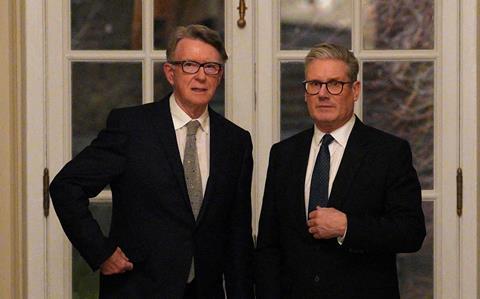
This week, Keir Starmer has appeared before Parliament to explain why he seemingly didn’t know that former US ambassador, Peter Mandelson, had been deemed a security risk by the government vetting agency and yet was still granted security clearance by the Foreign Office.
This throws up huge questions about the secretive way that governments work, the level of curiosity – or lack of it – shown by the prime minister, and the apparently dismissive attitude towards the fairly obvious risks of appointing Peter Mandelson to, well, anything really… but especially a post so sensitive.
Theories abound.
Some insist that the PM must have known about these risks, but was set on appointing Mandelson anyway. Others say it was the foreign office’s decision and information from security checks is never divulged to ministers. Or that they felt obliged to clear Mandelson because he had already been appointed.
Whatever the truth, it throws up deep questions about transparency and trust in government.
The last decade has shown us the inherent instability that occurs when Number 10 becomes a revolving door
Sir Olly Robbins, the foreign office permanent secretary, was swiftly fired. Starmer stood before the House of Commons and said it was “staggering” that he was not told the truth. But there’s a saying in politics, attributed to Ronald Reagan, that goes: “If you’re explaining, you’re losing”.
I suspect people have already formed their opinion: whether they think Starmer is lying, or that he simply wasn’t curious enough; that he is not in charge of his own government, is just trying to save his own skin, or that this is no big deal and we should just stop worrying about it…
None of these possibilities cast either the PM or our political system in a good light. Trust in authority is already at an all-time low, and this simply undermines it further.
Out of the loop
Journalist Peter Kellner has pointed out that keeping prime ministers out of the loop is nothing new. In a Substack post, he explained that from 1966, the government of Rhodesia (now Zimbabwe) was heavily sanctioned by the UN but continued to receive oil via a secret deal between energy companies. And British foreign office officials were complicit with this.
Then–prime minister Harold Wilson received a note to this effect, buried in the general deluge of documents that crossed his desk – meaning that, according to Kellner, “Wilson was technically told, but didn’t actually know.” This didn’t come to light until 1978 and became known as the “Rhodesia solution”, a handy way for officials to absolve their consciences.
In a time of fragile political trust, surely there can be few more important issues than the integrity of our Prime Minister
The comedy series Yes Prime Minister had great fun playing on this idea – the battle between civil servants who thought they knew best and the politicians, represented by the hapless Jim Hacker, who had one eye on the common good and the other on their electoral prospects.
In one exchange, Hacker asks his private secretary, Bernard Woolley, whether the foreign office is keeping something from him. Woolley replies: “I don’t know specifically what, Prime Minister, but I do know that the foreign office keep everything from everybody. It’s normal practice.”
Bigger issues
It is astonishing that a 1980s political satire so accurately reflects current reality. It also feels barely conceivable that this is the main political story when the Middle East is in turmoil, Ukraine is still being battered by Russia, and the government is facing multiple intractable domestic issues.
With local council elections imminent, this sense of malaise and incredulity feeds into a narrative that Britain is broken and that our government has no clue how to fix it.
So how should Christians respond?
The last decade has shown us the inherent instability that occurs when Number 10 becomes a revolving door. So perhaps we should just accept that no leader is perfect and choose continuity as we seek to grapple with more important issues.
But in a time of fragile political trust, surely there can be few more important issues than the integrity of our Prime Minister?
I’ve said before that the Bible is not overly concerned with forms of government, but it has a lot to say about what good government looks like. God delegates authority to human rulers and Romans 13:4 tells us that “the one in authority is God’s servant for your good”.
All leaders are flawed, but they are expected to work for justice and peace, to protect the vulnerable, and act with integrity. Ultimately, each of us will have to answer to God for our actions.
So, let’s pray the prophet Jeremiah’s prayer, to “seek the peace and prosperity of the city to which I have carried you into exile. Pray to the Lord for it, because if it prospers, you too will prosper” (Jeremiah 29:7).
Let’s pray for our leaders to pursue the common good, and for God to give them good judgement, integrity and wise advisers as they seek to navigate the challenges of our current political landscape.





















1 Reader's comment