









As US commanders reportedly invoke Armageddon to justify war with Iran, AJ Gomez reports on how Christian leaders are debating the meaning of biblical prophecy
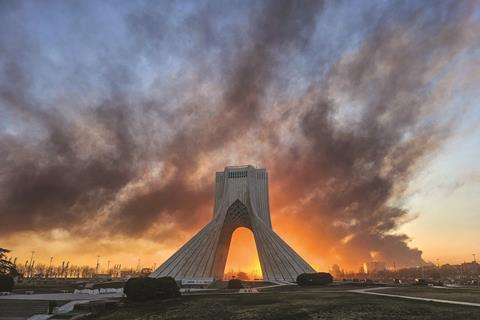
On 28 February 2026, President Donald Trump announced the start of US military operations in Iran. Operation Epic Fury was aimed at “eliminating” what he called “imminent threats” within the Iranian regime.
In the days that followed, independent journalist Jonathan Larsen reported on Substack that some US troops were being told the Iran war was part of God’s plan. According to a complaint from a noncommissioned officer, US forces were told President Trump had been “anointed by Jesus” to spark events leading to Armageddon.
The Guardian cited 200 further complaints received by the Military Religious Freedom Foundation that commanders were invoking Christian “end times” rhetoric in relation to the conflict. One said that the operation had been framed as “God’s divine plan”, with references made to the book of Revelation and the imminent return of Christ.
While the news provoked derision in many quarters, some prominent American evangelicals have agreed that events in the Middle East are related to Bible prophecy.
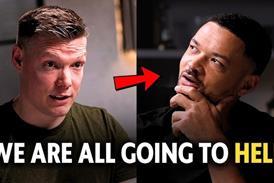
In a recent YouTube video, evangelist Greg Laurie suggested that Iran’s hostility towards Israel was an indication of end times prophecy being fulfilled: “The Bible tells us that the final conflicts of humanity will centre on Jerusalem,” he said.
“[Iranian leaders] also threatened to wipe Israel off the map,” he noted.
Writing for premierchristianity.com, theologian Rev Dr Ian Paul challenged this view, which he described as dispensationalist premillennialism. “It takes a strictly futurist view of Revelation, seeing John’s writings as predictions of the end times, in the distant future from John, which included a time of ‘tribulation’ and a ‘secret rapture’ of believers from the earth.”
Rev Paul traced the origins of this system to a theological framework developed by John Nelson Darby in the 19th century and later popularised through the Scofield Reference Bible of 1909. Paul argues that several key ideas within the system are misreadings of the New Testament, including the rapture, which he says “is not taught at all but arises from misreading Matthew 24:40 and 1 Thessalonians 4:17.”
Laurie addressed this criticism directly, acknowledging that while John Nelson Darby helped popularise rapture teaching in the 19th century, “he didn’t invent it”.
Laurie insisted the rapture had biblical and early Church roots, saying it is taught by “the apostle Paul, the apostle Peter, the apostle John. It is mentioned by Jesus Himself” and that early Christian writers also anticipated “the event when the Lord would call believers to heaven”.
But predicting the return of Christ through world events is impossible, according to Rev Paul’s reading of Revelation. He explained: “When Jesus comes, we will have no warning at all. Immediately before the mention of Armageddon, Jesus Himself appears to interject: ‘Behold, I am coming like a thief!’ [Revelation 16:15, ESV]
“It is almost as if Jesus is anticipating that, years hence, some people will misread this language and think that some powerful individual will be anointed to usher in Armageddon and the return of Jesus. No, says Jesus, I will come at a time that no one expects!”
A just war?
Aside from end-time debates, the ongoing conflict has prompted many Christians to ask an equally pressing question: can this war be morally justified?
In Christian ethics, this debate is often informed by the application of Just War theory. Writing for premierchristianity.com, Rev George Pitcher explains how the framework, developed by Christian thinkers such as Augustine of Hippo and Thomas Aquinas, attempts to determine when the use of military force can be morally legitimate. Conflicts are evaluated against several criteria, including whether there is a just cause, whether the war is declared by a legitimate authority, whether there is a reasonable chance of success, and whether it represents a last resort after diplomacy has failed.
Applying Just War principles to the Iran conflict, Pitcher argued that while the US might claim a just cause – on the basis that Iran is pursuing nuclear capabilities that threaten the region – the overall case remains weak, because diplomacy had not been exhausted. “A just war has to be a last resort”, he wrote.
Operation Epic Fury has been framed as “God’s divine plan”
Cardinal Robert W McElroy, Catholic Archbishop of Washington, also said the conflict fails several requirements of the Catholic just war tradition because America was not responding to a “grave and certain” attack, noting that Catholic teaching rejects preventative war based on future threats.
He also questioned whether the war has a clear objective, noting that “you cannot satisfy the just war tradition’s criterion of right intention if you do not have a clear intention.
“Catholic teaching leads to the conclusion that our entry into this war was not morally legitimate”, he concluded.
However, not all Christian leaders agree. Dr Daniel Heimbach, senior research professor of Christian ethics at Southeastern Baptist Theological Seminary, argued the conflict must be understood within the context of decades of hostility between Iran and the United States.
“The strikes are warranted by a 47-year war with Iran, not of our choice, that has been perpetrated by them. You can characterise the [attacks] as an effort to end it.”
Christians in Iran
Gaining an accurate insight into the state of the Iranian Church is difficult due to reporting restrictions and censorship by the authorities. However, according to many Christian ministries in the region, the number of Christians in Iran has been “growing rapidly” in recent years.
“The underground Church in Iran has been tested through persecution, conflict and economic crisis,” said David Yeghnazar, the executive director of Elam, a Christian charity involved in media ministry and church planting in the country. “And through it all, by God’s grace, the Church has continued to grow.
“We are in a season of unprecedented openness to the gospel among Iranians.”
Writing for premierchristianity.com, Elam’s advocacy coordinator, Chrissy Parkes, said the recent death of Ayatollah Khamenei could “mark the beginning of a new chapter” for the country. She urged Christians to pray for “just and righteous leaders, so that all Iranians would be able to live with freedom and dignity.
“Please pray that the Church in Iran would be spiritually prepared for this next chapter – grounded in scripture, courageous in witness and wise in love.
“And pray that, in the midst of uncertainty, the light of Christ would shine more brightly than ever across Iran. For while wars rage and leaders fall, the purposes of God for His Church do not.”
























1 Reader's comment