






After a four year legal battle, the Liberal Democrat party have admitted religious discrimination against David Campanale, who was deselected as parliamentary candidate for Sutton and Cheam in 2023. The Christian journalist says he was targeted because of his beliefs on abortion and assisted suicide. Tim Wyatt explores the issues
The Liberal Democrats are often seen as the friendliest, cuddliest, perhaps even the softest political party in Britain, stereotyped as mild-mannered, middle-class centrists in sandals.
But a Christian journalist who was forced out of the party over his religious convictions has claimed it is no longer a safe space for believers and has been overtaken by a rabidly secular illiberal ideology.
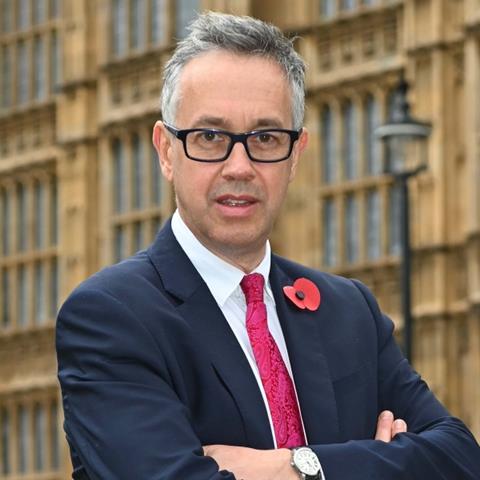
David Campanale, who spent decades reporting for the BBC and has since freelanced for Premier Christianity, won an internal selection process to be chosen as the Lib Dem candidate for Sutton and Cheam in 2021. But he was ousted by a coterie of local party activists, who he said could not countenance being represented by an evangelical who opposed abortion and assisted suicide.
Now, after a four-year legal battle, Campanale has won a remarkable victory in court after the Lib Dems admitted his claims of religious discrimination. They could now be on the hook for a considerable sum, with Campanale’s costs potentially topping £250,000 the journalist said, before any damages are agreed.
What happened
Campanale had already been a councillor and stood in previous elections for the Lib Dems before he was chosen as the candidate for Sutton and Cheam in 2021. But within weeks of his selection, Campanale said he came under intense scrutiny, harassment and suspicion from a clique of secularist party activists.
The journalist was dragged into intense meetings with the local party, during which he was interrogated about his views by dozens of activists. In his legal complaint, Campanale likened the experience to the “Spanish Inquisition”.
It emerged that some of those who would be canvassing for him at the upcoming general election were horrified their candidate was a pro-life churchgoer with mainstream Christian views. Things became so toxic that some activists refused to post his leaflets or even canvas on the same streets as him, something Campanale described as “nonsense”.
“You have no place in a liberal party if you’re triggered by the presence of a Christian,” he said.
Luke Taylor, who came third in the vote, even told Campanale that the Christian-friendly Liberal Democrat party, which had previously included believers such as Shirley Williams and Charles Kennedy, was “over”, and in the new secularised party there was no space for practising Christians.
Campanale refused to rescind his views on abortion and assisted suicide (both of which are always voted for under a free vote in parliament) but otherwise insisted he would be a loyal supporter of the Lib Dem party positions.
After an earlier attempt had been struck out on procedural grounds, the local Sutton and Cheam party finally managed to oust Campanale as their candidate in 2023, claiming he had “failed to win the confidence” of activists. Luke Taylor was later chosen to run for parliament in Campanale’s place and won the seat at the 2024 general election.
Legal action
In response to his deselection, Campanale crowdfunded thousands of pounds to take the Lib Dems to court, claiming they had discriminated against him because of his religious convictions.
He insisted he was used to the “rough and tumble” of Westminster political life, but that “religiously aggravated harassment” was unacceptable. “What I’ve gone through is nasty and unacceptable, but sadly typical of what’s going on in the liberal, intolerant left in Britain today.”
As a long-time party member, the former journalist said he was “sad” about resorting to legal action but believed it was the “only thing that was going to wake up the Liberal Democrats to their illegality”.
Initially, the Lib Dems defended themselves against his claim, saying local activists were shocked to discover that Campanale had previously been a candidate for the fringe party the Christian People’s Alliance (CPA). They claimed Campanale had misrepresented himself during the selection process, and said he was deselected because he failed to repudiate CPA policies on abortion and gay marriage, and could not secure enough support from local activists.
I’m not bitter that I went down for the sake of the unborn child
However, the Lib Dems have now admitted all of Campanale’s claims and accepted they broke the law when they deselected the former reporter.
Despite winning his case, Campanale remained rueful about what had happened. “The tragedy is if this illiberalism had not been allowed to fester and cause so much damage to the party’s national reputation, I would be approaching my second year as the Member of Parliament,” he said.
He was also scathing about Lib Dem leader Ed Davey, whose own constituency borders Sutton and Cheam. Despite being a friend of Campanale and also a Christian, Campanale accused Davey of not being able to “deal with a storm in a teacup in his own backyard.”
“The scripture says: ‘You’ll know them by their fruit’,” was all Campanale would say when asked why he thought Davey had not stepped in. He added: “Any Christian wanting to join the Liberal Democrats at the moment must be on notice that you can and will be removed if you stick to your Christian convictions.”
A deeper rot?
The row comes only a few years after another churchgoing evangelical found themselves in the firing line over their Christian beliefs. Tim Farron lead the party from 2015 to 2017 but was repeatedly questioned about his stance on homosexuality. Farron later said he deeply regretted being pressured into falsely saying he did not believe gay sex was sinful during an interview. In 2017, he stood down as leader, stating he could no longer see a way to “live as a faithful Christian and serve as a political leader”.
There were plenty within the party who found Farron’s socially conservative Christian beliefs an uncomfortable fit. And yet the idea that the Liberal Democrats have become a hardened secularist outfit - as Campanale now argues - does seem a little far-fetched.
Not only is the current leader, Davey, a churchgoing believer, but many of its MPs, including Farron, are also proud of their faith and speak openly about how it motivates them as politicians.
The Lib Dems declined to comment on Campanale’s claims, arguing the case was ongoing. But a spokesperson did say the party remained home to many practising Christians, including three Lib Dem MPs in neighbouring seats to Sutton and Cheam (one of whom is Davey).
One senior Christian Lib Dem figure, who did not want to be identified, said the regrettable behaviour in Sutton and Cheam had not been seen elsewhere in the party, and that members should be pulling together to win as many seats as possible in upcoming elections.
Still, this row underlines the disparate factions contained within the party. There are those, including Farron and Davey, who see no contradiction between following Jesus and supporting liberal political values. Yet many of the activists in Sutton and Cheam were horrified by their MP being pro-life, even if he was prepared to live out the liberal principle of not interfering with others’ rights.
In 2024, the Liberal Democrat Christian Forum (which represents hundreds of believers in the membership) wrote to the Equality and Human Rights Commission (EHRC) requesting it launch an investigation into their own party. “We believe the party’s handling of [Campanale’s case] is so egregious and offensive to the core principles of equality that the EHRC must step in. We understand there may be other instances of discrimination against Christians within the party.” The party’s hierarchy had shown a “blind eye to the extreme intolerance towards David’s Christian faith”, the LDCF added.
The group’s director, Elizabeth Jewkes, said that they continued to support Campanale but would not comment further until after the local elections this month.
Reponses and reflection
Two years ago, Lord Rowan Williams, former Archbishop of Canterbury, also weighed in. He said the party’s legal defence appeared to suggest it was “impossible” for Christians with socially conservative views to represent the Lib Dems, even if they were committed to upholding policy positions. “It is not enough to preserve one’s private conscientious judgement, it seems; total agreement in private and in public is demanded,” Williams said.
This week, Williams said he was “glad” to hear of Campanale’s win. “Whether or not one supports all David Campanale’s convictions (I disagree strongly on some things), is political allegiance now a matter of enforced orthodoxy on non-political or marginally political issues as well?” he asked.
As leader, Farron did at times try to make the classically liberal case for a separation between personal religious and moral convictions and what he sought to achieve through public policy. But this defence fell on deaf ears, including those within the party who rejected the idea he could simultaneously believe God forbade same-sex relationships while also upholding gay rights in parliament.
Any Christian wanting to join the Liberal Democrats must be on notice that you can and will be removed if you stick to your Christian convictions
Perhaps the party of Shirley Williams and Charles Kennedy, both passionate pro-life Christians who helped found the Liberal Democrats in the 1980s (Kennedy later went on to also lead the party), really is over?
Campanale is still sore about the lack of support he received from prominent fellow believers in the party during his battle, including Farron and Davey. But he insisted he was not “bitter” about what happened: “I genuinely think it’s a privilege to stand for Christ.”
He claimed he was told in one meeting that if he disavowed his Christian beliefs, he would be free to continue as their candidate for parliament. “I said ‘You can offer me anything you like but I will not sacrifice or trade my conscience for anything in the world’. I don’t regret that. I’m not bitter that I went down for the sake of the unborn child.
“I cannot be bought out. I will not be leaned upon. I will not be pressured into voting for issues that are contrary to Christian teaching.”
Taylor, who replaced Campanale and went on to became the MP for Sutton and Cheam, last year celebrated voting for both the decriminalisation of abortion and assisted dying legislation in the same week.
Campanale pointed to this as a sign of what would happen if Christians were forced out of political life by secular party activists. The “salt and light” of the Christian presence in public life was needed more than ever, he argued, but not at the price of “capitulating to totalitarian attitudes”.























1 Reader's comment