











Parliament has once again pushed the boundaries of abortion law, but the public remain unconvinced — with just 1 per cent of women supporting abortion up to birth, notes Lois McLatchie-Miller. As the law moves further than most are comfortable with, the Church must speak clearly and courageously for both mother and child, she argues
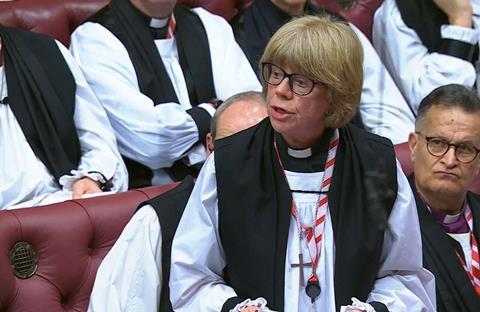
On Wednesday, Peers in the House of Lords voted to decriminalise abortion in Britain, for any reason at all, within the last three months of pregnancy.
This decision sets the UK on course to having one of the most extreme abortion regimes in the whole world.
Since 1967, abortion has already been legal in Britain for, in effect, almost any reason up to 24 weeks of pregnancy (almost 6 months). Already, this is far more permissive than most of Europe – the EU average limit on abortion is somewhere between 12 and 15 weeks (3-4 months).
Outside of these parameters, right now, abortion in the UK is generally not permitted – except on three important exceptions. Anyone can have an abortion at any point if their life is at risk, if their health is at serious risk, or if the child they’re carrying has any form of disability (even including minor impairments like a cleft lip or a clubbed foot).
Yet despite this legal framework already being incredibly liberal, the Westminster elites have decided to go a step further, and remove the laws which deter women from aborting perfectly healthy, viable, pain-capable and developed babies within the last three months of pregnancy for any reason whatsoever – even including because they’d prefer a boy to a girl, or because the child has become an inconvenience.
The debate in the chamber ahead of the vote was heated. Peers supportive of the proposals called on the House to “trust women” with these moral decisions. Concerns were raised from a range of different characters - from generally “pro-choice” feminists like Sharron Davies, who simply recognise that the proposals go too far; to the incoming Archbishop of Canterbury, who rearranged plans in order to attend the chamber following pressure in the press, and posited that such a “complex issue” as allowing abortion up to birth should not be allowed to become law via a clause added “hastily” with very little scrutiny.
Mullally’s presence in the debate and vote against the proposal was a welcome relief for Christians across the country deeply concerned about protecting unborn children. But as part of her speech, Mullally also stated that while the Church was opposed to abortion, in principle, she does not believe women should be prosecuted for illegal abortions when they operate outside of the rules. While this stance might feel and sounds “compassionate”, a deeper look reveals that a law criminalising elective late term abortions is an essential protection against women performing the dangerous procedure upon themselves; and an important safeguard upholding the rights of vulnerable unborn babies.
Take, for example, the case of Sarah Catt.
In 2012, Sarah Catt became one of very few women in modern British history to be convicted of having an illegal abortion. Sarah took poison to abort her baby at 39 weeks of pregnancy – just days from when the baby was due to be born. This was not because of an immediate risk to her health or a discovery that the baby was incompatible with life – it was because she was having an affair, and didn’t want her husband to find out.
Sarah Catt will now be pardoned for her crime as a result of the Lord’s decision on Wednesday. Sarah Mullally’s comments imply she thinks Sarah should not have had to face justice at all. Thankfully, cases like Sarah Catt’s are uncommon. Yet in removing the laws which deter Sarah’s actions and pardoning her, the parliament is insinuating that what she did is not wrong.
This matters now more than ever. In 2021, a “pills by post” scheme was introduced to allow women less than ten weeks pregnant to obtain abortion pills over the phone, to be sent to their homes, without any in-person medical examination. It is now easier than ever for women in late-stage pregnancy to receive these pills, simply by telling an abortion provider that she is much earlier in the pregnancy than she is.
Carla Foster is one such woman who abused this system in order to end her baby’s life at around 34 weeks pregnancy. After taking abortion pills alone at home, she delivered her baby, stillborn, in what she called a “traumatic experience”. She later named the baby “Lily”. Lily was a sentient, pain-capable and viable baby girl. She knew her mother’s voice. She could have been delivered alive on the very same day as she was killed. Carla spent only 35 days in prison for her actions.
outside the Westminster bubble, public opinion appears far more cautious than the direction of travel suggests
The current law preventing late-term abortions, then, is not overly-punitive. But it has successfully kept the numbers of women participating in this kind of dangerous activity relatively low. Removing the deterrent could see an increase in the number of women engaging in the practice, putting their own health at severe risk, and ending the lives of perfectly healthy, developed babies who could survive outside the womb if they were just delivered alive.
Notably, the move to decriminalise has sparked major backlash, both inside and outside the Church. Figures across the Right - from Reform’s Suella Braverman to Conservative leader Kemi Badenoch and Restore’s Rupert Lowe - have publicly condemned moves to decriminalise abortion all the way up to birth, warning that the amendment goes too far. Their interventions reflect a growing unease that what is being presented as a narrow reform risks sweeping far beyond what most people would recognise as reasonable.
That matters, because outside the Westminster bubble, public opinion appears far more cautious than the direction of travel suggests. Polling by Savanta ComRes found that just 1% of women supported abortion being available for any reason up to birth.
The fact that senior political figures are willing to draw a line - and to say, plainly, that decriminalisation without limit is a step too far - suggests that Britain’s moral instincts on late-term abortion have not disappeared. If anything, they may be reasserting themselves. The Church shouldn’t sit on the fence. In this case, compassion is not to turn a blind eye when wrongdoing is committed, but to uphold laws which prevent harm being perpetrated against both mothers and babies.
The incoming Archbishop voted the right way this week. But speaking with far more frequency and clarity on abortion – which ends the lives of 1 in 3 babies conceived in the UK – is going to be essential if the Church wants to retain any authority as a moral compass for our nation.























No comments yet