











When Jesus went to the cross, it cost Him everything, says Tim Farron MP. In a time of deep political uncertainty, when self-aggrandising leadership seems far removed from the pains and concerns of everyday life, Christ’s sacrifice stands as a stark reminder that there is a better way
What do we expect from our political leaders? In this social media age, our leaders are constantly in the spotlight; every movement scrutinised, every announcement picked over by a million armchair experts. We desire those in positions of authority to exercise good judgement and make wise decisions. Their actions influence our lives: how much tax we pay, the level of public services and benefits we receive, how we are kept safe, and – of increasing concern in today’s climate – whether we go to war.
Political leaders are trusted more if they are believed to be competent and to have the people’s interests at heart. They need to be effective communicators but the British public are also deeply sceptical about the degree of honesty and transparency with which promises are made, especially at election time.
We rightly hold our leaders to high standards, and are angry or disillusioned when these are not met. Confidence has been deeply undermined by recent political scandals such as Partygate or Peter Mandelson’s alleged leaking of confidential material to Jeffrey Epstein.
In response, leaders perhaps feel they need to present themselves as infallible. Any missteps are pounced upon, and admissions of mistakes are branded as u-turns. Emotion is often identified as weakness: when Chancellor Rachel Reeves appeared in tears during a Commons debate, it made the newspaper front pages - and there was precious little sympathy.
Compare and contrast
As we approach Easter, Jesus’ exercise of leadership offers a challenging contrast to every other - flawed – attempt throughout human history.
In January 1649, King Charles I was executed on Whitehall, just down the road from Parliament. It’s reported that he slept soundly the night before his death. And as he walked onto the scaffold, the King asked for an extra shirt. It was a cold morning and he didn’t want to be seen shivering. He didn’t want anyone to think he was shaking with fear.
Contrast that with Matthew’s account of Jesus in the garden of Gethsemane on the night before his execution. No peaceful slumber, no serenity in the face of death, no concern to keep up appearances. Instead, we see a picture of intense anguish.
We are the joy that made the agony of Gethsemane and Calvary worthwhile
Jesus twice asked his Father to remove the cup of wrath He was about to drink. This cup represented God’s just fury against all of human wickedness – including yours and mine. At this prospect, we see our God, weeping in terror, apparently looking for a way out.
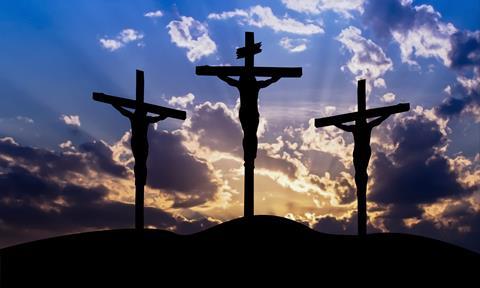
The crucifixion involved being rejected, mocked and humiliated; the terrible physical agony of dying slowly on the cross; and total spiritual separation from his Father. In it, we see Jesus’ humanity and the natural human desire to avoid pain and suffering; the desire for self-preservation and comfort. But He still chose to go ahead. Ultimately, in the words of Luke 19:10, He came “to seek and to save the lost”, and He accomplished this mission, even though it meant drinking the cup of suffering to the bitter end.
On the front lines
At the crucifixion we see the ultimate self-giving of a leader for His people. King Charles I was apparently brave enough to be on the battlefield during much of the English civil war, though never in too much danger, never on the frontline. But our King is on the front line. He gets into the trenches with His people and goes over the top to face death on our behalf.
Kings - and leaders of all kinds - are often challenged that they don’t understanding the suffering or struggles of ordinary people. But we cannot say that about Jesus. He knows exactly what it is like to suffer, to be terrified and rejected.
Jesus did not maintain a stiff upper lip as Charles I did. But, unlike Charles I, He did have a choice. He told Pilate in John 19, that “you would have no power over me if it were not given to you from above” and, in John 10, He stated that “no one takes (my life) from me, but I lay it down of my own accord. I have authority to lay it down and authority to take it up again.”
The crucifixion involved being rejected, mocked and humiliated; the terrible physical agony of dying slowly on the cross
Hebrews 12:2 tells us that Jesus endured the cross “for the joy that was set before him” – the redemption of sinners like you and I, so that He could be with us for all time. We are the joy that made the agony of Gethsemane and Calvary worthwhile.
As I reflect on Jesus’s actions for us at Easter, I am deeply challenged by his servant leadership. He is the King of the universe and yet He gave up all the honour, protection and comfort that leaders normally seek and expect. Instead, He modelled a form of leadership that is honest, self-giving, and down in the dirt with the people He came to serve, lead and save.
To say the very least, it’s a model that turns our leadership expectations on their head.
Maybe we do not expect our leaders to physically sacrifice themselves for their people. But Jesus’ approach can teach us so much about leadership as service, sacrifice and self denial.
Let’s pray today for all our political leaders, and ask God to help them exercise integrity, wisdom and compassion as they seek to lead our world in these difficult times.

























No comments yet