




The Archbishop of York has criticised the BBC for its “appalling lack of religious literacy”. Former head of religion at the BBC, Michael Wakelin agrees, but believes the remedy is not to be found in producing more religious programmes
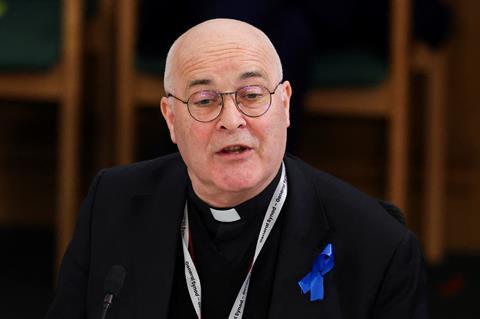
Speaking at a recent Religion Media Centre (RMC) press briefing, the Archbishop of York, Most Rev Stephen Cottrell, made some powerful and critical comments about the BBC and its “appalling lack of religious literacy”. It’s since led to coverage in the national press.
I’m a former Head of Religion and Ethics at the BBC, and I’m still a strong supporter of the Beeb’s ethos and aims. And yet I tend to agree with much of what the Archbishop said.
I worked for the BBC for 23 years across all networks on Radio and TV but always in the Religious Broadcasting Department. When I arrived in 1986, the department was riding high with a number of high profile programmes such as Everyman and Heart of the Matter in prime time TV slots, as well as Songs of Praise pulling in over 7 million viewers on a Sunday evening.
religion is still a huge influence in the world
It was also fairly easy in the 80s and early 90s to pitch for other special programming on top of a substantial portfolio on Radio of daily, weekly or returning strands. But gradually religion as a genre fell out of favour as funding cuts let to more competition for slots. Religion was not perceived as an audience grabbing proposition. And by the time we were moved to Manchester as a department in 1993 we were smaller and more vulnerable to the BBC’s drive to put programming out to independent tender. Inevitably this led to a loss of some religiously expert producers and researchers and a feeling that the BBC didn’t care very much for us as a department.
However we soldiered on with the strands we had left and a core of strong talent remained, and remains, to produce Sunday, Thought for the Day, the Moral Maze and Beyond Belief plus worship programmes on Radio 4 and Good Morning Sunday on Radio 2, as well as Songs of Praise – now outsourced to an independent production company. There are also some special programmes to mark religious festivals and the BBC still commissions the popular Pilgrimage on BBC 2.
There are fewer religious specialists than there were, but there is still admirable talent taking care of core business. And the Archbishop of York put on record that he works with the religion department in Salford. His concern was not with the department itself, but the place of religion in the wider BBC.
And it must also be said that there are some highly religiously literate journalists reporting on world affairs who tread a very fine line between being accurate and causing riots, including the BBC’s Religion editor Aleem Maqbool and the likes of Jeremy Bown and Lise Doucet.
The BBC doesn’t need a larger religious broadcasting department. It needs greater religious literacy across the corporation
But that’s not really what this debate is about. Yes, there is less money dedicated to religious commissions but if there was suddenly more money the programmes would not be put in primetime - much more likely to be put out late night or on digital services. When I was Head of Religious Broadcasting I was always fighting for more programming but since leaving in 2010, I came to the conclusion, as the Archbishop has done, that what the BBC needed was not a larger religious broadcasting department or more religious programmes but greater religious literacy across the corporation.
Religion across all programming
From news to dramas to documentaries to children’s programmes – the whole BBC output needs to understand the importance of religion to so many people around the world and to reflect this in its reporting and representation. It also requires a balance to not only expose its fragilities and errors but also recognition of the good it can do.
There is also a business imperative behind this. Good religious literacy in any organisation, public or private sector, should also lead to better accommodation of religious employees in the work place and better attraction and retention of staff. There is training available in this field but I would also point to the RMC as an expert resource for journalists and other media workers. We are a fiercely independent organisation providing authoritative insight, training and advice on all matters of religion across the world.
The beauty of the “religious literacy” narrative is that it does not promote religion – something the BBC was always fearful of – it just says that religion matters and deserves the highest editorial standards.
Despite society and the media ignoring religion and pretending it was going away, religion hasn’t actually disappeared and is still a huge influence in the world. We have to deal with it, we have no choice, and understanding it should be a priority, in order to avoid the toxic vacuum that so quickly develops when prejudice and ignorance are fanned by fake news and misinformation.
The BBC really cannot afford to abandon its duties to the British public and should recognise, as the Archbishop said, that “religion is a vital part of how millions and millions of people in Britain today get their belonging, their values, their purpose, their identity.”




















1 Reader's comment