



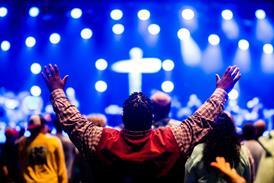





Too often, outward expressions of enthusiasm are mistaken for spiritual maturity. But God looks at the heart, not whether we’re standing, sitting or raising our hands, says Dawn Butler
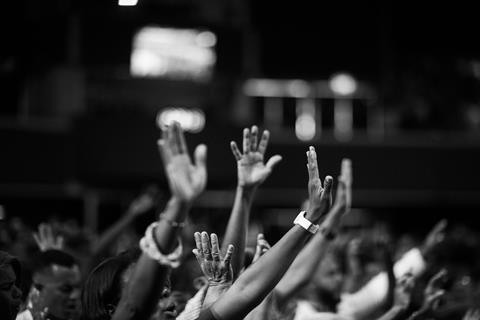
I’ve seen Christians judged; quietly, subtly, and sometimes not so subtly, for not being outwardly exuberant in worship.
I’ve noticed people watch to see if others remain seated, having given verbal consent to do so, but still judging the seated position. I’ve observed people look around the room to almost check the level of engagement, as if this can be truly assessed by what is seen.
One church leader announced to a large conference that if a person’s “dominant posture” during sung worship was to cross their arms, then it was probably their dominant posture in life in general. “If you’re disinterested and disengaged” in worship, then you’re probably like that as a parent too, he said.
These sorts of comments which question the spiritual maturity of others have stuck with me. They reveal something uncomfortable: somewhere along the way, outward expression has become a measuring stick for spiritual authenticity.
This is the issue that has wound me up most since returning to church. I’ve been “back in”, but not really back in. I’ve been intentionally loitering at the edges, returning different to how I stepped away. God and me – that’s unchanged. That’s my foundation. But church? That feels different, and I’m noticing things I didn’t see before.
One of those things is the near‑constant demand for conformity in worship. And yes, the irony of that happening in a non‑conformist church is not lost on me.
The pressure to perform
I used to lead worship, and that role became my identity. I lost Dawn within it. Although I no longer lead worship from the front of the church, my learning about worship hasn’t stopped. In fact, I’ve learned more since stepping away than I ever did while leading.
What I’m seeing now is a culture where worship is something you must show. Instructions come thick and fast: stand, kneel, dance, come to the front, move freely, fight inhibitions, be ‘authentic’. None of these things are wrong in themselves. But the cumulative effect is unmistakable: visible enthusiasm is treated as evidence of true worship.
And if you don’t comply?
People notice. And some judge.
Where humans look at the outside, God looks at the heart.
I’ve heard comments about those who stay seated: “They’re not engaging.” I’ve seen leaders look directly at the still, quiet ones while urging the congregation to “push past reluctance”. I’ve heard someone once say, “If you’re not responding outwardly, you’re resisting the Spirit.”
That’s a heavy accusation to level at someone whose heart you cannot see.
This is what winds me up — not the passion, not the joy, but the assumption that outward expression equals inward integrity. It is conformity dressed up as freedom.
Scripture has seen this before
The Bible is consistently clear that God rejects worship that is outwardly impressive but inwardly empty. Several prophets condemned performative worship:
- Amos declares that God “hates” empty assemblies and demands justice instead (Amos 5:21-24).
- Isaiah instructs the people to stop bringing meaningless offerings because their actions contradict their worship (Isaiah 1:13).
- Hosea reminds us that God desires mercy, not sacrifice (Hosea 6:6).
- Micah emphasises justice, mercy, and humility over religious performance (Micah 6:8).
These prophets are explicit: heart posture matters more than ritual compliance.
Jesus continues the theme. He quotes Isaiah: “These people honour me with their lips, but their hearts are far from me.” He confronts the Pharisees for obsessing over ritual details while neglecting justice and mercy. He tells the woman at the well that true worship is “…in spirit and truth”, and is not tied to external actions.
Paul and James echo the same message. Worship is offering your whole self to God, not performing rituals. Without love, even dramatic religious acts are meaningless noise.
So, when modern churches insist on outward demonstrations – postures, movement, volume – what exactly are we doing? If it isn’t ritual compliance, what is it?
Have we become the people we once critiqued?
Somewhere along the way, we’ve forgotten that we are the Pharisees and Sadducees – just in different clothing. There is not a single human on the planet who has the right to judge another’s worship. Where humans look at the outside, God looks at the heart.
Non‑conformist churches have simply become conformist in new ways. Instructions around expressive worship, passionate singing, emotional openness, or ‘authenticity’ are still conformity – just repackaged.
Churches that are expressive can be shallow and empty. Churches that are quiet, liturgical and contemplative can be deeply alive. It is not about the presentation. It is about the individual members of the whole.
And worship may look different for people in different seasons of life. Why wouldn’t it?
Integrity > conformity
For me, integrity wins every time. If that means I stick out like a sore thumb when my hope is to be in community, so be it. If it means I sit quietly inside a bit of wooden staging, unseen by others, so be it. Does that make my worship any less valuable than those dancing at the front?
I am responsible for my own integrity before God. And I cannot conform to cultural norms if doing so would be dishonest.
Will I be accepted in that position? I don’t know. But my aim is to grow each day in my life of worship — however that looks to anyone else or however anyone else judges it. After all, worship is not for the observers.
If each individual is allowed to explore how they align their walk of faith with scripture, and if each is allowed to analyse their own motives, we might move towards collective worship with substance and core value. If we dictate actions and performance, even unintentionally, we will not know what it is to worship in spirit and truth.






















No comments yet