








A landmark Supreme Court ruling has declared Christian-focused religious education in Northern Ireland state schools unlawful, yet Peter Lynas says there are grounds for hope. The way we teach the faith may need to change, but our right to communicate the Gospel remains unhindered, he says
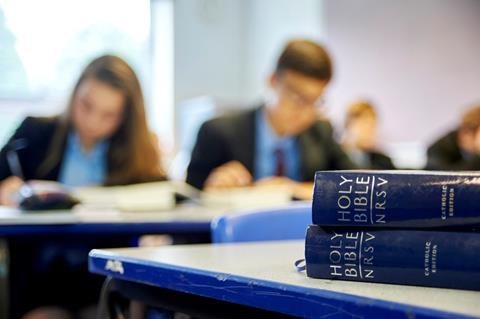
In a landmark decision this week, the UK Supreme Court has ruled that Christian-focused Religious Education (RE) and collective worship in state-controlled schools in Northern Ireland fail to meet the legal standard of being “objective, critical and pluralistic.” This judgment has sparked concern across Christian communities — but the Evangelical Alliance is urging Christians not to panic, and to view the ruling as an opportunity for renewed engagement.
What Did the Court Decide?
The case arose from a judicial review brought by a child and her father, who challenged the Department of Education for Northern Ireland. They argued that their rights under the European Convention on Human Rights had been violated. In particular, Article 2, which protects parents’ rights to have their children educated in line with their philosophical convictions and Article 9, which safeguards freedom of religion and belief.
At school, the child had received non-denominational Christian RE and participated in daily worship. Her parents, whose convictions align more with humanism, felt she was being taught to accept Christianity as absolute truth. The High Court agreed in 2022, finding the RE provided was insufficiently critical and pluralistic. However, the Court of Appeal later held that the statutory right for parents to withdraw their child was enough to protect their freedom — a conclusion the family appealed.
The Supreme Court found in favour of the child and her father. The justices held that the right of withdrawal was not enough to protect the family’s rights, as it placed an “undue burden” on parents and risked stigmatising the child. They concluded that the RE and collective worship in question were not delivered in a sufficiently “objective, critical and pluralistic” manner. While the State has a margin of appreciation in how it designs religious education, it must still ensure compliance with human rights law.
In other words: the Court did not ban Christian teaching in schools, but insisted that it must be balanced, fair and respectful of other beliefs.
Why This Is Challenging for Christians
The ruling suggests that the existing core syllabus, authored by major Christian denominations, may need significant revision. This could lead to greater input from non-Christian faith and belief communities, or a reimagining of how Christian truth is taught in state schools.
The Court also criticised the Department of Education’s lack of adequate monitoring of RE and collective worship. This may result in new inspection systems or tighter oversight of how religious education is delivered on the ground.
But there is hope. While the ruling is concerning, there are several encouraging and positive strands. It reminds us that “historically and today, Christianity is the most important religion in Northern Ireland.” It also affirmed the role of parents as the primary influence on what their children should believe and practice.
Nothing in this ruling diminishes the freedom of Christians to articulate, celebrate and pass on their faith
Crucially, the ruling highlighted the legal obligation to provide “undenominational religious education…based upon the holy scriptures.” It made clear that there is “no challenge in this case to collective worship in schools in Northern Ireland being focused on the Christian religion.” This is an important reminder that schools have a legal obligation to provide a daily act of collective worship. This reflects the historic reality that many schools were set up and run by churches before being handed over to the state. This obligation also exists in other parts of the United Kingdom.
The court’s ruling means schools will continue to teach about Christianity but in a more “objective, critical and pluralistic manner.” This already happens in many schools and if done well, will allow the truth and hope of Christianity to shine. Christians should have confidence in the gospel as good news as part of a more plural framework.
Looking Ahead
It will take time to understand the full implications of the ruling, not least because Northern Ireland has several different types of schools operating under different sets of laws.
However, there are important opportunities:
- Churches and Christian organisations can contribute to syllabus development, ensuring Christian perspectives remain central and accurately represented.
- Christian charities are well placed to provide resources to support schools in delivering daily Christian collective worship.
- School governors have a key role in shaping the ethos of individual schools and guiding how this ruling is implemented locally.
The Supreme Court’s decision challenges longstanding practice and invites Christian educators and parents to rethink how faith is taught in a plural society. But it also opens a door: to reimagine Christian RE that is deeply biblical, respectfully plural, and compelling in its witness.
Nothing in this ruling diminishes the freedom of Christians to articulate, celebrate and pass on their faith.
This is not a moment for fear, but a moment to reimagine how we engage with education and share the hope we have with young people in new and fresh ways. If we approach it with courage, grace and creativity, the Christian story will continue to be heard clearly and confidently in our schools.




















No comments yet