







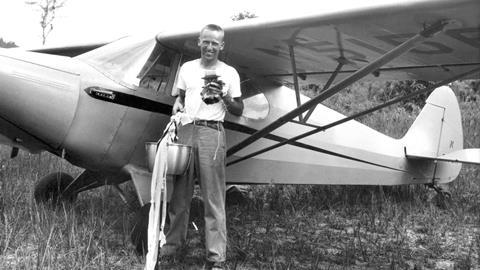

It’s 70 years since the most famous missionary of the 20th century was speared to death while sharing the gospel with an unreached tribe. Jim Elliot’s witness inspired generations of Christians to carry the gospel to the ends of the earth. But less is known about his pilot, Nate Saint, who charted their course – and whose family still serve the tribe who killed their grandfather
You’ve probably heard the words of American missionary Jim Elliot before: “He is no fool who gives what he cannot keep to gain what he cannot lose.” The quote is still preached from pulpits and printed on Christian merchandise seven decades after his death, aged just 28.
Elliot was one of five young missionaries killed while trying to reach one of the world’s most isolated tribes in the Ecuadorian jungle in 1956. Their deaths became a defining missionary story of the 20th century. But behind that famous name stood pilot Nate Saint – the man who made the mission possible, and whose family have spent the past seven decades turning unimaginable tragedy into a story of reconciliation.
Early life
Nathanael (Nate) Saint was born in 1923, the seventh of eight children. He grew up in Philadelphia against a backdrop of Puritan piety; a vibrant, holistic approach to Christian living that married robust Reformed theology with deep inner devotion. Nate’s father, Lawrence, was an eminent stained-glass designer, whose work includes a spectacular eight-metre depiction of the last judgement in Washington National Cathedral.
The Saints attended prayers on Wednesdays, two services on Sundays and Sunday school. The children received a silver penny for reciting Bible verses but were struck with a little green whip for disobedience. In Nate’s autobiography, Jungle Pilot, his father quotes the ominous words from Proverbs 13:24: “Spare the rod and spoil the child.” As jazz, dancing and film exploded across America, the Saint family’s approach to discipline was indicative of the Puritans’ rejection of the ‘moral decay’ of the 1920s. Fortuitously, Nate’s attention was already focused elsewhere.
A passion for planes
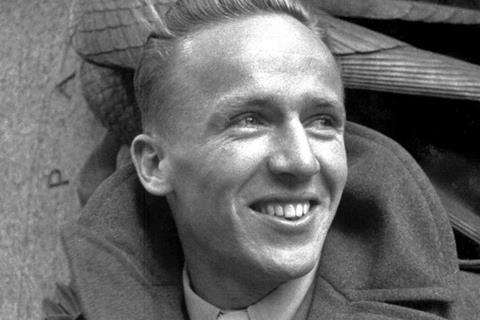
Nate experienced his first flight at the age of seven with his older brother, Sam, who later became an American Airlines captain. Although he could barely see over the edge of the open cockpit, Nate was hooked. He sketched aircraft throughout his childhood and, at the age of twelve, built a six-foot glider.
Appointed as crew chief in the Army Air Corps, Nate felt a call to the mission field in 1944, aged 21. His father sent him a newspaper clipping about the Christian Airmen’s Missionary Fellowship: a fledgling organisation that sought to bring together believers from the Allied Forces who wanted to use their aviation skills to spread peace in the aftermath of war. This awakened Nate to the idea of spreading the gospel from the air.
Nate was determined to initiate a new style of radical, practical outreach
Founded as Mission Aviation Fellowship (MAF) in 1945, Christian airmen and women from the USA, New Zealand and Europe began to launch investigative air surveys into unchartered corners of the world to see how aircraft could be used as a force for good. Nate watched the movement with intrigue.
Betty Greene, a 25-year-old American pilot, was the first woman to cross the Andes mountains in a Waco Cabin biplane, delivering Bible translators safely to a Mexican jungle camp in February 1946. Two years later, RAF engineering officer Stuart King and his pilot, squadron leader Jack Hemmings, plotted a ten-month survey of Central Africa in a wooden Miles Gemini aircraft. They left London with little more than a map, compass and the River Nile as their guide. The concept of advancing God’s kingdom from the skies was born on a wing and a prayer, and Nate decided he was all in.
In September 1948, Nate and his wife, Marjorie, moved to Ecuador. It was a rollercoaster of emergencies and hardships. The newlyweds were commissioned to set up MAF’s first South American headquarters in Quito. As well as welcoming the first of their three children, Nate wrote of hair-raising landings on narrow jungle airstrips as “like parking a car at 70 miles an hour”. Yet he was determined to scale the length and breadth of their new parish, which covered a growing number of rural, Protestant mission stations. “It is our task to lift these missionaries up to where five minutes in a plane equals 24 hours on foot”, he wrote. Gaining precious time through flight would exponentially accelerate the spread of good news.
The mission
When Nate heard of the Auca Indians, all his enthusiasm focused on reaching the primitive tribesmen of the Amazon who had never encountered the outside world. “There should be some from every tribe in His presence in the last day,” he declared, just 21 days before his death. Nate’s passion to fulfill the Great Commission is echoed by numerous Christian mission organisations today. But few have gone so boldly where no missionary has gone before, and Nate was determined to initiate a new style of radical, practical outreach.
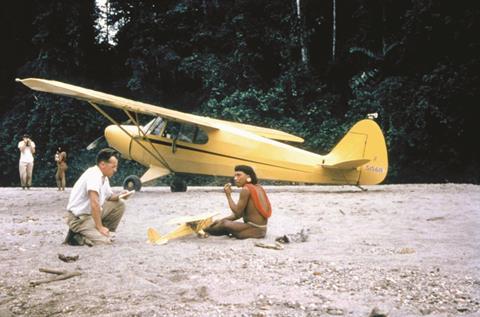
Rallying four passengers: Ed McCully, Peter Flemming, Roger Youderian and Jim Elliot, the pioneers made their first contact with the Auca – also known as the Waodani people – in 1955. Every week for three months, the group lowered gifts in a bucket from MAF’s yellow Piper PA-14 Family Cruiser aircraft. They were delighted when the Waodani began reciprocating, placing items in the bucket in return – particularly as the tribe were otherwise renowned for violence. Donning a beautifully feathered Waodani crown, the crew made plans to land. It was an exciting opportunity for the gospel.
This ‘bucket-drop’ technique would later become a widely used method of lowering cargo accurately without the need for a parachute. It required exceptional skill and an understanding of centrifugal force and motion. Nate’s early methods have influenced modern drone recovery systems used by military and experimental drone technology around the world today.
As Christmas 1955 approached, the five comrades wrote festive greetings to far-flung relatives and laid out the essentials for their trip – including food rations, radios, medical supplies and gifts – in neat piles along their departure airstrip at Arajuno.
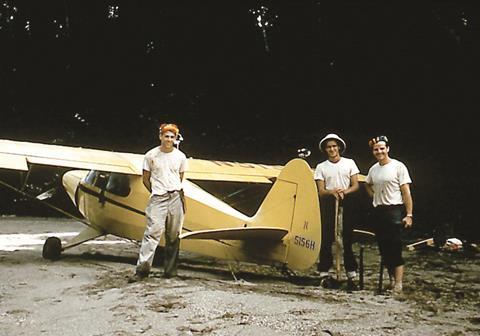
On Tuesday, 3 January 1956, Nate landed the little yellow plane – now synonymous with the devastating events which would later unfold – on Palm Beach, a sandbar approximately four miles from the Waodani settlement. Ed was the first to step from the plane into the Amazon delta. Five flights later, the full crew had arrived and set up camp on the edge of the Curaray River.
After three days, a group of tribespeople appeared. Jim Elliot waded fearlessly towards them; an open hand offering an invitation for the Waodani to join them for food. Minutes later, the little group were sharing lemonade, hamburgers and communicating in their local tongue. This first meeting lasted all of Friday afternoon, precious hours that were long prayed for, as recorded in 39 heartfelt pages of Nate’s personal journal.
On Sunday, 8 January, Nate made a final radio call to his wife, Marjorie, back at MAF’s base camp. With plans to hold a service on Palm Beach, Nate’s plea to the women was simple: “Pray for us. This is the day.” At 3:12pm, the hands of Nate’s wristwatch stopped moving as the muddy water of the Curaray River seeped into its broken case. This is believed to be the moment when Nate, Jim, Ed, Peter and Roger were speared to death by the Waodani.
Shockwaves and selflessness
At 4:30pm, the time Nate had promised to contact the women back at base, the radio receivers were silent. By dusk, Marjorie was unable to continue with her usual daily routine. Five terrible days of uncertainty followed. Nate’s yellow plane was found sitting in the middle of Palm Beach with its fabric stripped off. A search party commenced, with US military planes scouring the jungle from above. Two bodies were eventually sighted on Wednesday 11. The final three – including Nate’s - were later recovered from the Curaray river.
The tragic deaths of Nate and his crew made headlines around the world, from The New York Times to The Guardian in London. Editors at TIME magazine commissioned Cornell Capa – one of the world’s great photographers – to travel to Ecuador for a ten-page feature which appeared in Life magazine, its influential photojournalism publication.
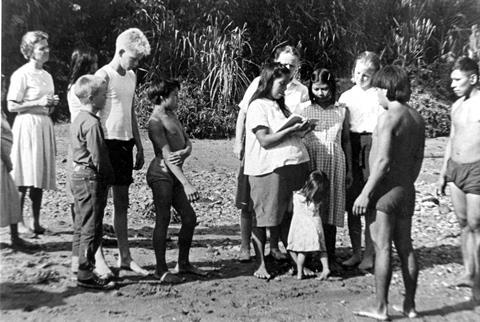
Since then, at least 17 works have been published about the martyrs of Palm Beach, including missionary accounts, family memoirs and autobiographies. Some argue that the tragedy 70 years ago reshaped the story of Christian mission, shifting its emphasis from duty and expansion to calling and sacrifice. The selfless dedication and radical forgiveness demonstrated by relatives who returned to Auca territory led mission thinkers to endorse the learning of local languages, understanding cultures and building trust, rather than imposing Western practices. Paul Hiebert, for example, began writing on the cultural sensitivity of mission during the 1970s, and in the 1990s David Bosch implored that the gospel should be shaped by local traditions and social realities.
Elliot is arguably the most widely known of the five. His wife, Elisabeth, was responsible for bringing his writings to life – and played a key role in achieving his dream to share the gospel with the Waodani.
For those operating in sensitive and dangerous places, communicating Christ must often be done without any words at all
After the deaths of the men, Elisabeth (along with her ten-month-old daughter, Valerie) and Nate’s sister, Rachel, decided to stay in Ecuador. On 11 January, mere hours after the tragedy, Elisabeth wrote: “I want you to know that prayers are being answered moment by moment – I am ever so conscious of His everlasting arms. There are no regrets. I want to serve the Lord in the future, so pray for His continued grace and guidance.”
Along with her brother, Rachel Saint had also caught the vision for reaching the Aucas. She learned their language with the help of Dayuma, a Waodani woman who had fled the tribe during the 1940s. In 1957, Dayuma became the first Waodani to convert to Christianity.
The following year, word reached the MAF base that two more Auca women had left the jungle. Mankamu and Mintaka – who were among the original group of tribespeople who met Nate and his crew on Palm Beach – were looking for Dayuma, who had been missing for more than a decade. The three women became pivotal in re-establishing contact between the missionaries and their indigenous community.
In October 1958, less than three years after their husband and brother were murdered, Elisabeth and Rachel returned to Waodani territory with Dayuma. In 1961, they moved to Waodani territory and lived among the people for two years, demonstrating fearless love and teaching a message of forgiveness. The transformation was seismic, and the Waodani chose to change their way of life forever as they accepted Christ. In 1965, the Gospel of Mark, translated into the Waodani language by Rachel and Wycliffe Bible Translators, was presented to the Auca by Nate’s sons, Steve and Phil.
Nate’s wife Marjorie settled in the Ecuadorian capital, Quito, and continued mission work from there, returning to Palm Beach for key celebrations, anniversaries and reunions. Nate’s children were welcomed into the tribe, and Steve was even baptised in the same river where his father’s body had been found – by the man who speared Nate to death. Recalling the experience in his book, End of the Spear (Tyndale House Publishers), Steve says that he “learned to respect” the men who killed his father and yet later treated him “like family”.
“I hadn’t forgotten the pain of losing Dad, but I couldn’t imagine not loving them, and all the other Waodani who had come to visit this terrible, wonderful place. When they lifted us up out of the water, they told us to live happily and at peace, following God’s trail. It seemed out of character that such kind and gentle men could have done such a terrible thing.”
In the years since, Steve has devoted his life to serving the Waodani. In 1996, he founded The Indigenous Peoples’ Technology and Education Centre (ITEC) in response to a request from the Waodani to learn how to reach their own people with the gospel. Using technology, practical skills and culturally appropriate resources, ITEC aims to fulfil the Great Commission without dependency on Western Church practices.
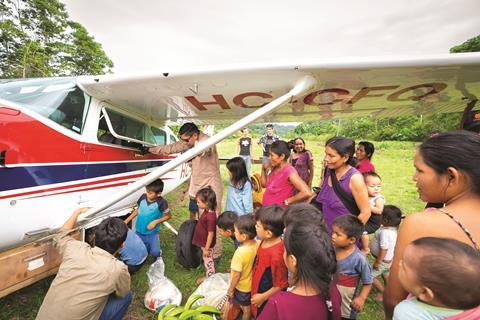
Today, ITEC is directed by Nate’s grandson, Jaime, who is passionate about continuing his grandfather’s mission: to see every tribe and tongue participate in God’s kingdom and improve the quality of life for isolated communities. MAF aircraft still land every month, serving a flourishing church, school and providing access to medical care for surrounding villages.
His son Steve was baptised by the man who speared Nate to death
“For the last 70 years, God has been writing a story of His love, reaching the most difficult and dangerous places on earth,” says Jaime. “What seemed a tragedy in 1956, God has used for His glory.
“My family were led to the jungle on the request of the Waodani, but they did not want us to serve them, they wanted to learn skills – such as dentistry, medicine, optometry and flight. The Great Commission is just as much a matter of obedience today as it was 70 years ago and ITEC now travels around the world teaching indigenous Christ-followers practical skills to open doors for the gospel.”
A rod not a fish
Although Nate initially handed out gifts and food, the community-led, sustainable style of mission initiated by the Waodani has proven undeniably successful, and is a model adopted by many well-known Christian charities today. Tearfund, World Vision, Samaritan’s Purse and Christian Aid all note the importance of combining local knowledge, cultural understanding and practical training to demonstrate the gospel while limiting dependency and fostering empowerment.
Few would deny the lasting impact of giving a man a rod rather than a fish to help lift him out of poverty. And for those operating in sensitive and dangerous places, communicating Christ must often be done without any words at all.
None of us know whether it was the spoken name of Jesus that sparked the deaths of Nate and his crew, but the seven decades of investment, love and reconciliation demonstrated by the Saint family do reveal a tangible transformation and freedom that Jesus promised to those who turn to Him.
Whatever your view of the term ‘missionary’ – often contested for carrying assumptions of superiority, paternalism and colonial undertones – Nate’s example combined faith, courage and long-term commitment, which has been carried on by generations of his family and the wider Christian community.
























No comments yet