





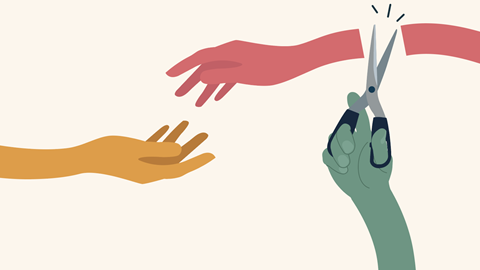

What’s left of the UK international development budget is less than we spent on fizzy drinks in 2024. Meanwhile, 25 million people missed out on lifesaving aid. One year after sweeping aid cuts sent shockwaves through the development sector, what responsibility do Christians have to the world’s poorest?
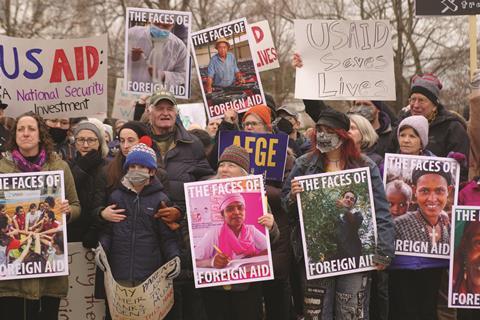
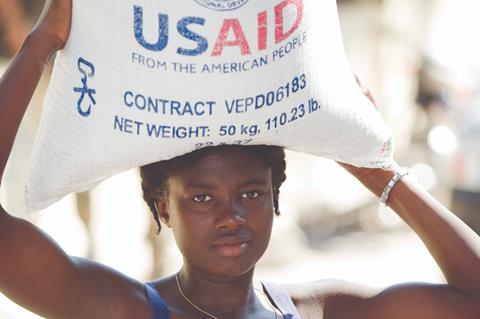
This time last year, the foreign aid sector reeled as an entire US government department was permanently closed by the Trump administration. The US Agency for International Development (USAID) had previously funded initiatives around the world to the tune of $40bn and facilitated at least 500,000 aid worker jobs. Charities such as Oxfam were horrified: “The effect of these cuts on people is dire”, said the charity in a statement. “At least 23 million children stand to lose access to education, and as many as 95 million people would lose access to basic healthcare, potentially leading to more than 3 million preventable deaths per year.”
President Trump had argued USAID’s spending was wasteful, fraudulent and misaligned to his “America first” policy. But the trend away from spending on foreign aid is not limited to the USA. By the time USAID closed on 2 July 2025, British Prime Minister Keir Starmer had also announced the most drastic aid budget cuts of any G7 country – with plans to reduce relief spending to just 0.3% of Gross National Income (£9.2bn) by 2027. That’s less than the UK spent on fizzy drinks in 2024.
The controversial reduction has brought UK development assistance to its lowest rate since 1999, breaking Labour’s election manifesto promise to increase aid spending to 0.7% – a pledge backed by many of Britain’s churches and Christian MPs from across the political spectrum. Labour MP Stephen Timms previously warned that even a global pandemic was no justification for reducing Britain’s commitment to international aid. Writing on premierchristianity.com, Liberal Democrat MP Tim Farron called cutting foreign aid “the ultimate in vice-signalling”.
Christian philanthropy service Stewardship says that, as USAID began to fold in March 2025, employees at some faith-based charities such as Medair voluntarily deferred their salaries to allow the little funding that was left to be prioritised on humanitarian activities. Other NGOs such as Christian Aid and Care International called on the UK government to reverse aid cuts, with more than 100 charities following suit.
The case for cuts
Some have welcomed the decision to switch spending from aid to defence at a time of escalating uncertainty. The UK has consistently been among the world’s most generous global donors since the end of the second world war. For a period, the UK was the only G7 nation to meet or exceed its 0.7% giving target. Is it time to cut ourselves some slack and focus on domestic needs?
It’s also easy to question the effectiveness and integrity of foreign aid. In a 2020 article in The Spectator, Rev Michael Nazir-Ali, the former Anglican bishop, said UK taxpayers’ aid spending was being lost on “suffocating bureaucracy, inefficiency and outright corruption”.
In a recent conversation with Premier Christianity, Rev Nazir-Ali acknowledged both increasing financial pressures and the ongoing need for scrutiny of government aid spending, which continues to be plagued with inefficiencies.
Nearly 200 million children rely on humanitarian assistance
“While it’s regrettable that the British government has significantly cut international aid, I can see the economic pressures behind the decision. However, what we do give can – and should – be better targeted so even the smallest budget delivers real impact. We urgently need an audit of UK foreign aid – including whether too much is spent on large technical projects led by British experts that may never be completed or deliver meaningful benefits to anyone.
“As a nation, we have historically been generous in supporting vulnerable countries, and British donors would be better to carry on directing this valuable generosity towards smaller, grassroots causes which are both effective and transparent. Many are Christian charities, missions and church initiatives which are having great impact. It seems Parliament will play a much smaller part in how we as conscientious citizens continue to help those living in low-income communities into the future.”
The complex ethics, sustainability and transparency of aid – whether distributed via the government or the Church – are undeniable. There are genuine debates taking place about the impact of historic Church initiatives across low- income countries. For example, some critics spotlight how passive dependence and the degradation of indigenous customs have been unfortunate outcomes of well-intentioned, longstanding Christian mission work.
But it’s hard to find any prominent Christian thinker who will publicly agree to the scale of the 2025 foreign aid slashes in what has been described as “the worst humanitarian year on record”.
What’s the impact?
The effects of the current, unprecedented cuts in foreign aid are still unfolding, but according to a Humanitarian Action report, 25 million people missed out on lifesaving assistance last year – that’s the entire population of Australia.
This has led to delays in global development, including access to clean water, safe sanitation, lifesaving vaccinations and basic human rights at a time where nearly 200 million children rely on humanitarian assistance. Some say the hard work achieved by the global NGO community has been set back 15 years – when the United Nations’ sustainable development goals were first adopted.
According to Bond, a UK network for international development organisations, vulnerable populations in Africa will be worst affected. “Marginalised communities will continue to pay the highest price for our political choices,” Gideon Rabinowitz, Bond’s director of policy and advocacy, told The Guardian. “Now is the time for the UK to step up and urgently rebuild its shattered reputation on a global stage.”
As the world’s wealthiest governments turn their backs on the most vulnerable, many big development operations, oiled by institutional funding, have withdrawn. This includes dozens of international development charities that are household names, faithfully supported every month by UK donors, such as World Vision, Tearfund and World Relief.
In the wake of eye-watering cuts, grassroots projects are left frantically trying to plug the gaping holes left behind. And plenty of Christian charities are pressing on, delivering what they can with the little funding that’s left, and asking donors to dig deeper than ever before.
Catholic development charity CAFOD raised concerns from the Democratic Republic of Congo [DRC], where the NGO is present in every province, helping to manage more than 40% of the country’s health facilities and around 60% of primary schools. It warned that the funding crisis is creating tensions between refugees and host communities – where now only a third of people in acute need are receiving humanitarian assistance. Bernard Balibuno, CAFOD’s country director in Kinshasa says: “The crisis in the DRC illustrates the human cost of aid cuts. The choices governments must now make are about their commitment to solidarity with people in human crisis, and we urge donors not to overlook the affected populations and their access to basic needs.”
Ruth Jack is director of African programmes for Mission Aviation Fellowship (MAF) – a Christian air operator which flies some 1,500 humanitarian, mission and health organisations to remote locations across the globe. Living in Uganda, Ruth has a bird’s-eye view of the unfolding crisis in her country, home to Africa’s largest refugee population and a hive of world-class international development.
With nearly 2 million refugees in the country, and “no money to feed them”, the numbers of acutely malnourished children have escalated “faster than anyone in the humanitarian sector anticipated,” she says. “It’s absolutely desperate. MAF is at the heart of a network of agencies doing what they can with very little.
“The NGO community is on its knees,” Ruth continues. “People’s lives dried up overnight – many are left starving and without hope. A generation of children will go without an education. Mothers are unable to feed their families and, quite literally, these mothers are walking away.”
Abandoned minors – known as unaccompanied refugee children – have been called the smallest survivors of the aid crisis by the United Nations High Commission for Refugees (UNHCR), and they are arriving in their hundreds to Uganda’s refugee settlements each month. It’s hard to imagine becoming so desperate that you walk away from your own kids. Yet, this is the stark reality in the world’s most vulnerable and forgotten places.
Real lives
One such child is twelve-year-old Nyakim, who arrived in Uganda’s Rhino refugee camp having fled war-torn South Sudan with her nine sisters and cousins. One day in February 2025, they woke up to find their mother gone. Nyakim is now head of the family, and missing the monthly bag of maize flour previously handed out by the World Food Programme to feed ten hungry mouths.
Nyakim’s story, shared recently in The Telegraph, helps put a name to seemingly overwhelming statistics. It’s thought that she is one of 153,000 unaccompanied refugee children worldwide.
Marginalised communities will continue to pay the highest price for our political choices
But many of those affected by cuts are not refugees – they are development experts who have given their lives to serve the world’s poor. In a moving opinion piece published by The Guardian last year, former USAID worker Christian Smith described how his world fell apart in the space of two days. His mother, who embraces a form of Christianity that connects closely with conservative US politics, told her son that USAID had funded terrorists and performed sex changes on children – perhaps trying to reassure him about his unexpected redundancy.
“Such disinformation about our development programs has taken root and is spreading”, Smith wrote. “Dire symptoms are everywhere: polarisation of people and information sources and the hardening of hearts against complexity.” Still working to rebuild his life after a career at USAID, Smith calls his mother every day as she undergoes cancer treatment.
“It has not been easy, having lost my job, my father and what continues to feel like my country”, he wrote. “But escaping the present gilded age will require a stubborn belief that what we’re trying to preserve is worth the effort. In a world pulling itself apart, maybe that persistence is its own form of hope.”
Help? Yes, you can
Today, with so many conflicting opinions, provocative headlines, touching stories and eye-watering statistics, all we can do is prayerfully consider our personal responsibility to the international community. No doubt you have received a piece of charity mail through the door this week – or seen an urgent appeal on your social media feed. Whether it was a nudge from a global NGO or personal email from a local mission, every effort is valid and necessary to address the huge imbalances that appear to be deepening across the globe.
As the days draw longer, most of us have enjoyed a can of something refreshing to welcome the rare appearance of sunshine. So next time you fancy a carbonated tipple, perhaps you could donate the money to your favourite Christian development charity instead; they’ll be eternally grateful.
Your £1.50 will go further than you think.



















No comments yet