

Partner content
Despite experiencing war and homelessness, Tom Menjor refused to let hardship define his future. Today, as All We Can’s country representative, he is helping local organisations tackle poverty and protect vulnerable girls through a distinctly Christian model of partnership that puts local people in the lead
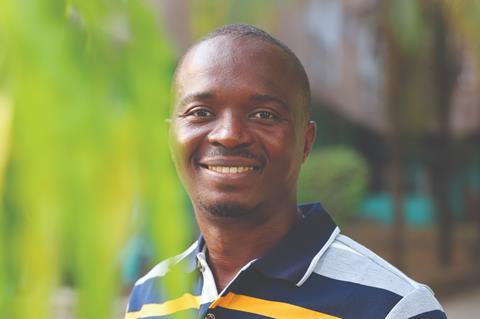
What was life like for you growing up in Sierra Leone?
I was born in 1983 and am the eldest of five siblings. We lived in a rural community, and salaries were very low for both of my parents, who worked as medics. We were barely surviving. Our neighbours were even worse off. They would often come to my mother and beg for food.
When the civil war broke out in 1991, the rebels targeted government officials, including my dad. They attacked our town and burned down the house we were living in. We ran into the bush and stayed there for four years. We created our own village and stayed close to the river for water. During this time, I had to stop attending school.
Eventually my father took me to another town and handed me over to a cousin so that I could start attending primary school again. I barely had any food to eat. We had a small room in the house where four of us were sleeping. There was no table or chairs – just one long bench. I had to wait until everyone had gone to sleep so I could use the bench to study. My dad kept encouraging me: “When you are educated, you will get everything you are looking for.” It kept ringing in my ears that there is hope for the future.
Eventually I completed secondary school and passed the entrance exam to university. My first degree was a five-year programme, during which I was awarded a scholarship. I lost my father, and while I was doing my master’s my mother was sick as well. I was supporting them and my siblings.
You now work for All We Can. Is food scarcity still an issue in Sierra Leone?
It is. The underlying issue is poverty and there is high food insecurity across the country – 80% to 90% of Sierra Leoneans depend on imported food, particularly the staple food, rice. Even if food is there, people can’t afford it.
How is All We Can making a difference?
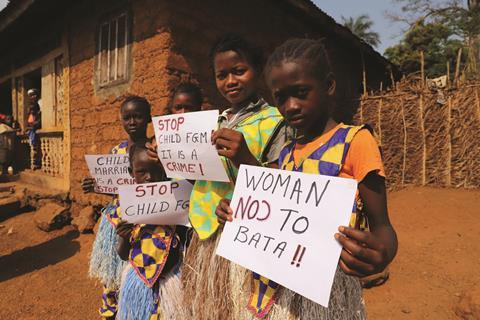
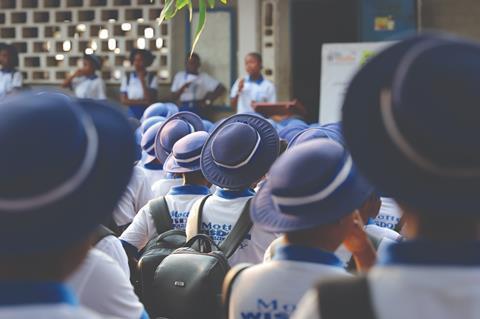
There is a lot of gender-based violence, particularly in rural areas. You see a lot of girls struggling to continue their education due to poverty. The girls depend on men to support them. The men [abuse] them, and they get pregnant and drop out of school.
All of our partners are working on child protection. Safe spaces have been established, and they employ mentors who provide coaching. They teach the girls about their rights and how to protect themselves. There is now increased awareness among the girls and the rate of teenage pregnancy has decreased drastically in the communities that we support.
What makes All We Can unique?
Our partners tell us they have never worked with any donor like All We Can. That’s because we assign a country representative to them. I don’t impose on our partners, but work with them to develop strategic plans and monitor their activities. I help with organisational development, governance and institutional management.
We are partner- and community-led. Our partners tell me: “Your funding is quite small, but your technical support is huge.”
How important is faith to your work?
All We Can is a Christian charity. The leadership of two of our three partners is Christian, and the majority of their staff are also Christians. One of our partners is Muslim – 90% of their staff belong to the Islamic religion. But in Sierra Leone, we are tolerant of different religions. Our partners go to communities that are both Christian and Muslim, and implement activities with no discrimination.
All We Can strives to decolonise aid and its funding to partners is unrestricted.
To find out more visit allwecan.org.uk















No comments yet