











Three years ago, Gavin Drake warned that Hamas’s 7 October attack would bring a brutal Israeli response and catastrophe for Gaza. As he revisits what he got right and what he didn’t foresee, he points to the evidence that neither Israeli security nor Palestinian freedom will be won through the destruction of the other
Two days after the Hamas-led attacks of October 7, 2023, I wrote an article explaining what had happened, anticipating what might follow and asking how Christians should pray.
Some of its predictions proved grimly accurate.
“Extremist voices calling for Gaza to be flattened are more likely to have their way,” I wrote. “While the total destruction of Gaza is unlikely, the response from Israel will almost certainly be hard and brutal.”
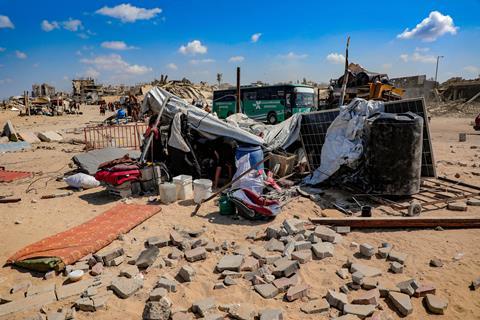
Three years later, more than 74,000 Palestinians have reportedly been killed. Most of Gaza’s population has been displaced and much of the territory lies in ruins. Large-scale fighting ended with a ceasefire in October 2025, but Israeli attacks have continued; more than 1,400 Palestinians have reportedly been killed since then, and Israel still controls around two-thirds of Gaza.
What I got right
The scale of the destruction went far beyond anything I imagined when I wrote that first article.
I also said: “This latest attack by Hamas makes life for Gazans worse. Israel’s response to the war has been, and will be, brutal. Israeli extremists and moderates will be united in determination to make sure this never happens again. The Israeli government will face immense pressure to ensure that Hamas is destroyed. And they will have the will to try to do this.”
Israel had the will, but not the means to achieve all its objectives. Hamas’ leadership and military capacity were severely damaged, but the organisation has not been destroyed or disarmed. Some hostages were rescued by Israeli forces, but most were brought home through negotiated exchanges.
Nor did Israeli unity last. The initial determination to respond gave way to bitter arguments about the conduct of the war, the fate of the hostages and whether Benjamin Netanyahu’s government prolonged the fighting for political reasons.
But the central prediction was right: the attack brought catastrophe upon the people of Gaza.
The horror of Israel’s response has produced a dramatic growth in anti-Israeli feeling. That is not surprising. People have watched children pulled from rubble, families repeatedly displaced, hospitals overwhelmed and civilians go hungry. Anger at the Israeli government is not the same as hatred of Jews, and criticism of Israel must not automatically be dismissed as antisemitism. Yet the distinction is too often lost.
Explaination ≠ Justification
In 2023, I wrote: “One of Israel’s founding principles is a safe homeland for Jews. This dream of a Jewish homeland didn’t begin with the Holocaust, because while the Holocaust stands alone in its scale of evil and death, it wasn’t the first example of antisemitism. Jews have faced centuries of pogroms and persecution — often from Christians. As a result of this, they have a determination to ensure that never again will Jews be left unprotected.”
That history does not justify what Israel has done in Gaza. But it helps to explain the Israeli instinct that threats must be confronted overwhelmingly and that Jewish security cannot be entrusted to anybody else.
The 1972 Munich Olympics provides an earlier example. Members of the Palestinian group Black September took Israeli athletes and coaches hostage; 11 members of the Israeli team were killed, along with a German police officer, after a disastrous rescue attempt.
Israel responded with a long campaign, commonly known as Operation Wrath of God, in which Mossad agents pursued and killed Palestinians believed to have been involved in terrorism. The operation extended across Europe and beyond. It also demonstrated the danger of vengeance conducted without accountability: in Lillehammer, Norway, Israeli agents murdered Ahmed Bouchikhi, an innocent Moroccan waiter mistaken for one of their targets.
The determination to ensure that attacks upon Jews would never go unanswered helps to explain Israel’s response after October 7. It cannot justify the destruction of Gaza or the suffering inflicted upon its civilian population. Explanation and justification are not the same thing.
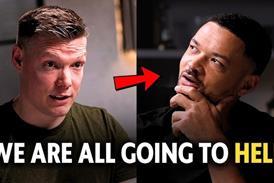
Nor does outrage at Gaza justify antisemitism. Britain’s Community Security Trust recorded 1,926 antisemitic incidents during the first six months of 2026 — more than during the whole of 2022. Jewish people in Britain are being held responsible for the actions of a government over which they have no control (as Premier’s recent roundtable discussion, below, makes clear).
Some pro-Palestinian campaigning risks making this worse by moving attention away from Palestinians and placing Western activists at the centre of their story.
The flotillas involving Greta Thunberg were primarily protests, not viable aid operations. The Madleen, intercepted in June 2025, carried only a symbolic quantity of supplies and had little prospect of reaching Gaza. Once Israel stopped it, the story became Thunberg’s detention rather than Palestinian hunger. Raising awareness has value, but Gazans had again become supporting characters in a Western drama.
Something similar happened with Palestine Action, proscribed after organised break-ins and serious criminal damage against defence companies and RAF Brize Norton. Whether terrorism legislation was proportionate remains disputed, with a Supreme Court appeal pending. But Britons remain free to campaign lawfully for Palestinians. Considerable attention has instead been devoted to a violent Western extremist organisation whose activities caused injury and millions of pounds of damage.
The Green Party’s declaration that it is “anti-Zionist” has produced another British argument about definitions, intentions and party discipline. None of these controversies deliver food, shelter, justice or political freedom to Palestinians. They make Western campaigners the subject of a struggle whose consequences are borne elsewhere.
Raising awareness has value, but Gazans had again become supporting characters in a Western drama.
They also risk fuelling antisemitism, even unintentionally. When every dispute becomes a test of whether somebody supports or opposes “Zionists”, condemnation of Israel can slide into suspicion of Jews. There is enough real suffering and injustice in Gaza and the West Bank to confront without manufacturing additional grievances centred upon ourselves.
There is another way.
The alternative
I first met Maoz Inon in 2013 while visiting Nazareth. Years earlier, he had worked with the Palestinian Christian Azar family to turn their historic home, the Fauzi Azar house, into a guest house. The project helped to revive tourism in Nazareth’s Old City, supporting Palestinian businesses and encouraging visitors to encounter the city and its people rather than pass through on a coach.
Maoz’s parents, Bilha and Yakovi Inon, were killed in their home during the October 7 attack. He would have had every reason to retreat into grief, anger or demands for vengeance. Instead, he intensified his work for peace, alongside Palestinian peace activist Aziz Abu Sarah.
Inon has spoken with Christians, Jews and Muslims and campaigned fiercely for a future founded upon equality, security and reconciliation. Together, they are helping to reopen the Fauzi Azar house as a cultural centre and place of encounter.
The Hamas-led attacks of October 7 did nothing for the Palestinian cause. They murdered civilians, traumatised Israeli society and brought devastation upon Gaza. Israel’s response did nothing for the Israeli cause. It horrified much of the world, deepened hatred, destroyed Palestinian lives and failed to create lasting security.
Both peoples are suffering. Neither will be liberated by the other’s destruction.
Maoz Inon’s life offers another possibility. Peace will not come from Western activists making themselves the story, nor from Israelis and Palestinians competing for exclusive ownership of grief. It will come through people prepared to recognise the pain, humanity and rights of those on the other side.
Three years after October 7, peaceful communities for Israelis and Palestinians remain possible. Maoz has paid an unimaginable price and still believes that. Christians should have the courage to believe it too — and to work and pray to make it real.
























No comments yet